


Day of Remembrance and Reconciliation: how Ukraine moved away from the cult of the USSR’s ‘victory’ and why it was imposed on us
For decades, the Soviet authorities and the Russians turned the tragedy of the Second World War into an aggressive cult. But three years ago, Ukraine finally decided that on this day it would commemorate the victims alongside a free Europe. Find out why there are two dates for the surrender, how the Kremlin uses 9 May for its imperial ambitions, and why our departure from the myths of the USSR is final

For many decades, the post-Soviet space was dominated by a culture of grandiose military parades and the clanging of arms. However, three years ago, Ukraine made a definitive civilisational choice by severing ties with the toxic Soviet legacy. The transition to the European tradition of remembrance was a significant step in safeguarding national identity against aggressive Russian propaganda and imperialist encroachments.
8 May or 9 May? The historical distinction
The division into two dates arose solely due to the political ambitions of the Soviet leadership. The original Act of Surrender of Nazi Germany was signed in Reims, France, on 7 May and officially came into force on 8 May. The entire free world accepted this fact, but the Soviet dictator Joseph Stalin demanded ‘his own’ signing in defeated Berlin. The second ceremony took place late in the evening of 8 May, when, according to Moscow time, it was already the 9th. This trivial time difference became a convenient tool for the Kremlin to artificially separate Soviet citizens from the rest of the world and emphasise the exceptional, monopolistic role of the USSR, downplaying the allies’ enormous contribution to the defeat of Nazism.
What does Remembrance and Reconciliation Day on 8 May mean?
For the countries of Europe and Ukraine, 8 May is not a celebration of the military machine’s triumph, but a day of deep mourning and reflection on the greatest tragedy in human history. It is a time to remember the tens of millions of dead, the shattered lives and the cities reduced to rubble.
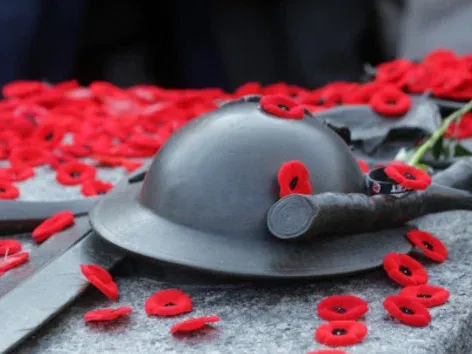
Unlike the Soviet slogan — “We can do it again!” — the main European theme of this day is “Never again”. It aims to ensure that societies learn from the past and do everything possible to prevent a new global catastrophe. The red poppy has become the symbol of this day, representing the blood shed and the memory of the victims, rather than aggressive geopolitics.
Incidentally, Ukraine suffered colossal human and material losses during the Second World War. Demographic losses are estimated at 8–10 million people, including fallen soldiers, civilian casualties, concentration camp prisoners and deportees. Material losses amounted to around 40% of the USSR’s total losses.

Why did the USSR and Russia create a cult of victory?
Paradoxically, immediately after the Second World War, the Soviet authorities avoided large-scale celebrations. Stalin was openly afraid of the millions of front-line soldiers who had seen Europe, learnt to make decisions with weapons in their hands, and could ask the regime uncomfortable questions. That is precisely why, in 1947, 9 May even ceased to be a public holiday.
The true cult of victory began to be artificially constructed by Leonid Brezhnev in 1965. The ideology of world communism was losing its appeal, the economy was beginning to stagnate, the myth of the revolution was fading, and the regime urgently needed a new ideological ‘bond’ to hold the multinational empire together.
Victory in the war became the main, and perhaps the only, indisputable justification for the existence of the USSR, a tool for the total mobilisation of society and the suppression of any dissent.
Don't want to miss important updates and useful articles? Subscribe to our weekly newsletter!
How Russian propaganda uses 9 May today
In modern Russia, the Soviet myth has finally mutated into an aggressive phenomenon commonly referred to as ‘victory mania’. The Kremlin has completely appropriated the victory over Nazism, cynically erasing from history the immense suffering and contributions of Ukrainians, Belarusians and other peoples.
Today, 9 May in the Russian Federation clearly serves as a tool for the militarisation of society and a direct justification of its own imperial ambitions. The slogan of remembrance ‘Never again’ has been replaced by the menacing ‘We can do it again’. Russian propaganda uses the symbolism of the Second World War, sacred to many, to legitimise aggression against sovereign states, labelling anyone who disagrees with Moscow’s dictatorship as ‘Nazis’. It was under the banner of ‘denazification’ that the Russian dictator Putin invaded Ukraine. The cult of ‘victory’ and ‘anti-Nazism’ has turned into a psychological weapon that is deliberately preparing Russians for new wars of conquest and justifying the genocide of their neighbours.
But the most intriguing paradox lies in the fact that within the ranks of the Russian army, which is currently carrying out genocide in Ukraine, there are open Nazis who bear swastika tattoos and openly declare neo-Nazi and far-right views.
How and why Ukraine rejected its Soviet past
The process of moving away from the narratives imposed by the Kremlin began in earnest in Ukraine following the Revolution of Dignity and the start of Russian aggression in 2014. It became absolutely clear that celebrating Military Power Day in unison with a country whose army is currently killing Ukrainians in Donbas and occupying Crimea is absurd.
Russia’s full-scale invasion finally shattered all Soviet illusions. The state officially established 8 May as the Day of Remembrance and Victory over Nazism in the Second World War, aligning its historical memory with that of the European community.
The editorial team at Visit Ukraine, together with the entire civilised world, honours the memory of those who defended peace against tyranny back then, and those who are doing so today for the sake of Ukraine and the freedom of Europe!
On 9 May, Ukraine now celebrates Europe Day — a celebration of unity, democratic values and peace, which the modern Russian empire is so desperately, yet unsuccessfully, trying to destroy!
Order stylish merch on the Visit Ukraine portal and remind the world every day that Ukraine and Europe are together!

A reminder! Russia proposed a ceasefire on 8–9 May for the sake of the parade in Moscow, but Ukraine has put forward its own conditions. Kyiv announced the start of a ceasefire as early as 6 May. However, Russia is once again making threats. Find out whether we should expect a real ceasefire.
Want to know more? Read the latest news and useful materials about Ukraine and the world in the News section.
We recommend purchasing it for a safe and comfortable trip to Ukraine:
Visit Ukraine Insurance – insurance covering military risks for entry and travel in Ukraine;
Visit Ukraine Car Insurance – car insurance with extended coverage in Ukraine;
Visit Ukraine Legal Advice – comprehensive legal support on entry to Ukraine;
Visit Ukraine Tickets – bus and train tickets to/from Ukraine;
Visit Ukraine Tours – the largest online database of tours to Ukraine for every taste;
Visit Ukraine Hotels – hotels for a comfortable stay in Ukraine;
Visit Ukraine Merch – patriotic clothing and accessories with worldwide delivery.
© 2018-2026, Visit Ukraine. Use, copying or reprinting of materials on this site is permitted only with a link (hyperlink for online publications) to Visit Ukraine.
All rights reserved.
Recommended articles
2 min
Events
Ucrania ha elegido a su representante para el concurso de canciones de 2026: la final de la selección nacional terminó de manera emocional y ruidosa, presentando a los espectadores un nuevo artista para el gran escenario europeo. El ganador ya se está preparando para su actuación en Viena, donde el aniversario de Eurovisión reunirá a millones de espectadores de todo el mundo. Descubre quién representará a Ucrania, con qué canción y cuándo tendrá lugar el principal concurso de música de Europa
11 may.. 2026
More details2 min
Events
Día de la Madre 2026: cuándo se celebra y qué tradiciones están involucradas
El Día de la Madre es la oportunidad perfecta para mostrar tu amor y cuidado. Descubre la fecha exacta de la celebración en 2026 y qué regalos originales puedes conseguir para tu mamá
10 may.. 2026
More details2 min
Events
Día de la Vyshyvanka 2026: ¿Dónde y cómo se celebrará el 20 aniversario en todo el mundo?
El Día de la Vyshyvanka es un símbolo de unidad entre los ucranianos en todo el mundo y un evento cultural importante. Descubre cómo se celebrará el 20 aniversario en 2026, dónde tendrán lugar los eventos principales y cómo puedes unirte a la celebración
06 may.. 2026
More details3 min
Events
Ukrainian Armed Forces Infantry Day is not just a date on the calendar, but a reminder of those who hold the most challenging sections of the front line every day. It is the infantry who are the first to enter battle, hold their positions, and liberate Ukrainian territories. Learn more about the significance of this holiday, the role of the infantry in the war, and how Ukrainians can support the military
06 may.. 2026
More details