


Temporary protection in the EU for Ukrainians may be extended: what decisions are being discussed
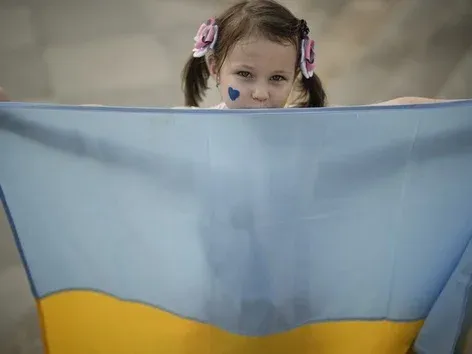
The European Union is discussing a possible extension of temporary protection for Ukrainians, but is simultaneously preparing for a gradual transition to other grounds for residence. Learn more about what changes may be introduced and how this will affect millions of people

European Union member states have begun a new round of discussions regarding a possible extension of temporary protection for Ukrainians who were forced to flee due to the full-scale war. If the decision is approved, the Temporary Protection Directive could remain in effect for a sixth consecutive year. At the same time, officials in Brussels are increasingly emphasizing that the format of this extension could change significantly.
How does temporary protection work in the EU?
The temporary protection mechanism was activated in March 2022 as an emergency response to the mass exodus of people from Ukraine. It allowed millions of Ukrainians to:
legally reside in EU countries
work without additional permits
receive an education
access medical and social services
This served as an alternative to the complex asylum procedure and significantly simplified the integration of Ukrainians in European countries.
In June 2025, member states agreed to extend this mechanism until March 4, 2027.
Don't want to miss important updates and useful articles? Subscribe to our weekly newsletter!
How many Ukrainians are under protection?
According to Eurostat, as of January 31, 2026, 4.38 million people who had left Ukraine were under temporary protection in the EU.
The countries that have taken in the most Ukrainians are:
Germany — 1.26 million
Poland — 965,990
Czech Republic — 397,185
These countries remain key destinations for Ukrainians in Europe.
You can learn more about the amount of assistance for Ukrainians in Germany, Poland, the Czech Republic, the Netherlands, France, Spain and other European countries in 2026 by following the link.
Why is the issue back on the agenda?
Despite the current extension through 2027, the Council of the EU has already approved a plan for a gradual exit from the temporary protection system.
In September 2025, a recommendation on a coordinated transition was adopted, which provides for:
preparation for voluntary return to Ukraine (when it becomes safe)
or transition to other grounds for stay—work, study, or family reunification
However, implementing this plan has proven more difficult than expected.
Earlier, we told you what mistakes most often lead to loss of time or status and how to prepare for changing documents.
What scenarios are currently being discussed?
According to European media reports, EU capitals are considering several options:
1. Full extension for everyone
The simplest political option is to extend protection once again without changes.
2. Limited extension
The mechanism could be narrowed to a so-called “residual status” for:
the most vulnerable categories
of individuals who cannot transition to another type of residence permit
3. Greater autonomy for EU countries
Member states could be allowed to independently determine transition rules and conditions of stay.
The main challenge for the EU
The key challenge is that the temporary mechanism has effectively become long-term. At the same time, Ukrainians’ transition to other types of permits is proceeding slowly; many countries lack clear procedures for changing status, and the rules vary significantly from one country to another.
This complicates the formation of a unified policy at the EU level.
What does this mean for Ukrainians?
Even if a decision on a new extension is adopted, experts advise against relying solely on automatic status renewal.
It is already worth:
checking the possibility of obtaining a work or student residence permit
considering options for family reunification
preparing the necessary documents:
employment contract
proof of income
diplomas and certificates
This approach aligns with the EU Council’s overall strategy for the gradual phasing out of temporary protection.
Currently, the European Union faces a difficult choice: to extend a convenient but temporary mechanism or to transition to a more systematic approach to the integration of Ukrainians.
For Ukrainians themselves, this means one thing—the period of “automatic stability” is gradually coming to an end. And the sooner they start planning for long-term status in the EU, the better their chances of avoiding problems in the future.
If you are planning to switch from temporary protection to a residence permit in the EU, it is important to take into account all the legal nuances before submitting documents. Visit Ukraine's migration lawyers will help you assess your situation, choose the best country, and support the application process to avoid mistakes and delays. This is especially true if you have a non-standard case or want to be sure of the result on the first try.

Please note! European countries are gradually changing their residency rules for Ukrainians, especially for men of draft age. Some countries are introducing additional checks, requiring proof of military status, or subjecting applicants to more complex asylum procedures. Read which countries are tightening their legalization requirements and who this may affect.
Photo: AP/Vadim Ghirda
Want to know more? Read the latest news and useful materials about Ukraine and the world in the News section.
Our recommendation for a safe and comfortable trip:
Visit Ukraine Insurance - insurance for a safe stay abroad without unnecessary expenses;
Green Card - compulsory car insurance for traveling abroad;
Visit Ukraine Tickets - book tickets for buses, trains, and airplanes to/from Ukraine and between cities around the world;
Private Lawyer service - professional legal support on visa and migration issues;
Visit Ukraine Merch - buy patriotic clothing and accessories with worldwide delivery.
© 2018-2026, Visit Ukraine. Use, copying or reprinting of materials on this site is permitted only with a link (hyperlink for online publications) to Visit Ukraine.
All rights reserved.
Recommended articles
2 min
Events
Les célébrations de Pâques en Ukraine en 2026 se déroulent dans un contexte d'état d'urgence et de mesures de sécurité renforcées. Les croyants ont été conseillés sur la façon d'assister aux services religieux où la participation en ligne est autorisée, et quelles restrictions s'appliqueront en raison du couvre-feu. Découvrez comment célébrer la fête en toute sécurité sans enfreindre les règles
24 mars. 2026
More details2 min
Events
Chaque année, le 25 mars, l'Ukraine célèbre la Journée du Service de Sécurité d'Ukraine - une fête professionnelle des personnes qui protègent l'État chaque jour. Découvrez comment le SSU a vu le jour, quel rôle il joue aujourd'hui et pourquoi cette fête est importante pour chaque Ukrainien
25 mars. 2026
More details2 min
Popular
Les prix des billets d'avion en Europe pourraient augmenter considérablement à la fin de l'été en raison de la situation sur le marché du carburant. Découvrez pourquoi easyJet a averti d'une hausse des prix, quelles destinations perdent déjà en popularité et à quoi les passagers peuvent s'attendre
25 mars. 2026
More details2 min
Travel
Magnolias en Transcarpatie 2026 : Quand ont-elles commencé à fleurir et où pouvez-vous les voir ?
Le printemps est arrivé tôt en Transcarpatie cette année—les magnolias, les cerisiers en fleurs et les crocus sont déjà en fleurs dans toute la région. Oujhorod et Mukachevo sont devenus des destinations de choix pour les voyages de printemps. Découvrez où exactement les magnolias fleurissent et ce qui vaut la peine d'être vu en Transcarpatie ce printemps
25 mars. 2026
More details