


.gif)
Ukrainians in the EU Risk Losing Their Status: 10 Mistakes to Avoid When Transitioning from Temporary Protection to a Residence Permit
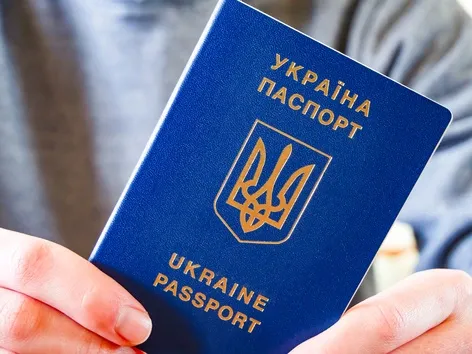
Ukrainians in the EU face risks when transitioning from temporary protection to a residence permit. Find out which mistakes most often lead to delays or loss of status, and how to properly prepare for the change in documentation

Millions of Ukrainians in the European Union will face the need to change their status in the coming years—transitioning from temporary protection to a full-fledged residence permit. And it is at this stage that many lose not only time but also the chance to remain in the country legally.
According to the Office of the UN High Commissioner for Refugees, there are over 4 million Ukrainians with temporary protection in EU countries. Most of them will need to change their status by March 2027. As relocate.to reports, common mistakes are made on a massive scale—and often have serious consequences.
Why is it important not to delay changing your status?
Waiting until the last minute is one of the most common mistakes. If most Ukrainians start submitting documents closer to the deadline, this will overload the systems, create waiting lists of 6–12 months, and risk not being able to process the documents in time. It is best to start preparing 6–9 months before temporary protection expires.
Don't want to miss important updates and useful articles? Subscribe to our weekly newsletter!
Top 10 Mistakes Ukrainians Make When Transitioning to an EU Residence Permit
1. Waiting until the last minute. Delaying automatically puts you in line with thousands of other applicants.
2. Outdated information in official registries. Changing your address, job, or marital status without updating official registries disrupts the continuity of residence. In some countries, this is critical—for example, in Poland, CUKR requires confirmation of 365 days without “gaps.”
3. Incomplete set of documents. The absence of even a single document can lead to the return or rejection of the application.
4. Moving without closing your previous status. Moving to another EU country without canceling your previous status creates a legal conflict and may result in a denial.
5. Dependence on social assistance. For most types of residence permits, you must prove financial independence. If your primary income comes from social benefits, this reduces your chances of a positive decision.
6. Errors in online applications. Systems automatically reject incorrectly filled-out forms. Often without the possibility of appeal.
7. Missed application deadlines. Many countries have strict application “windows.” Missing a deadline means waiting for the next cycle—sometimes more than a year.
8. Lack of a language certificate. For permanent residency in many countries, a B1 level is required. Simply taking a course without passing the exam does not count.
9. Submitting complex cases on your own. Retirees, freelancers, entrepreneurs, or families with mixed immigration statuses face a high risk of rejection without legal support.
10. Informal work. Informal income is not considered in the application. Most programs require a verified employment history and proof of paid taxes.
In most cases, it’s important not to take risks: consulting an immigration lawyer through Visit Ukraine will help assess your case, properly gather documents, and avoid critical mistakes that could cost you your status.

What to do right now: a checklist for Ukrainians in the EU
To avoid wasting time and opportunities, you should act now:
● check the expiration date of your temporary protection;
● update all your information in municipal registries;
● gather a complete set of documents;
● prepare proof of income for the past 1–2 years;
● if necessary, consult a lawyer or an NGO;
● sign up for language courses with certification.
Those who start preparing in advance have a much better chance of obtaining legal status without delays or rejections. At the same time, even a single mistake can result in months of waiting or the loss of the right to stay in the country.
We remind you! European countries are gradually changing residency rules for Ukrainians, especially for men of draft age. Some countries are introducing additional checks, requiring proof of military status, or transferring applicants to more complex asylum procedures. Read which countries are tightening legalization requirements and who this may affect.
Photo: alexkonon / Freepik
Want to know more? Read the latest news and useful materials about Ukraine and the world in the News section.
Our recommendation for a safe and comfortable trip:
Visit Ukraine Insurance - insurance for a safe stay abroad without unnecessary expenses;
Green Card - compulsory car insurance for traveling abroad;
Visit Ukraine Tickets - book tickets for buses, trains, and airplanes to/from Ukraine and between cities around the world;
Private Lawyer service - professional legal support on visa and migration issues;
Visit Ukraine Merch - buy patriotic clothing and accessories with worldwide delivery.
© 2018-2026, Visit Ukraine. Use, copying or reprinting of materials on this site is permitted only with a link (hyperlink for online publications) to Visit Ukraine.
All rights reserved.
Recommended articles
2 min
For refugees
The European Union has already begun discussing future decisions for Ukrainians after the temporary protection expires in 2027. Find out what EU countries plan to discuss, what issues remain open, and how this may affect Ukrainians in Europe
09 Mar. 2026
More details3 min
For refugees
Will Ukrainian pensioners be able to remain in Europe after temporary protection ends in 2027?
After temporary protection ends in 2027, Ukrainian pensioners in the EU will have to switch to other grounds for residence. Find out which countries offer the best chances of staying, what mechanisms already exist, and what you should prepare in advance
11 Mar. 2026
More details2 min
Health
The End of Free Healthcare in the EU? What Will Ukrainians Now Have to Pay for Out of Pocket
The rules for access to medicine for Ukrainians are gradually changing in EU countries. Find out which medical services remain free for refugees in Europe, and which ones you increasingly have to pay for yourself
16 Mar. 2026
More details2 min
For refugees
The status of Ukrainian children in the EU depends on their parents’ legal residence and does not change automatically. Find out if a child can be deported, what will happen after 2027, and how families can retain their right to reside in Europe
17 Mar. 2026
More details