


Has Poland started deporting Ukrainians for traffic offences? Here’s what you need to know
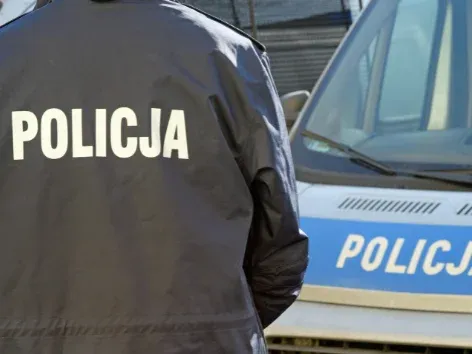
Are you afraid to get behind the wheel in a neighbouring country because of alarming rumours about mass deportations? We’ve looked into the matter in detail to find out whether the Polish authorities really do revoke visas for the slightest traffic offences, or whether this is just an internet scare story. Find out exactly which traffic offences could actually lead to deportation for Ukrainians

Alarming reports have been circulating online: ‘Poland has begun deporting Ukrainian citizens for traffic offences’. Such headlines have caused panic among Ukrainians currently in the country. However, the reality is quite different from what is being portrayed online.
There is no mass deportation for ordinary traffic offences. The rumours arose against the backdrop of a specific, high-profile case in which a foreign national did not merely breach the Highway Code but demonstrated contempt for Polish laws.
What could actually lead to deportation from Poland in 2026?
Polish law does indeed provide for the procedure of forcibly removing a foreigner, but this requires substantial grounds. A simple speeding offence, incorrect parking or accidentally missing a traffic sign will result solely in an administrative fine, just as it would for any Polish citizen.
The grounds for deportation are the recognition of a foreigner as a threat to national security or a breach of public order. In the context of road traffic, this means that a person must either commit a serious offence (for example, driving while heavily intoxicated with serious consequences) or systematically flout the law, leading to court convictions. It is precisely this tougher policy of responding to systematic offences among foreigners that has catalysed the recent high-profile deportations.
A Ukrainian has already been deported from Poland for breaching traffic regulations
The media storm over ‘deportations for traffic offences’ erupted following a high-profile incident that Polish law enforcement authorities decided to deal with as harshly as possible.
The case concerns a Ukrainian blogger who, for the sake of content, drove his car into a strictly protected nature reserve within a national park. The situation was exacerbated by the fact that the offender posted photos and videos of his actions on social media. The incident took place in the city of Oświęcim. The Polish authorities viewed this not as an accidental mistake by the driver, but as a demonstrative and cynical disregard for the country’s laws. The incident caused a huge public outcry; the Polish Ministry of the Interior intervened in the case, after which the offender received an administrative decision ordering his deportation.
Don't want to miss important updates and useful articles? Subscribe to our weekly newsletter!
How the deportation procedure and ban on entry to the Schengen Area work
Polish authorities are now taking a tough and swift approach to foreigners who maliciously violate local laws. The deportation procedure no longer drags on for months.
The case in Oświęcim shows that the process takes a minimum of time. The man was detained on 26 May, and all the bureaucratic formalities, including the processing of documents and escorting, were completed within a single day. On the same day, the offender was taken to the border crossing point in Medyka and handed over to representatives of the State Border Guard Service of Ukraine.
It is important to understand that forced deportation is not simply a return home. In the case described, a severe sanction was imposed on the offender: a ban on re-entry into Poland and all other Schengen countries for a period of 5 years.
Polish law enforcement officials explicitly emphasise that such uncompromising decisions are taken not only to punish a specific individual, but also as a deterrent — to show other foreigners that disregarding the laws of the host country is unacceptable.
Deportation for a fine: should drivers in Poland be worried?
If you are an average driver who has accidentally exceeded the speed limit and received a ticket from a speed camera, you face no consequences other than having to pay the fine. Ordinary administrative offences are not grounds for the revocation of documents or deportation.
However, if a foreigner makes a habit of breaking the rules, refuses to pay fines, receives court sentences for traffic offences, or deliberately disrupts public order for the sake of social media hype — the risk of deportation becomes very real.

Reminder! Many Ukrainians do not plan to emigrate once the war is over, but among those already working in Poland, the mood is different. Find out how many Ukrainians do not want to return home and what factors influence their decision to stay abroad.
Want to know more? Read the latest news and useful materials about Ukraine and the world in the News section.
Our recommendation for a safe and comfortable trip:
Visit Ukraine Insurance - insurance for a safe stay abroad without unnecessary expenses;
Green Card - compulsory car insurance for traveling abroad;
Visit Ukraine Tickets - book tickets for buses, trains, and airplanes to/from Ukraine and between cities around the world;
Private Lawyer service - professional legal support on visa and migration issues;
Visit Ukraine Merch - buy patriotic clothing and accessories with worldwide delivery.
© 2018-2026, Visit Ukraine. Use, copying or reprinting of materials on this site is permitted only with a link (hyperlink for online publications) to Visit Ukraine.
All rights reserved.
Recommended articles
2 min
Work
Lavori altamente qualificati in Polonia per ucraini: dove cercare?
Costruire una carriera all'estero è del tutto possibile, anche se attualmente lavori in un campo non correlato alle tue qualifiche. Le aziende polacche stanno cercando professionisti esperti in IT, finanza e logistica, e un nuovo programma gratuito ti aiuterà a personalizzare il tuo CV e a superare il colloquio. Scopri come candidarti e trovare un ruolo in ufficio
24 mag. 2026
More details2 min
For refugees
L'Europa si sta preparando a deportare un gran numero di ucraini soggetti a coscrizione militare? Il Ministero dell'Interno ha ufficialmente spiegato come funziona la procedura di readmissione e se le autorità ucraine possono avviare il rimpatrio dei rifugiati dalla Germania o da altri paesi dell'UE. Scopri chi decide sulla deportazione e chi ha davvero motivo di preoccuparsi
25 mag. 2026
More details2 min
For refugees
Nuove tariffe per i servizi consolari in Polonia: quanto dovranno pagare gli ucraini
Il costo di elaborazione dei documenti all'estero è aumentato! Sono entrate in vigore le nuove tariffe consolari per gli ucraini. Questo articolo espone i prezzi attuali per il rilascio di passaporti esteri, la redazione di procure, la registrazione dei matrimoni e l'emigrazione per residenza permanente. Scopri quanto costano ora questi servizi e chi ha diritto a concessioni
25 mag. 2026
More details3 min
Education
Student Residency Permits After Age 35: Why Ukrainians in Europe Are Returning to School in Droves
An increasing number of Ukrainians in the EU over the age of 35 view university not only as an opportunity to gain a new profession, but also as a chance to legally remain in Europe after their temporary protection expires. In many countries, a student residence permit grants the right to work, build a career, and eventually transition to long-term residency status. Learn more about how studying in the EU could mark a new chapter in life for Ukrainians in 2026
26 mag. 2026
More details