


Large-scale air traffic disruptions: thousands of flights canceled due to escalation in the Middle East
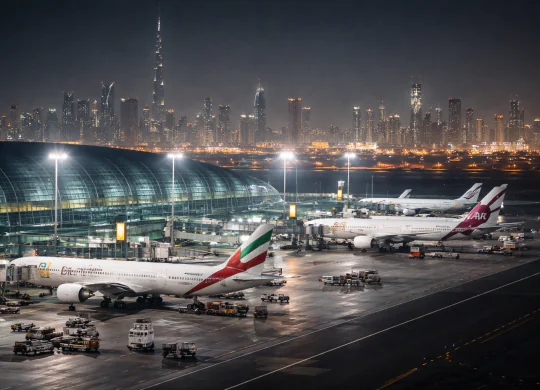
The escalation in the Middle East has caused large-scale disruptions in global aviation: thousands of flights have been canceled, key hubs in the region have been closed, and hundreds of thousands of passengers are stranded. The consequences are already being felt far beyond the region: routes are being changed, flights are being extended, and governments are preparing to evacuate citizens. Find out more about which airports and airlines have been hit hardest and what travelers should do now

On Sunday, March 1, global aviation faced large-scale disruptions after the US and Israeli attacks on Iran. The airspace over Qatar, Iran, and Iraq was temporarily closed, and a number of countries in the region severely restricted flights. As a result, thousands of international flights were canceled, tens of thousands of passengers remained stranded at airports, and global route networks were disrupted.
The key transit hubs, Dubai and Doha, which account for a significant portion of air traffic between Asia, Europe and the Americas, were the most affected. As of March 3, the situation remains tense, and the number of canceled flights continues to grow.
Earlier, we told you that a nationwide transportation strike would take place in Belgium on March 12.

What happened on March 1 and why was the airspace closed?
On March 1, 2026, global aviation was at the center of a major crisis after the US and Israeli attacks on Iran. In response, the region rapidly plunged into escalation, forcing a number of countries to urgently close or significantly restrict their airspace.
Flights over Iran were completely or partially restricted:
- Iran
- Qatar
- Iraq
- United Arab Emirates
- Kuwait
- Bahrain
- Israel
According to CNN, the skies over the region remained almost empty in the hours after the attacks. Most airlines quickly changed their routes or canceled flights entirely.
The situation was complicated by reports of missile and drone strikes on infrastructure in the Gulf region. In particular, according to the FT, the airports of Dubai, Abu Dhabi, Kuwait and Manama were attacked. The attack on Zayed International Airport in Abu Dhabi killed one person and injured seven others.
Key transit hubs such as Dubai and Doha temporarily suspended operations, which immediately triggered a chain reaction in the global route network. With a significant portion of flights between Europe, Asia and the Americas passing through the region, the closure of the skies led to massive re-routes and cancellations around the world.
As of March 3, tensions in the region remain high, and airlines continue to adjust their schedules depending on the security situation.
Don't want to miss important updates and useful articles? Subscribe to our weekly newsletter!
Scale of cancellations: thousands of flights and paralyzed hubs
The consequences of the escalation were felt in the first hours after the airspace was closed. According to the Cirium analytical group, about 2,000 flights were canceled on Saturday alone. Of the 4,000 flights scheduled for Sunday, more than 700 were canceled before Saturday evening. Later, the number of cancelations continued to grow.
As of 5:00 a.m. Kyiv time on Monday, Emirates and Qatar Airways had canceled more than 400 flights together. Two key international hubs were the most affected:
1. Dubai International Airport - the world's busiest international airport
2. Hamad International Airport in Doha
According to FlightAware, more than 600 Emirates flights were canceled at Dubai's main airport. Both hubs temporarily suspended all flights, effectively paralyzing transit between Europe, Asia, and America.
Other regional airports that experienced disruptions include:
1. Ben Gurion Airport in Tel Aviv
2. King Abdulaziz International Airport in Jeddah
The Indian airline IndiGo should be mentioned separately - it was the most affected carrier outside the Middle East due to its active presence in Dubai, Doha and Jeddah.
According to industry experts, millions of passengers were affected during the first week of the escalation. The closure of the world's largest transit hub for international travelers has caused a serious disruption to the global aviation system, the effects of which may be felt for several days even after the skies are fully opened.
Which airlines were affected the most?
Carriers whose business model is based on transit through the Gulf hubs have been hit the hardest. For them, the closure of the airspace meant not just delays, but a complete disruption of the route network and crew rotation.
Emirates
Emirates suspended all flights until Monday afternoon local time. More than 600 flights were canceled at Dubai International Airport. Passengers were allowed to rebook free of charge within 20 days of the original departure date, but this did not reduce the burden on contact centers and ground services.
Qatar Airways
Qatar Airways announced the resumption of flights only after the official opening of Qatar's airspace. Due to the closure of the skies over Doha, the carrier was forced to cancel flights en masse, which seriously affected connecting routes between Europe and Asia.
Etihad
Etihad also suspended all flights to and from its base in Abu Dhabi. Given the company's role in regional and intercontinental transit, this has put additional strain on alternative routes.
IndiGo
India's IndiGo was the most affected carrier outside the Middle East. Due to active flights to Dubai, Jeddah, and Doha, the company was forced to cancel flights en masse and change routes.
European airlines
European carriers also responded quickly:
1. Lufthansa suspended flights to and from Dubai until March 4, and to Tel Aviv, Beirut, Amman, Erbil, Dammam, and Tehran until March 8.
2. British Airways canceled flights to Tel Aviv and Bahrain until March 4.
3. Air France has also canceled flights to the region.
Even the airlines that did not completely cancel flights were forced to significantly change their routes, flying around the danger zones. This resulted in longer flight times and higher fuel costs.
In our previous article, we told you that popular low-cost airlines Ryanair and Wizz Air were among the outsiders in the 2026 passenger satisfaction rating.
Why this is affecting the whole world: the role of the Middle East in global transit
The Middle East is one of the world's major transit hubs: Dubai, Doha, and Abu Dhabi are the hubs for a significant portion of flights between Europe, Asia, Australia, and North America. The business model of the Gulf airlines is based on connecting flights, so the closure of the airspace instantly disrupted global route networks.
Aircraft and crews were stranded outside their bases, transit passengers were stuck in hubs, and airlines around the world were forced to change routes, flying around dangerous areas. This lengthens flight times, increases costs, and causes a chain reaction in international aviation even after the skies are partially reopened.
Security situation and travelers' recommendations
The situation in the region remains tense. There have been reports of missile and drone strikes on airports in Dubai, Abu Dhabi, Kuwait, and Manama. A strike on Zayed International Airport in Abu Dhabi killed one person and injured seven others. The US Embassy in Bahrain recommended that citizens avoid hotels in Manama after reports of an attack on the Crowne Plaza.
Travelers are advised to regularly check flight status directly on the websites of airlines and airports, not to go to the airport without confirming their departure, and to use the possibility of free rebooking, if available. In a number of countries, governments are already preparing evacuation measures for their citizens. Due to the unstable security situation, schedule changes may occur even within a few hours.
You can conveniently purchase tickets for all types of transport in Ukraine and abroad through the ticket booking system on Visit Ukraine — the service allows you to quickly select a route, check the schedule, and plan transfers without any hassle.

We remind you! Ukrzaliznytsia is introducing dynamic pricing for SV premium cars and 1st class Intercity+. Read how ticket prices will change depending on the season, day of the week, demand, and date of purchase.
Want to know more? Read the latest news and useful materials about Ukraine and the world in the News section.
Our recommendation for a safe and comfortable trip:
Visit Ukraine Insurance - insurance for a safe stay abroad without unnecessary expenses;
Green Card - compulsory car insurance for traveling abroad;
Visit Ukraine Tickets - book tickets for buses, trains, and airplanes to/from Ukraine and between cities around the world;
Private Lawyer service - professional legal support on visa and migration issues;
Visit Ukraine Merch - buy patriotic clothing and accessories with worldwide delivery.
© 2018-2026, Visit Ukraine. Use, copying or reprinting of materials on this site is permitted only with a link (hyperlink for online publications) to Visit Ukraine.
All rights reserved.
Recommended articles
1 min
Transport
Strajk w Belgii 12 marca: Lotnisko w Brukseli ostrzega przed masowymi odwołaniami lotów
Ogólnokrajowy strajk transportowy odbędzie się w Belgii 12 marca, wpływając na lotnisko w Brukseli. Dowiedz się, jakich zakłóceń się spodziewać, czy loty zostaną odwołane i jak przygotować się na zmiany w swoich planach podróży
01 mar. 2026
More details2 min
Transport
Lotnisko Boryspil jest gotowe do otwarcia: kiedy loty mogą wznowić
Ukraina stopniowo przygotowuje się do wznowienia pełnego ruchu lotniczego, a główny węzeł lotniczy kraju już ogłosił, że jest w pełni technicznie gotowy do uruchomienia lotów. Dowiedz się, w jakich warunkach Boryspil będzie mógł przyjąć pierwsze loty i jak szybko samoloty pojawią się ponownie na ukraińskim niebie
26 lut. 2026
More details2 min
Transport
New direct train to connect Malmö, Gothenburg and Oslo this summer
Scandinavia will become even more accessible to travelers this summer. A new direct train will connect Malmö, the west coast of Sweden and the Norwegian capital Oslo with daily services. Find out more about the schedule, stops and ticket prices
27 lut. 2026
More details2 min
Popular
Ryanair i Wizz Air wśród outsiderów: ocena satysfakcji pasażerów 2026
Popularne tanie linie lotnicze Ryanair i Wizz Air są wśród outsiderów w ocenie satysfakcji pasażerów 2026. Dowiedz się, kto otrzymał najwyższe oceny i dlaczego podróżni coraz bardziej irytują się dodatkowymi opłatami
03 mar. 2026
More details