


.gif)
Eurozone 2026: Which European countries will accept the euro?
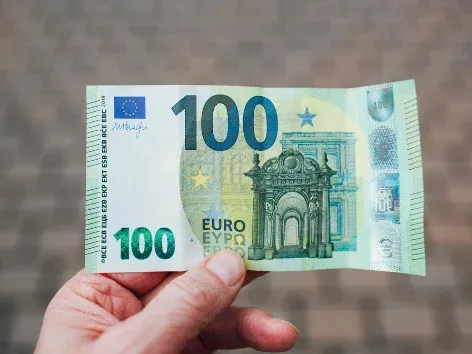
Europe’s financial borders have changed in 2026. Bulgaria has officially adopted the euro, but many EU countries still retain their national currencies. To avoid losing money on currency conversion and to plan your travel budget properly, it is important to know the current composition of the Eurozone. Find out which countries accept the euro and where you will still need the local currency

Whether travelling across the continent, going on a business trip or moving to another country, a clear understanding of the local financial system is essential. The single European currency greatly simplifies logistics by eliminating unnecessary currency conversion fees; however, not all of Europe has adopted the euro. In 2026, the currency bloc expanded, and the financial landscape underwent significant changes.
Which countries are part of the Eurozone in 2026
Today, the euro is the sole official currency of twenty-one European Union member states. The historical core of the Eurozone, which took shape in the early 2000s, comprises Austria, Belgium, Germany, Greece, Ireland, Spain, Italy, Luxembourg, the Netherlands, Portugal, Finland and France.
Gradually, the monetary union expanded eastwards and southwards. Subsequently, Slovenia, Cyprus, Malta, Slovakia, Estonia, Latvia, Lithuania and Croatia replaced their national currencies with the euro, with Croatia making the transition in 2023. Bulgaria became the newest member of the European financial family, bringing the total number of member countries to twenty-one.
Bulgaria in the Eurozone?
Yes, on 1 January 2026, Bulgaria officially became the 21st member of the Eurozone. This event was the culmination of lengthy preparations and rigorous economic reforms. The Bulgarian lev, which for many years had been pegged to the euro at a fixed exchange rate, began to be phased out of circulation.
For tourists and businesses, this transition means maximum convenience when making payments. There is no longer any need to look for currency exchange offices upon arrival in Sofia or at Black Sea resorts. Throughout 2026, a transitional dual pricing regulation (in levs and euros) is in force in the country; however, cashless payments and cash withdrawals from ATMs are now carried out exclusively in the single European currency.
Where is the euro accepted, apart from Eurozone countries
The European currency has the status of legal tender outside the EU as well. First and foremost, these are microstates that have integrated their economies with their neighbours on the basis of special bilateral agreements. These include Andorra, Monaco, San Marino and the Vatican. These microstates have the legal right not only to use the euro but also to mint their own coins, which often end up in the hands of numismatists.
There are also countries that have decided to use the euro unilaterally, without official EU membership or agreements with the European Central Bank. Montenegro and Kosovo have completely abandoned their own currencies in favour of the euro to stabilise their economies. Therefore, when travelling to these Balkan countries, you won’t need to buy local currency — it simply isn’t available there.
Don't want to miss important updates and useful materials? Subscribe to our weekly newsletter!
In which EU countries is local currency required
It is a mistake to assume that holding a Schengen visa or a country’s status within the European Union automatically means the euro is in circulation. A number of major European states retain financial autonomy.
In Central and Eastern Europe, you will need local currency to pay for purchases. In Poland, payments are made in zlotys; in the Czech Republic, in Czech korunas; in Hungary, the forint is in circulation; and in Romania, the Romanian leu. And although some of these countries are considering the possibility of switching to the single currency in the future, in 2026 you will still need a currency exchange bureau or a bank card with a favourable exchange rate.
The Scandinavian EU countries have also remained true to their traditions. Sweden retains the Swedish krona, whilst Denmark, even at the time of signing the Maastricht Treaty, legally secured the right not to introduce the euro and continues to use the Danish krone. It goes without saying that in European countries outside the EU (such as the UK, Switzerland or Norway), transactions are also conducted exclusively in national currencies.
Reminder! There are currently several ways to transfer funds to Ukraine from abroad. These include transfers using an IBAN number, international transfer systems and card-to-card transfers. Find out which payment systems are most popular among Ukrainians abroad and how to transfer funds using each of them.
Want to know more? Read the latest news and useful materials about Ukraine and the world in the News section.
Our recommendation for a safe and comfortable trip:
Visit Ukraine Insurance - insurance for a safe stay abroad without unnecessary expenses;
Green Card - compulsory car insurance for traveling abroad;
Visit Ukraine Tickets - book tickets for buses, trains, and airplanes to/from Ukraine and between cities around the world;
Private Lawyer service - professional legal support on visa and migration issues;
Visit Ukraine Merch - buy patriotic clothing and accessories with worldwide delivery.
© 2018-2026, Visit Ukraine. Use, copying or reprinting of materials on this site is permitted only with a link (hyperlink for online publications) to Visit Ukraine.
All rights reserved.
Recommended articles
3 min
Finance
Pensions in Poland for Ukrainians in 2026: Who Is Eligible and How to Receive Benefits
Poland remains one of the key destinations for Ukrainians working abroad, so the issue of pensions is becoming increasingly relevant. As of 2026, clear rules apply: work experience in both countries is taken into account, and benefits may be calculated separately. Learn more about who is eligible for a pension in Poland and how to apply for it
26 Apr. 2026
More details2 min
Finance
How to Enter Ukraine: Money, Cards, Cash and Currency Rules for Tourists
The financial system of Ukraine in 2026 combines modern cashless payments and the need to have cash due to war realities. Find out what currency is used in Ukraine, whether foreign cards work, how to withdraw money, what limits apply, and how to avoid unnecessary fees while traveling
26 Apr. 2026
More details2 min
For refugees
Germany tightens rules: Ukrainians may lose benefits for refusing work
Germany has tightened the rules for recipients of social assistance. Now, Ukrainians under temporary protection may lose their benefits after just one refusal to work. Find out how the rules are changing and who is affected
27 Apr. 2026
More details3 min
Finance
Which European countries will have the highest business taxes in 2026: current rates
European countries vary significantly in terms of the tax burden on businesses, ranging from 9% to 35%. The highest rates are found in Malta, while Hungary remains one of the most tax-friendly destinations. Learn more about where in Europe businesses pay the highest taxes and how rates are changing
09 May. 2026
More details