


Salarios en Europa en 2026: ¿dónde se paga más?
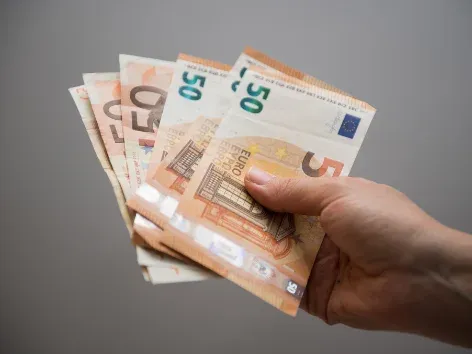
Las últimas cifras de 2026 revelan los ingresos reales de los europeos. Los líderes nominales están perdiendo terreno frente a países con un costo de vida más bajo, y los impuestos marcan la diferencia. Descubre qué países pagan más cuando se tiene en cuenta el poder adquisitivo

The European labour market in 2026 continues to show significant economic disparities. According to the latest report by the Organisation for Economic Co-operation and Development (OECD), ‘Taxation of Wages’, the gap between the wealthiest and developing countries on the continent remains vast. The annual pre-tax earnings of full-time workers range from a modest €18,590 in Turkey to a substantial €107,487 in Switzerland. The study covered 27 countries, including 22 EU member states, clearly demonstrating that geographical location continues to be a major determinant of citizens’ financial well-being.
Want to work abroad but don’t know where to start?
Consult the employment lawyers at Visit Ukraine!

What will the average salary in Europe be in 2026?
Looking at the overall picture across the continent, the average figures show a marked disparity. Switzerland has cemented its status as the clear leader, becoming the only European country where the average annual income has comfortably surpassed the €100,000 mark. At the other end of the scale are the countries of South-Eastern Europe and some Baltic states, where annual salaries barely exceed the €20,000 mark. It is important to note that all the figures given are calculated before tax (gross).
Which countries have the highest salaries in Europe?
Iceland has firmly taken second place in the pan-European ranking after Switzerland, with an average of €85,950 per year. Rounding out the top three is Luxembourg, which holds the undisputed top spot among European Union countries with an average of €77,844. High positions are traditionally held by the countries of Northern Europe and the Benelux: in Denmark, the average salary stands at €71,961, in the Netherlands at €69,028, and in Norway at €68,420.
As for the key drivers of the European economy, Germany offers the most attractive conditions, with an average salary of €66,700. The UK is hot on its heels with a figure of €65,340. Other major players in the eurozone show significantly more modest figures. In France, the average annual salary is €45,964, in Italy €36,594, and in Spain, professionals earn an average of €32,678 per year.
Don't want to miss important updates and useful articles? Subscribe to our weekly newsletter!
Which country has the lowest salaries in the EU?
The lowest salaries among EU countries are recorded in Slovakia, where the average annual income is €19,590. A significant number of Central and Eastern European countries fall into the category of states with average salaries below €30,000 per year.
These include Hungary (€21,257), Latvia (€21,321) and the Czech Republic (€23,685). Slightly ahead of them are Portugal, with an average of €24,254, and Poland, where workers earn around €24,490. Bringing up the rear in the list of countries with incomes below thirty thousand are Estonia (€25,603), Greece (€26,563) and Lithuania (€28,474).
Real wages in Europe
Nominal income figures do not always reflect real well-being, as purchasing power depends directly on local price levels. When salaries are adjusted for purchasing power parity (PPP), the gap between European countries narrows significantly. In this measure, annual incomes range from €38,118 in Slovakia to €106,532 in Switzerland (which retains its lead here too).
Interestingly, thanks to the relatively low cost of domestic goods and services, Turkey showed the biggest jump in the purchasing power ranking, rising from last place straight to 18th position. Germany improved its position by five places, moving from seventh to second (93,985 PPP). At the same time, countries with a high cost of living lost ground: Iceland dropped from second to ninth place, and Estonia slipped from 20th to 25th position.
Why are wages in Europe so different?
Experts from the International Labour Organisation attribute this significant income inequality to three fundamental reasons. First and foremost, labour productivity and the structure of the national economy play a huge role: countries with developed finance, high-tech and innovation sectors generate greater added value. The second factor is the strength of trade unions and the development of collective bargaining systems, which effectively protect workers’ rights. Finally, local prices and the specifics of fiscal policy have an impact. Tax rates across European countries vary drastically, so the net income remaining with employees can differ significantly from the nominal figure.
Finding employment abroad is a significant step that requires a thorough understanding of international and local legislation. To minimise risks, apply for work visas correctly, obtain a residence permit and protect your rights against a foreign employer, seek professional assistance.
A team of qualified lawyers from Visit Ukraine provides comprehensive legal support on matters of legal employment and migration to European countries.
Entrust the paperwork to the experts and be confident in your successful future!
Please note! In Germany, almost one in five residents falls into the very low-income category, whilst only a small percentage of the population earns truly high salaries. In 2026, the country’s authorities are actively discussing tax reform and new approaches to supporting the middle class. Find out more about which salaries are considered high and low in Germany and how much the country’s residents actually earn.
Want to know more? Read the latest news and useful materials about Ukraine and the world in the News section.
We recommend purchasing it for a safe and comfortable trip to Ukraine:
Visit Ukraine Insurance – insurance covering military risks for entry and travel in Ukraine;
Visit Ukraine Car Insurance – car insurance with extended coverage in Ukraine;
Visit Ukraine Legal Advice – comprehensive legal support on entry to Ukraine;
Visit Ukraine Tickets – bus and train tickets to/from Ukraine;
Visit Ukraine Tours – the largest online database of tours to Ukraine for every taste;
Visit Ukraine Hotels – hotels for a comfortable stay in Ukraine;
Visit Ukraine Merch – patriotic clothing and accessories with worldwide delivery.
© 2018-2026, Visit Ukraine. Use, copying or reprinting of materials on this site is permitted only with a link (hyperlink for online publications) to Visit Ukraine.
All rights reserved.
Recommended articles
2 min
For foreigners in UA
Las empresas ucranianas enfrentan una escasez de mano de obra, por lo que las compañías están teniendo que reclutar trabajadores de otros países. Descubre si hay una escasez de mano de obra en Ucrania y si debemos esperar un aflujo masivo de migrantes de Asia
11 may.. 2026
More details2 min
Work
Polonia ha comenzado a revocar las licencias de médicos de países no pertenecientes a la UE debido a nuevos requisitos de idioma. Descubre por qué los profesionales médicos ucranianos están perdiendo su derecho a ejercer y qué se requiere para que sus calificaciones sean recertificadas
13 may.. 2026
More details2 min
Work
Salarios en Alemania en 2026: ¿Cuánto necesitas ganar para vivir cómodamente?
En Alemania, casi uno de cada cinco residentes se encuentra en la categoría de ingresos muy bajos, mientras que solo un pequeño porcentaje de la población gana salarios realmente altos. En 2026, el gobierno del país está discutiendo activamente la reforma fiscal y nuevos enfoques para apoyar a la clase media. Aprende más sobre lo que constituyen los salarios altos y bajos en Alemania y cuánto ganan realmente los residentes del país
14 may.. 2026
More details3 min
Work
Trabajar los fines de semana en Europa: Cuántos europeos trabajan los sábados y domingos
El mercado laboral europeo se caracteriza por contrastes significativos en los enfoques hacia los horarios de trabajo: en algunos países, casi la mitad de la fuerza laboral trabaja los sábados y domingos, mientras que en otros, esta cifra apenas alcanza unos pocos por ciento. La brecha varía según la región, el tipo de empleo y la industria. Aprende más sobre cuántos europeos trabajan los fines de semana y cómo el continente se está moviendo hacia una semana laboral más corta
14 may.. 2026
More details