


.gif)
The status of Ukrainians in the EU after 2027: what changes are expected and how to prepare in advance
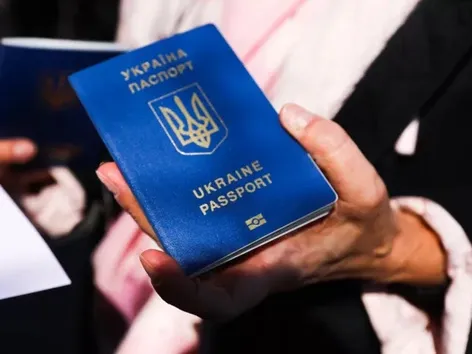
Temporary protection for Ukrainians in the EU will only be valid until 2027. Find out what options will be available after this date and why it is worth starting to prepare for the change in status now

Millions of Ukrainians who fled to European Union countries after the start of the full-scale war are currently living there under temporary protection. However, this mechanism has clear time limits. The EU has already officially announced that the extension of temporary protection until March 4, 2027, is final. This means that after this date, the legal status of Ukrainians in Europe will change, and it is worth preparing for this in advance.
Temporary protection in the EU: what is currently in effect
The temporary protection mechanism has allowed Ukrainians to legally reside in EU countries and gain access to the labor market, education, healthcare, and social support without going through complicated migration procedures. It is thanks to this status that millions of people have been able to quickly adapt to life abroad.
As of today, approximately 4.3 million Ukrainians are under temporary protection in EU countries, almost 30% of whom are children. The largest Ukrainian communities have formed in Germany, Poland, the Czech Republic, and Spain. At the same time, the total number of Ukrainians in the EU continues to grow, but there is a redistribution between countries — in some states, their numbers are decreasing.
What will change after March 4, 2027
European institutions have already made it clear that after 2027, the temporary protection mechanism for Ukrainians will cease to exist. This means that the automatic right to reside will disappear, and everyone will have to make an individual decision regarding their further stay in the EU.
After the temporary protection expires, Ukrainians will have two main options:
● apply for a national residence permit in the country where they actually live;
● voluntarily return to Ukraine.
There will be no one-size-fits-all solution — the conditions for legalization will depend on the legislation of the specific country, the grounds for residence, the level of integration, and personal circumstances.
Don't want to miss important updates and useful articles? Subscribe to our weekly newsletter!
National residence permits: what to consider
Applying for a national residence permit is a full-fledged migration procedure. It may involve employment, education, family reunification, starting a business, or other legal grounds for long-term stay.
Requirements vary from country to country within the EU: in some places, the key factors are a stable income and a contract with an employer, while in others, it is proof of accommodation, language skills, or integration courses. It is important to understand that after 2027, the transition from temporary protection to national status will most likely not be automatic — you need to prepare for this in advance.
Why you should start preparing now
Although there is still time until 2027, postponing preparation is risky. The change in status will affect millions of people at once, which means a heavy workload for migration services and possible delays in processing documents.
Early preparation allows you to:
● assess your chances of legalization in a particular country;
● understand what documents you need to collect;
● change the basis for your stay if necessary (for example, from temporary protection to work or study);
● avoid a situation of illegal stay after the status expires.
Legal assistance for legalization in the EU
Issues related to changing status and legalizing residence in European Union countries often require professional support. On the Visit Ukraine platform, Ukrainians can obtain the services of immigration lawyers who help them understand the rules of legalization in any EU country. Specialists advise on choosing the optimal basis for residence, preparing documents, employment, and other legal nuances that are becoming particularly important in the run-up to 2027.

We remind you! European countries are gradually revising their approach to supporting Ukrainians, changing the rules of social assistance and conditions of stay. What was considered standard state support just a few years ago is now increasingly being restricted or transformed. Read more about which countries are tightening conditions for Ukrainians and what to consider before moving.
Photo: getty images
Want to know more? Read the latest news and useful materials about Ukraine and the world in the News section.
Our recommendation for a safe and comfortable trip:
Visit Ukraine Insurance - insurance for a safe stay abroad without unnecessary expenses;
Green Card - compulsory car insurance for traveling abroad;
Visit Ukraine Tickets - book tickets for buses, trains, and airplanes to/from Ukraine and between cities around the world;
Private Lawyer service - professional legal support on visa and migration issues;
Visit Ukraine Merch - buy patriotic clothing and accessories with worldwide delivery.
© 2018-2026, Visit Ukraine. Use, copying or reprinting of materials on this site is permitted only with a link (hyperlink for online publications) to Visit Ukraine.
All rights reserved.
Recommended articles
1 min
Popular
Do I need a parent's permission for my child to travel abroad in 2026?
In times of war, many mothers or other family members try to take their children abroad. However, there are situations when the father is not around and cannot give his consent to the child's departure in writing. Find out if this document is needed for a child to cross the border without any problems in 2026
21 Jan. 2026
More details2 min
For refugees
Extension of tolerance visas in the Czech Republic: online registration starts on January 8, 2026
The Czech Republic has officially confirmed the dates for the extension of tolerance visas and temporary protection in 2026. Find out when online registration starts, how to book a visit, and what you need to extend your status
08 Jan. 2026
More details2 min
For refugees
Poland has set the end date for temporary protection for Ukrainians as March 4, 2026. Read on to find out what will happen to PESEL UKR status, what legalization options will remain, and how to prepare for the new residence rules
09 Jan. 2026
More details1 min
For refugees
Canada simplifies family reunification scheme for Ukrainians: details
Canada is expanding opportunities for Ukrainian families already in the country by simplifying the rules for legal residence and access to work and study. New government decisions give more time to adapt and wait for immigration decisions after the closure of emergency programmes. Find out who can take advantage of the updated conditions, which statuses can be extended, and until what date Ukrainians will be able to legally live in Canada
20 Jan. 2026
More details