


.gif)
The EU has created a list of ‘safe countries’: what does this mean and who does it apply to?
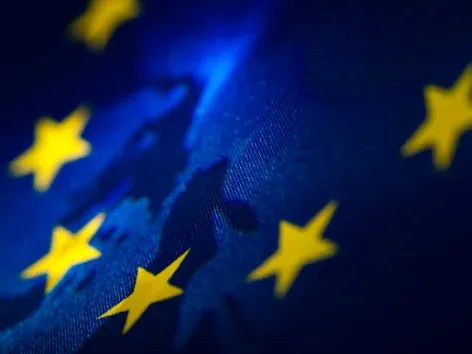
The European Union is changing the rules of the game in the field of asylum and introducing a new mechanism for filtering migrants. Now, some applicants will be considered under an accelerated procedure, and the chance of receiving protection will be lower already at the stage of submitting documents. The new system directly affects the timing of case consideration and the likelihood of rejection. Find out how the list of ‘safe countries’ works and what it means for foreigners in the EU

The European Union continues to reform its migration system and strengthen its approach to asylum applications. On 10 February, the European Parliament supported changes to the rules that should speed up procedures and reduce the number of unfounded applications. A key innovation was the creation of a pan-European list of so-called safe countries of origin.
The decision was supported by 408 MEPs, opposed by 184, and 60 abstained.
What is a ‘safe country’?
The EU is now officially enshrining the principle that if a country is considered safe, its citizens do not, by default, need international protection.
This means that:
▪️ asylum applications will be processed on an expedited basis;
▪️ the likelihood of rejection increases significantly;
▪️ the burden of proof is shifted to the applicant.
The person must prove that they personally face persecution, torture, discrimination or serious danger upon return.
Who will be affected by the new rules
The initial list includes: Bangladesh, Colombia, Egypt, Kosovo, India, Morocco and Tunisia.
In addition, countries that are candidates for EU membership can automatically be considered safe if there is no large-scale violence or systematic human rights violations.
If a citizen of one of these countries applies for asylum, their application will be considered under an accelerated procedure, and rejection is the most likely outcome.
The concept of a ‘safe third country’
At the same time, the EU has expanded the application of another mechanism — safe third country.
This means that an asylum seeker may be sent not to their own country, but to the country through which they travelled and where they could have sought protection.
This option is possible if:
▪️ the person has a connection to the country (family, residence, language, culture);
▪️ they travelled through it on their way to the EU;
▪️ the EU has an agreement with that country.
The exception only applies to unaccompanied minors.
Don't want to miss important updates and useful articles? Subscribe to our weekly newsletter!
What will change in practice
The European Union wants to reduce the burden on the asylum system and filter out applications that are considered economic migration rather than escape from persecution more quickly.
The European Commission will regularly review the list. If the situation worsens, the country may be temporarily recognised as unsafe or completely excluded.
At the same time, Member States retain the right to supplement the list at national level.
Why are they doing this
According to European politicians, the new system will allow unfounded applications to be rejected more quickly and reduce waiting times for decisions. The EU believes that the procedures are currently overloaded and often misused.
In fact, Europe is moving towards a model where asylum is only for those who are genuinely fleeing danger, not for anyone who wants to move.
Who might be indirectly affected
Although the decision is aimed at citizens of specific countries, other migrants will also feel the consequences:
▪️ it will become more difficult to enter the EU through ‘transit asylum’;
▪️ the number of refusals will increase;
▪️ there will be more deportations through third countries;
▪️ border controls will increase.
The reform is part of a large package of migration changes that the EU plans to implement in the coming years.
When planning a trip to Germany or another EU country, it is worth taking care of medical insurance in advance. For Ukrainians traveling abroad, the Visit Ukraine platform offers online medical insurance, which allows you to avoid additional risks and meet the requirements of the host countries.

Reminder! The Czech Republic is tightening the conditions for Ukrainians to obtain long-term residence and is focusing on economic independence. Find out what new requirements the government is setting and who will be eligible for special status.
Want to know more? Read the latest news and useful materials about Ukraine and the world in the News section.
Our recommendation for a safe and comfortable trip:
Visit Ukraine Insurance - insurance for a safe stay abroad without unnecessary expenses;
Green Card - compulsory car insurance for traveling abroad;
Visit Ukraine Tickets - book tickets for buses, trains, and airplanes to/from Ukraine and between cities around the world;
Private Lawyer service - professional legal support on visa and migration issues;
Visit Ukraine Merch - buy patriotic clothing and accessories with worldwide delivery.
© 2018-2026, Visit Ukraine. Use, copying or reprinting of materials on this site is permitted only with a link (hyperlink for online publications) to Visit Ukraine.
All rights reserved.
Recommended articles
2 min
Travel
Top 10 budget destinations for vacations in 2026: where to go in Europe on a budget
In 2026, tourists are looking for ways to relax in Europe without spending a fortune. Find out which 10 destinations have become the most affordable for budget vacations and how much a trip to each of them will cost
21 Feb. 2026
More details1 min
Popular
The number of Ukrainians with temporary protection in EU countries continues to grow. Find out which countries have the most refugees, where the highest growth has been recorded, and what is the concentration of Ukrainians per thousand population
21 Feb. 2026
More details2 min
For refugees
The Czech Republic is tightening the conditions for Ukrainians to obtain long-term residence and is placing an emphasis on economic self-sufficiency. Find out what new requirements the government is setting and who will be eligible for special status
21 Feb. 2026
More details2 min
Emigration
Many Ukrainians in Poland are looking for a way to settle in the country after their temporary protection expires and are considering starting their own business as a way to legalise their status. But does registering a JDG really lead to a residence permit, or is it just the first step in a more complicated procedure? Find out if a JDG will help you transition from UKR status to a residence card in 2026
20 Feb. 2026
More details