


.gif)
Will Ukrainian pensioners be able to remain in Europe after temporary protection ends in 2027?
- What will be the main issue after the end of temporary protection?
- Germany: more humanitarian opportunities for older people
- Poland: the clearest transition mechanism for Ukrainians
- Czech Republic: an opportunity for the self-sufficient, more difficult for the vulnerable
- What should Ukrainian pensioners do now?

After temporary protection ends in 2027, Ukrainian pensioners in the EU will have to switch to other grounds for residence. Find out which countries offer the best chances of staying, what mechanisms already exist, and what you should prepare in advance

After March 4, 2027, temporary protection for Ukrainians in EU countries will end. For people of retirement age, this does not mean automatic loss of residence rights, but their future status will depend on their country of residence, health status, level of integration, and the legal route they choose. That is why the question of the future for Ukrainian pensioners in Europe is already becoming practical rather than theoretical. This is written about by relocate.to.
What will be the main issue after the end of temporary protection?
The European Commission is already talking about a coordinated exit from the temporary protection regime. This means that states should not wait until spring 2027, but should prepare other legal grounds for Ukrainians to stay in advance: national long-term status, family grounds, employment routes, or humanitarian permits.
For older people, it is not the fact of reaching retirement age that is decisive, but a combination of circumstances. First and foremost, these are health status, the need for treatment or care, and the inability to return safely to Ukraine. The second important factor is integration: length of residence, availability of housing, family, social and medical ties, participation in community life, and knowledge of the language. The third factor is the country of residence, as it determines whether there is a real “bridge” after temporary protection.
Germany: more humanitarian opportunities for older people
Germany remains one of the countries where there are more options open to Ukrainians of retirement age than might appear. Permits under §24 AufenthG for Ukrainians have been extended until March 4, 2027, and this time can be used not only to wait, but also to prepare for the next step.
A special rule applies to certain employment paths: a person aged 45 or older who is receiving a residence permit for work for the first time must usually show a gross annual salary of at least €55,770 or confirm that they have adequate pension provisions. However, this rule applies specifically to the career path for qualified specialists, not to humanitarian or integration permits.
This is why the humanitarian provisions of §25(4) and §25(5) AufenthG are particularly important for older Ukrainians in Germany. They allow a residence permit to be granted if departure would be exceptionally harsh or virtually impossible. For pensioners, this may apply to serious illness, dependence on care, the need for treatment, occupation of their home region, lack of housing or a safe place to return to.
The mechanism of exceptional hardship under §23a AufenthG is also important. It is not widespread, but it can be critically important for vulnerable older people.
Another tool is §25b AufenthG for cases of permanent integration. Here, the length of stay, social ties, language, and participation in the life of the country are important. At the same time, some of the requirements may not apply if a person is unable to meet them due to illness, disability, or old age.
It is also important that there is a relatively strong social support system in Germany for elderly people with low incomes. If income is insufficient, Sozialhilfe can be applied for through the Sozialamt. This does not mean an automatic right to a German pension, but it does mean that a person with legal status is not left without systemic support.
Don't want to miss important updates and useful articles? Subscribe to our weekly newsletter!
Poland: the clearest transition mechanism for Ukrainians
If we are talking not about humanitarian exceptions, but about a technically understandable administrative transition, Poland looks like one of the strongest options. For Ukrainians with PESEL UKR status, there is a transition to a CUKR residence card, which is valid for three years. Applications are submitted electronically only through a special MOS portal.
However, the card is not issued automatically. The person must meet several conditions: be a citizen of Ukraine or a family member of such a citizen, have legal residence in connection with temporary protection, have UKR status as of June 4, 2025, and on the day of application, as well as continuously maintain this status for at least 365 days.
That is why Poland seems realistic for Ukrainian pensioners not because of their age as such, but because of the existence of a separate transitional status for a large group of people. For many, this is easier than going through a complicated humanitarian procedure.
At the same time, the right to reside should not be confused with the right to a Polish pension. A Polish pension or simultaneous receipt of Polish and Ukrainian pensions is possible when a person has insurance periods in both countries and meets the conditions for the appointment of payments in each of them. This is not a universal supplement for all Ukrainian pensioners, but a separate procedure within the framework of the social security agreement between Poland and Ukraine.
It is also important to note that Poland pays special attention to vulnerable groups in its support system. Pensioners are explicitly mentioned among the categories that can stay longer in collective accommodation centers.
Czech Republic: an opportunity for the self-sufficient, more difficult for the vulnerable
For several years now, the Czech Republic has been offering Ukrainians not only an extension of temporary protection, but also a transition to a longer stay. The main instrument here is a special long-term residence permit for people with temporary protection. However, this mechanism is primarily intended for economically self-sufficient individuals.
This is where pensioners need to make a sober assessment. If a person has a stable Ukrainian pension, family support, housing, does not depend on humanitarian payments, and can document their self-sufficiency, the Czech Republic may be a good option. But if a person has limited resources, needs constant care, or lives mainly on assistance, the Czech route becomes much more difficult.
At the same time, humanitarian instruments remain. If a person cannot return to Ukraine due to a real threat, shelling, occupation, or lack of access to medical treatment, they can apply for international protection or subsidiary protection.
There is also a category of difficult circumstances for those who are physically unable to leave due to age, illness, or lack of documents. These cases are considered individually and do not require mandatory proof of income.
What should Ukrainian pensioners do now?
The main mistake is to wait for 2027 without preparation. Right now, you need to collect all documents confirming your life in the country of residence: medical certificates, treatment documents, language certificates, confirmation of social and family ties, housing leases, volunteer activities, or other involvement in the community.
If returning to Ukraine is dangerous or virtually impossible, these reasons must be recorded in writing: occupation, lack of housing, need for medical treatment or constant care, lack of relatives who can take the person in after their return.
In such situations, timely legal advice is especially important. Visit Ukraine's migration lawyers can help you assess which path after temporary protection is realistic in a particular country, which documents you should prepare now, and how not to lose your chance for legal residence after 2027.

We remind you! The European Union has already begun discussing future decisions for Ukrainians after the end of temporary protection in 2027. Read what exactly the EU countries plan to discuss, what issues remain open, and how this may affect Ukrainians in Europe.
Photo: konstantinraketa / Freepik
Want to know more? Read the latest news and useful materials about Ukraine and the world in the News section.
Our recommendation for a safe and comfortable trip:
Visit Ukraine Insurance - insurance for a safe stay abroad without unnecessary expenses;
Green Card - compulsory car insurance for traveling abroad;
Visit Ukraine Tickets - book tickets for buses, trains, and airplanes to/from Ukraine and between cities around the world;
Private Lawyer service - professional legal support on visa and migration issues;
Visit Ukraine Merch - buy patriotic clothing and accessories with worldwide delivery.
© 2018-2026, Visit Ukraine. Use, copying or reprinting of materials on this site is permitted only with a link (hyperlink for online publications) to Visit Ukraine.
All rights reserved.
Recommended articles
2 min
For refugees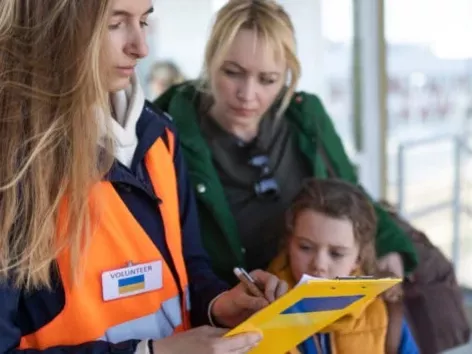
Which German states are hosting Ukrainians in March 2026: addresses of camps
Germany continues to accept and provide assistance to Ukrainians, but camps are not open in all federal states. Find out more about the current camp addresses and accommodation conditions for refugees from Ukraine
02 Mar. 2026
More details2 min
For refugees
The UK government has announced details of the second extension of visas for Ukrainians under the Ukrainian Permission Extension program. Find out who will be eligible for an additional 24 months of stay and what conditions will apply
26 Feb. 2026
More details1 min
Work
EU labor market: which professions and countries lead in terms of job vacancies
In 2026, the European labor market is showing uneven growth depending on the sector and country. The greatest demand is observed in applied professions, while some technological areas are shrinking. Find out where in the EU there are the most vacancies and which specialists are in demand today
02 Mar. 2026
More details2 min
For refugees
5.6 million Ukrainians are still abroad. How many of them actually plan to return?
In 2026, 5.6 million Ukrainians live far from home. While the older generation is gradually returning to their homeland, young people from large cities continue to settle in Germany and Poland. Find out how many refugees actually plan to return to Ukraine
07 Mar. 2026
More details