


.gif)
April 26 – Chernobyl Disaster Remembrance Day: The Scale of the Accident, Chronology of Events, and Real-World Consequences
- What happened at the Chernobyl Nuclear Power Plant on April 26, 1986?
- The Scale of the Disaster: Radiation, Evacuation, and the Exclusion Zone
- Consequences of the Accident: Human Health and the Environment
- Day of Remembrance for Victims of Radiation Accidents: How It Is Observed
- Lessons of Chernobyl: What the World Learned After the Disaster
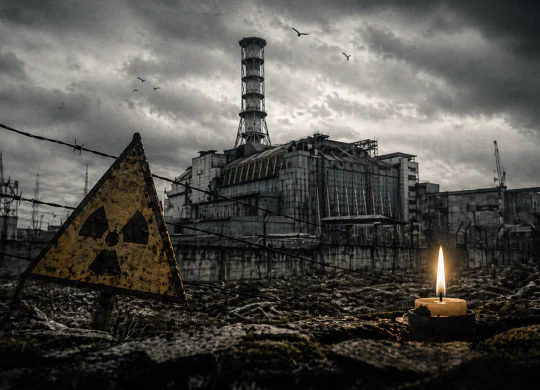
On April 26, 1986, one of the worst man-made disasters in human history occurred: the explosion at the Chernobyl Nuclear Power Plant. Radioactive contamination spread across much of Europe, and the consequences of the tragedy are still felt today. Learn more about the scale of the accident, the key events of that night, and the real-world consequences of the disaster

April 26 is a date that forever changed the history of Ukraine and the entire world. In 1986, an explosion at the Chernobyl Nuclear Power Plant caused widespread radioactive contamination that affected not only Ukraine but also dozens of other European countries.
The Chernobyl accident is considered the worst man-made disaster in the history of civilian nuclear energy. In the days following the explosion, thousands of people were exposed to radiation, and over 100,000 people were evacuated from the danger zone. The consequences of the tragedy are still felt even decades later.
Every year on April 26, Ukraine and the world commemorate the victims of the Chernobyl disaster. This day serves not only as a reminder of the tragedy but also as an important reminder of the need for oversight, safety, and accountability in the use of nuclear technology.
In our previous article, we described how Ukraine is turning its resources into an instrument of revival and international recognition.

What happened at the Chernobyl Nuclear Power Plant on April 26, 1986?
On the night of April 26, 1986, an explosion occurred at the fourth power unit of the Chernobyl Nuclear Power Plant during a test of the turbine generator. The experiment was intended to verify whether the reactor could generate electricity in the event of a loss of external power, but due to a series of errors and regulatory violations, the situation spiraled out of control.
At approximately 1:23 a.m., two powerful explosions occurred, completely destroying the RBMK-1000 reactor. As a result, the upper part of the reactor was destroyed, and a large amount of radioactive substances, including iodine-131, cesium-137, and strontium-90, were released into the atmosphere. According to experts’ estimates, approximately 5–8% of the reactor’s total radioactive fuel was released into the environment.
The fire that broke out after the explosion lasted several days and contributed to the further spread of radioactive materials. Firefighters and plant personnel were the first to arrive at the accident site; they worked without proper protection and received critical doses of radiation.
In the first hours after the disaster, the scale of the accident was underestimated. Official information remained limited, and the population of the surrounding areas was not immediately evacuated. Only more than 36 hours after the explosion did the evacuation of the city of Pripyat begin, where about 50,000 people lived.
In our previous article on the fourth anniversary of the full-scale invasion, we described how Ukrainians commemorate the bloody events and tirelessly fight for their right to independence.
The Scale of the Disaster: Radiation, Evacuation, and the Exclusion Zone
The accident at the Chernobyl Nuclear Power Plant quickly went beyond the scope of a local disaster. Radioactive emissions spread over thousands of kilometers, and the consequences were felt not only in Ukraine and neighboring countries but also across much of Europe.
According to estimates by international organizations, the radioactive cloud reached the territories of Belarus, Poland, Sweden, Germany, and other countries within a few days of the explosion. It was the elevated radiation levels in Sweden that first forced the international community to take notice of the accident, which had initially been hushed up.
Key figures on the scale of the disaster:
- Approximately 30 km – the radius of the exclusion zone established around the Chernobyl Nuclear Power Plant
- Over 116,000 people were evacuated in 1986
- In total, over 350,000 people were resettled in the following years
- Up to 70% of radioactive fallout fell on the territory of Belarus
- Contamination was recorded in more than 20 European countries
The city closest to the plant was Pripyat, home to about 50,000 people. The evacuation did not begin until April 27—more than a day after the explosion, when radiation levels had already significantly exceeded normal limits.
As a result of the disaster, a special exclusion zone was established—a restricted-access area covering not only the Ukrainian part but also adjacent regions of Belarus. Part of this territory remains uninhabitable even today.
Don't want to miss important updates and useful articles? Subscribe to our weekly newsletter!
Consequences of the Accident: Human Health and the Environment
The Chernobyl disaster had long-term consequences that are still felt today. The hardest hit were the people who were the first to respond to the accident, as well as the population of the contaminated territories.
In the first days after the explosion, dozens of plant workers and firefighters received high doses of radiation. According to official data, 28 people died from acute radiation sickness within the first few months after the accident. In total, more than 600,000 liquidators participated in the cleanup efforts.
Key health consequences include:
- A significant increase in cases of thyroid cancer, especially among children
- Long-term risks of cancer due to radiation exposure
- Psychological consequences: stress, depression, and social isolation among those affected
- Increased strain on the healthcare system in the affected regions
Special attention is given to the effects of radioactive iodine-131, which rapidly accumulated in the body through water and food. It was this substance that became the main cause of the sharp increase in thyroid diseases among children in the following years.
The environment also underwent serious changes. Radioactive contamination of soil, water, and forests led to the formation of the so-called “red forest”—an area where trees died from high doses of radiation. At the same time, due to the absence of human activity, part of the exclusion zone eventually transformed into a unique natural area where wildlife populations are recovering.
According to estimates by the World Health Organization and other international bodies, it is difficult to determine the exact number of victims of the disaster due to the long-term nature of radiation’s effects. However, it is clear that the consequences of Chernobyl extend far beyond 1986 and continue to affect people’s lives today.
In our previous article, we talked about the history of the approval of the National Flag of Ukraine.
Day of Remembrance for Victims of Radiation Accidents: How It Is Observed
April 26 is not just a date on the calendar, but a day of profound national remembrance. On this day, people commemorate the tragedy that changed the lives of millions and pay tribute to those who were first at the epicenter of the disaster: firefighters, Chernobyl plant workers, military personnel, and liquidators who performed their duties without proper protection.
It was they who, in the first hours after the explosion, climbed onto the roof of the destroyed reactor, extinguished the fire, cleared the area, and effectively prevented the further spread of radiation. Many of them were unaware of the true extent of the danger, but acted knowing that the lives of others depended on their decisions. Their contribution is often cited as crucial in preventing an even greater catastrophe.
This day is officially recognized internationally by a resolution of the United Nations. In Ukraine, memorial ceremonies are held on April 26; people bring flowers to monuments honoring the liquidators, light candles, and observe a moment of silence for those who did not return. Cities and communities host themed events and gatherings with liquidators and their families.
For many Ukrainians, Chernobyl is not just a page in a textbook, but a part of their personal history. Evacuated families, abandoned homes, lost lives, and years of struggling with the consequences—all of this still resonates in the memories of generations. That is why April 26 is not only a day of mourning but also of deep gratitude to the people who stood up to protect others and did the impossible to mitigate the scale of the tragedy.
To learn more about the results of the Gradus study “Ukraine 2035: Strength, Vulnerability and Potential of the Country”, please follow the link.
Lessons of Chernobyl: What the World Learned After the Disaster
The Chernobyl disaster was a turning point for the global nuclear energy industry. It demonstrated just how dangerous the combination of technical flaws, human error, and a lack of transparency in critical situations can be.
Following the accident, safety protocols at nuclear power plants were significantly revised. In particular, international oversight was strengthened, requirements for safety systems were raised, and information sharing between countries became more open. The International Atomic Energy Agency plays a key role in this process, coordinating nuclear safety standards at the global level.
At the same time, Chernobyl showed that the consequences of such disasters know no borders. Radioactive contamination spread far beyond the borders of a single country, making nuclear safety a shared responsibility for the entire world.
Another important lesson is the cost of silence. Delays in informing the public and the international community led to additional risks and exacerbated the health consequences. Today, rapid response and transparency are key principles in emergency situations.
Chernobyl also served as a reminder of the role of the human factor. Even the most complex technologies require clear instructions, oversight, and accountability at every level. Errors in such systems can have global consequences.
Today, as the world continues to use nuclear energy, the lessons of Chernobyl remain relevant. They shape modern safety standards and serve as a reminder that the cost of a mistake can be too high.
Remembering Chernobyl is not just about dates and facts, but also about preserving history and honoring the heroic efforts of the liquidators. On the Visit Ukraine platform, you can find themed patriotic merchandise dedicated to important events in Ukrainian history. This is an opportunity not only to honor the memory of the past but also to support Ukrainian initiatives by preserving symbols that remind us of strength, resilience, and responsibility toward future generations.
Honor the heroes of the past and support those who defend Ukraine today - purchase patriotic merchandise at Visit Ukraine!

We remind you! Ukraine is undergoing a moment of rethinking itself — a country that defends freedom while opening its culture, nature, and history to the world as a source of inspiration and strength. From art to sustainable tourism, every direction is becoming part of the global conversation about modern identity and development. Read more about how Ukraine is transforming its resources into a tool for revival and international recognition.
Want to know more? Read the latest news and useful materials about Ukraine and the world in the News section.
We recommend purchasing it for a safe and comfortable trip to Ukraine:
Visit Ukraine Insurance – insurance covering military risks for entry and travel in Ukraine;
Visit Ukraine Car Insurance – car insurance with extended coverage in Ukraine;
Visit Ukraine Legal Advice – comprehensive legal support on entry to Ukraine;
Visit Ukraine Tickets – bus and train tickets to/from Ukraine;
Visit Ukraine Tours – the largest online database of tours to Ukraine for every taste;
Visit Ukraine Hotels – hotels for a comfortable stay in Ukraine;
Visit Ukraine Merch – patriotic clothing and accessories with worldwide delivery.
© 2018-2026, Visit Ukraine. Use, copying or reprinting of materials on this site is permitted only with a link (hyperlink for online publications) to Visit Ukraine.
All rights reserved.
Recommended articles
2 min
Events
Every year on March 9, Taras Shevchenko, a poet, artist, and symbol of Ukrainian freedom, is commemorated in Ukraine and around the world. This day opens Shevchenko Days, a period dedicated to the memory of the poet and his work. Learn more about the history of the holiday, its significance today, and modern ways to honor Ukrainian culture
09 Mar. 2026
More details2 min
Events
Every year on March 10, Ukrainians celebrate the Day of the National Anthem of Ukraine, one of the main symbols of national identity. The history of the song “Ukraine has not yet died” goes back more than a century and a half and is closely linked to the struggle for independence. Learn more about the history of the anthem, interesting facts about it, and the significance of this symbol for Ukrainians today
10 Mar. 2026
More details2 min
Events
Security Service of Ukraine Day: history, role of the SSU during the war and interesting facts
Every year on March 25, Ukraine celebrates the Day of the Security Service of Ukraine - a professional holiday of people who protect the state every day. Find out how the SSU came into being, what role it plays today, and why this holiday is important for every Ukrainian
25 Mar. 2026
More details3 min
Events
National Guard Day of Ukraine 2026: how it arose, role in the war and key achievements
The National Guard of Ukraine celebrates its professional holiday on March 26. Learn more about the history of the creation of the National Guard, its role in the war, key operations and interesting facts about the guardsmen
26 Mar. 2026
More details