


.gif)
May 18 — Day of Remembrance for the Victims of the Genocide of the Crimean Tatar People: The History of Deportation and Contemporary Repression
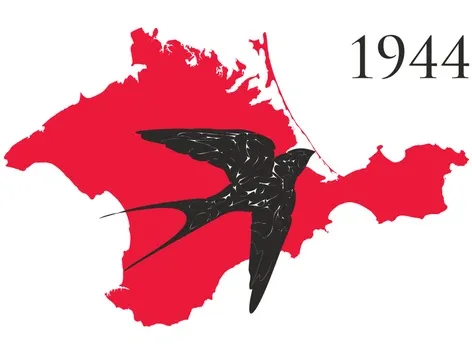
Every year on May 18, Ukraine honors the memory of the victims of the genocide of the Crimean Tatar people—a tragedy that began with the deportation of 1944. Learn about the history of this crime, its scale, and how repression against the Crimean Tatars continues today in occupied Crimea

Every year on May 18, Ukraine pauses to honor the memory of the victims of the genocide of the Crimean Tatar people. This day is not just a date on the calendar. It is a reminder of one of the gravest crimes committed by a totalitarian regime against an entire people — a crime whose consequences are still felt today.
It was on May 18, 1944, that stalin’s regime began the mass forced deportation of Crimean Tatars from their historic homeland — Crimea. About 200,000 people were transported in freight train cars to remote regions of the USSR — Central Asia and other parts of the country. Thousands died along the way and in the first years of exile due to inhumane conditions, starvation, and disease. Entire families were wiped out. An entire people was deprived of its homeland.

From “Day of Mourning” to Official Recognition of Genocide: A Chronology of Remembrance
Ukraine has addressed this tragedy gradually but consistently. In 1994, pursuant to Presidential Decree No. 165/94 of April 14, the “Day of Mourning and Remembrance of the Victims of the Deportation of the Crimean Tatar People” was established. This marked the first official recognition of the tragedy at the state level.
In May 2014, on the eve of the 70th anniversary of the deportation, Acting President of Ukraine Oleksandr Turchynov signed a decree establishing the “Day of the Struggle for the Rights of the Crimean Tatar People,” which is also observed on May 18.
A key step was the decision of the Verkhovna Rada of Ukraine on November 12, 2015: on that day, the deportation of the Crimean Tatars was officially recognized as genocide against the Crimean Tatar people, and May 18 was designated as “Day of Remembrance for the Victims of the Genocide of the Crimean Tatar People.” Since then, this day has held official state status and honors the memory of all those who perished as a result of criminal Soviet policies.
Genocide as a Tool: What Did the stalinist Regime Seek to Achieve?
The 1944 deportation was not a spontaneous wartime decision, but a deliberate policy of exterminating the people as a whole. The Soviet system sought to deprive the Crimean Tatars of their homeland, erase their presence from Crimea, and eradicate their culture, language, traditions, and historical memory. In essence and in their consequences, these actions meet the international definition of genocide — the destruction of a group of people on ethnic grounds.
Despite extraordinary losses, violence, and decades of exile, the Crimean Tatars have not ceased their struggle for the right to live on their land. Their resilience is proof that even the most brutal repressive machine is incapable of destroying a people who preserve their identity.
Remembering these crimes means more than just honoring the dead. It is also a way to support those who continue to fight today. That is why a portion of the proceeds from the sale of patriotic merchandise on Visit Ukraine is donated to help those affected by the war — because there are many ways to support Ukraine, even in everyday life.

Don't want to miss important updates and useful articles? Subscribe to our weekly newsletter!
The Crimean Tatar People and Ukraine: A Shared Struggle
The Crimean Tatars are the indigenous people of Crimea, who for centuries have been neighbors and brothers-in-arms to the Ukrainians. Both peoples suffered repression, first under the russian empire and then under the USSR. After russia’s occupation of Crimea in 2014, this shared fate took on a new dimension.
Every person, every ethnic group, and every nation has the right to freedom, peaceful existence, and prosperity on their native land. This is not a declaration, but a principle for which the Crimean Tatars have paid — and continue to pay — a very high price.
Repression in Occupied Crimea: The Same Logic, New Tools
The current russian occupation of Crimea replicates the repressive logic of the soviet era with the same goal — to force the Crimean Tatars to disappear from the peninsula or to break their resistance. The forms have changed, but the essence remains the same.
In occupied Crimea, systematic persecution of Crimean Tatar activists, journalists, and ordinary citizens continues. Searches, illegal arrests, and fabricated criminal cases — all of this has become a daily reality for the indigenous people of Crimea. According to human rights activists, russia is holding hundreds of Crimean Tatar political prisoners, and since the start of the occupation, over 520 politically motivated cases of persecution have been documented, more than half of which — over 270 cases — involve Crimean Tatars specifically.
The media landscape remains a distinct tool of pressure. Since 2014, dozens of Crimean media outlets have been forced to cease operations, and journalists and civil society activists have become targets of repression. The aggressor is methodically silencing the Crimean Tatar voice — just as the soviet authorities sought to erase the people themselves.
Today, Ukraine, together with the Crimean Tatar people, is fighting not only for the return of Crimea, but also for the fundamental right of peoples to be free, to preserve their identity, and to live without fear of a repressive state.
The Day of Remembrance for the Victims of the Genocide of the Crimean Tatar People is not merely a Crimean Tatar tragedy. It is a warning to all of humanity: against persecution, deportations, and genocide on any grounds. The memory of the victims of totalitarianism is a reminder of the price of freedom and of why the crimes of empires must never be forgotten or repeated.
As long as Crimea remains occupied, May 18 is not only a day of mourning but also a day of solidarity with a people who are still waiting to return home.
We remind you! Ukrainian symbols have long transcended traditional culture and become part of everyday style, from clothing and accessories to modern patriotic merchandise. They combine history, strength, and a modern identity that Ukrainians wear with pride. Read more about the meaning of the trident, embroidery, viburnum, and the blue-and-yellow colors.
Photo: wikipedia
Want to know more? Read the latest news and useful materials about Ukraine and the world in the News section.
We recommend purchasing it for a safe and comfortable trip to Ukraine:
Visit Ukraine Insurance – insurance covering military risks for entry and travel in Ukraine;
Visit Ukraine Car Insurance – car insurance with extended coverage in Ukraine;
Visit Ukraine Legal Advice – comprehensive legal support on entry to Ukraine;
Visit Ukraine Tickets – bus and train tickets to/from Ukraine;
Visit Ukraine Tours – the largest online database of tours to Ukraine for every taste;
Visit Ukraine Hotels – hotels for a comfortable stay in Ukraine;
Visit Ukraine Merch – patriotic clothing and accessories with worldwide delivery.
© 2018-2026, Visit Ukraine. Use, copying or reprinting of materials on this site is permitted only with a link (hyperlink for online publications) to Visit Ukraine.
All rights reserved.
Recommended articles
1 min
Popular
What is the curfew in different regions of Ukraine in 2026?
Due to the current martial law in Ukraine, a curfew has been imposed. Find out what exactly is prohibited, in which regions of Ukraine restrictions apply, and where there is no curfew in 2026
06 Apr. 2026
More details3 min
War
Will the war in Ukraine end in 2026?
The war in Ukraine remains one of the most debated topics, and forecasts for its end vary considerably. Experts share their opinions on the possibility of the war ending in 2026. Find out more about the prospects, key forecasts and what awaits Ukraine next year
08 May. 2026
More details2 min
Popular
Banksy is one of the most enigmatic artists of our time, whose name remains unknown despite the global popularity of his work. Find out what new facts about the artist have emerged thanks to a Reuters investigation, as well as where to see his graffiti in Ukraine
20 Mar. 2026
More details2 min
Events
Ukraine’s historic record at Eurovision: what the country is bringing to the contest
Ukraine has chosen its representative for the 2026 Song Contest: the final of the national selection concluded on a high note, introducing viewers to a new artist set to take the big European stage. The winner is already preparing for their performance in Vienna, where the anniversary Eurovision Song Contest will attract millions of viewers from all over the world. Find out when Europe’s biggest music contest will take place
14 May. 2026
More details