


.gif)
Vyshyvanka Day 2026: How a Ukrainian Symbol Became a National Emblem
- Vyshyvanka Day: How the Holiday Came to Be and Why It Is Celebrated Around the World
- Why has the vyshyvanka never been just a piece of clothing in Ukraine?
- Why do Ukrainian vyshyvankas differ by region?
- How has the war changed Ukrainians’ attitude toward the vyshyvanka?
-
How Ukrainians view the vyshyvanka today: results of a Gradus survey
- For Ukrainians, the vyshyvanka is first and foremost a symbol of national identity
- Most Ukrainians own at least one embroidered shirt
- Ukrainians most often wear embroidered shirts for holidays and important events
- Young people wear vyshyvankas less often, but integrate them more frequently into their everyday style
- Half of Ukrainians feel social pressure on Vyshyvanka Day
- Why does Vyshyvanka Day remain important to Ukrainians in 2026?
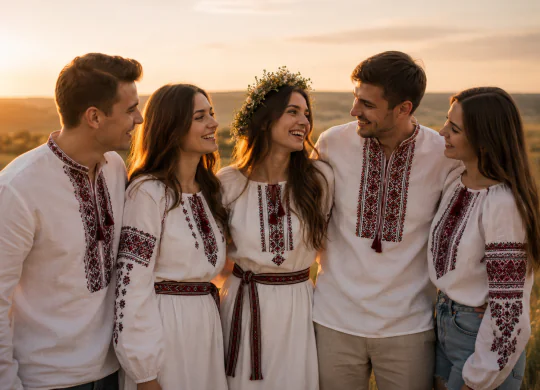
Vyshyvanka Day has long since ceased to be merely a celebration of traditional clothing. For millions of Ukrainians, the vyshyvanka has become a symbol of remembrance, unity, cultural heritage, and support for the country during the war. It is worn not only in Ukraine but also in dozens of countries around the world—at work, in school, at international events, and at charity events. Today, the Ukrainian vyshyvanka combines ancient traditions with modern national identity, and interest in it continues to grow among young people and the Ukrainian diaspora. Learn more about the history of the holiday, the significance of Ukrainian embroidery, and how Ukrainians view the vyshyvanka today

Few national symbols in the world remain an integral part of everyday life, cultural heritage, and a country’s international image all at once. For Ukraine, the vyshyvanka has become such a symbol—a garment that embodies history, memory, traditions, and national identity. Today, Ukrainian embroidery patterns are recognized far beyond the country’s borders, and Vyshyvanka Day brings together millions of people in different corners of the world every year.
The Vyshyvanka took on special significance after the start of the full-scale war. For many Ukrainians, it has become not only a cultural element but also a symbol of resilience, unity, and support for the country. People are increasingly choosing vyshyvankas for important events, international meetings, charity events, and even everyday life, while Ukrainian brands of traditional clothing continue to gain popularity both in Ukraine and abroad.
Today, the vyshyvanka is no longer just about tradition. It’s about the connection between generations, preserving one’s own culture, and the desire to show the world Ukrainian identity even in the most difficult times. Learn more about the history of Vyshyvanka Day, the meaning of Ukrainian patterns, and how modern Ukrainians view their national clothing.
In our previous article, we described how Ukraine is turning its resources into an instrument of revival and international recognition.

Vyshyvanka Day: How the Holiday Came to Be and Why It Is Celebrated Around the World
Vyshyvanka Day is one of the youngest, yet at the same time one of the most famous modern Ukrainian holidays. It was initiated in 2006 by students of Yuriy Fedkovych Chernivtsi National University. The idea was very simple: to come to class one day wearing embroidered shirts to support Ukrainian traditions and show that traditional clothing can be part of everyday life.
The initiative quickly spread beyond the university. Within a few years, Vyshyvanka Day began to be celebrated in various cities across Ukraine, and later abroad. Today, Ukrainian communities in Canada, the U.S., Poland, Germany, France, the U.K., and dozens of other countries around the world join in the celebration. People hold parades, flash mobs, charity events, photo shoots, and cultural festivals.
The holiday is traditionally celebrated on the third Thursday of May. The organizers deliberately chose a weekday to show that the vyshyvanka is not a museum exhibit and not exclusively festive attire. It can be worn in everyday life—at work, school, during meetings, or while traveling.
After the start of full-scale war, Vyshyvanka Day took on an even deeper meaning. For many Ukrainians, it has become a way to demonstrate their identity, support the country, and remind the world of Ukrainian culture. That is why millions of photos of people wearing vyshyvankas appear on social media every year, and Ukrainian diplomats, military personnel, volunteers, and public figures are increasingly choosing traditional attire for international events and official meetings.
Learn more about themeaning of the trident, embroidery, viburnum, blue and yellow colors, and other Ukrainian symbols by following the link.
Why has the vyshyvanka never been just a piece of clothing in Ukraine?
For Ukrainians, the vyshyvanka has been much more than just a wardrobe item for centuries. In different regions of the country, it was seen as a talisman, a symbol of one’s lineage, a part of family history, and a way to show one’s affiliation with a particular community or region. That is why great care was taken in creating the shirt: the ornaments, colors, and even the placement of the patterns had specific meanings.
In traditional Ukrainian culture, embroidered shirts were often made by hand and passed down from generation to generation. They were worn at weddings, christenings, major holidays, and other important events. It was believed that carefully chosen symbols could protect a person from evil and bring prosperity, health, and happiness. That is why, in many families, antique embroidered shirts remain a special family heirloom to this day.
Ornaments held special significance. For example, geometric symbols were often associated with protection and harmony, plant motifs with life, fertility, and the continuation of the family line, and the color red traditionally symbolized love, energy, and strength. At the same time, the meanings of symbols could vary across different parts of Ukraine depending on local traditions.
Despite centuries of history, the vyshyvanka has not lost its relevance today. For many Ukrainians, it remains a way to emphasize their identity and connection to their culture. This became particularly noticeable after 2014 and even more so after the start of the full-scale war, when the national garment also became a symbol of unity and support for Ukraine around the world.
In our previous article, we discussed how Vyshyvanka Day will be celebrated in 2026, where the main events will take place, and how to join in the celebration.
Why do Ukrainian vyshyvankas differ by region?
Ukrainian embroidery has evolved over centuries, so each region of the country has developed its own style, colors, and techniques. It is precisely because of this that experienced artisans can often determine the origin of a vyshyvanka simply by its ornamentation or embroidery technique. Traditions were influenced by climate, local materials, regional history, and even neighboring cultures.
Today, regional characteristics remain an important part of Ukrainian cultural heritage. Many modern brands and artisans adapt traditional patterns to contemporary clothing while preserving authentic elements.
Poltava Region and Central Ukraine
Vyshyvankas from Central Ukraine are traditionally distinguished by their restraint and delicacy. The Poltava region is known for the “white-on-white” technique, considered one of the most complex in Ukrainian embroidery. These shirts look very neat.
Key features:
- Light or pastel colors;
- Small geometric patterns;
- Minimalist style;
- Great attention to detail and symmetry.
It is Poltava-style embroidered shirts that are often associated with classic traditional Ukrainian clothing.
Hutsul Region and the Carpathians
Carpathian embroidered shirts are among the brightest and most recognizable in Ukraine. They are characterized by rich colors, large patterns, and complex compositions. Hutsul shirts were traditionally decorated with very dense embroidery, and in some regions, beads and decorative metal elements were also used.
The most common elements in Carpathian patterns include:
- Red, yellow, green, and black colors;
- Diamonds and geometric symbols;
- Floral motifs;
- Multi-layered decorative elements.
Today, it is precisely Hutsul motifs that Ukrainian designers frequently incorporate into contemporary clothing collections.
Podillia, Bukovina, and Bessarabia
In these regions, embroidery traditions blended Ukrainian motifs with elements of neighboring cultures. As a result, local embroidered shirts feature a very distinctive style and intricate patterns.
For example:
- In Bukovina, embroidery with gold and silver threads was popular;
- In Bessarabia, dark colors and large floral elements were frequently used;
- Podillia is characterized by red-and-black patterns and dense geometric embroidery.
Despite modern fashion trends and mass-produced clothing, Ukrainians are increasingly interested in authentic regional embroidered shirts. Because of this, ancient embroidery techniques are being actively revived in Ukraine, and ethnic patterns are increasingly appearing not only in festive but also in everyday clothing.
Don't want to miss important updates and useful articles? Subscribe to our weekly newsletter!
How has the war changed Ukrainians’ attitude toward the vyshyvanka?
After the start of the full-scale war, the vyshyvanka took on an even deeper meaning for Ukrainians. Whereas previously for many it was primarily festive or traditional clothing, today it has become a symbol of national unity, resilience, and support for Ukraine. People are increasingly wearing embroidered shirts not only on holidays but also in everyday life, at international events, charity events, and important occasions.
This has become particularly noticeable abroad. The Ukrainian diaspora regularly organizes marches and flash mobs for Vyshyvanka Day in cities across Europe, the U.S., and Canada. Since 2022, these events have become not only cultural occasions but also a way to remind the world about the war in Ukraine and to support Ukrainians.
At the same time, interest in Ukrainian traditional clothing brands has grown significantly. Many people have begun consciously purchasing Ukrainian vyshyvankas, supporting local manufacturers and artisans. Some brands have even adapted traditional patterns to modern everyday styles, making it increasingly common to pair vyshyvankas with jeans, suits, or basic urban wear.
Today, for many Ukrainians, the vyshyvanka is associated with:
- Supporting their own culture;
- Remembering their roots and family;
- Solidarity during wartime;
- Demonstrating Ukrainian identity to the world;
- Respect for traditions and history.
Social media has played a special role in popularizing the vyshyvanka. Every year on Vyshyvanka Day, Ukrainians post photos en masse in traditional clothing, and international politicians, diplomats, athletes, and celebrities are increasingly joining campaigns to support Ukraine while wearing vyshyvankas. As a result, traditional Ukrainian clothing has gradually become not only a part of the culture but also one of Ukraine’s most recognizable symbols worldwide.
In our previous article, we talked about the history of the approval of the National Flag of Ukraine.
How Ukrainians view the vyshyvanka today: results of a Gradus survey
Ahead of Vyshyvanka Day, the research company Gradus surveyed Ukrainians to determine the role the vyshyvanka plays in modern life. The results showed that for most people, traditional Ukrainian clothing remains an important symbol of national identity, although it is not worn very often in everyday life.
For Ukrainians, the vyshyvanka is first and foremost a symbol of national identity
The study revealed that 49% of Ukrainians view the vyshyvanka primarily as a symbol of national identity. Another 24% consider it traditional festive attire, while 9% see it as a symbol of resistance and resilience during wartime. Only 3% of respondents associate the vyshyvanka primarily with contemporary fashion.
The survey also confirmed that the authenticity of the vyshyvanka remains very important to Ukrainians. People pay attention to the symbolism of the patterns, natural fabrics, and traditional motifs that reflect the cultural characteristics of different regions of the country.

Infographic: “Vyshyvankas in the Wardrobe” / Source: Gradus Research, 2026.
Most Ukrainians own at least one embroidered shirt
According to Gradus, 37% of Ukrainians own one embroidered shirt, while another 28% own two or three. At the same time, about a third of respondents noted that they do not have a single embroidered shirt in their wardrobe.
Despite this, the embroidered shirt remains an important element of cultural self-identity. Many Ukrainians buy new styles specifically for national holidays, charity events, or important family occasions. Interest in modern embroidered shirts adapted to everyday fashion has become particularly noticeable.
Ukrainians most often wear embroidered shirts for holidays and important events
The most common practice remains wearing an embroidered shirt a few times a year—this was the response of 44% of survey participants. Another 17% wear it only once a year, and 6% wear it several times a month or more often.
Ukrainians most often wear embroidered shirts:
- On state and national holidays;
- At official or public events;
- On religious holidays;
- During family events;
- For school or work.
At the same time, only 10% of respondents noted that they wear embroidered shirts in everyday life without a specific occasion. This indicates that for most Ukrainians, it remains a special symbolic garment rather than a staple of their daily wardrobe.

Infographic: “Vyshyvanka Wearing Practices” / Source: Gradus Research, 2026.
Young people wear vyshyvankas less often, but integrate them more frequently into their everyday style
Interestingly, young Ukrainians aged 18–24 are less likely to wear vyshyvankas on traditional holidays, yet this age group is more active in integrating them into their daily style.
According to the study, young people are more likely to wear embroidered shirts to school, work, or in everyday life.
This may indicate a gradual shift in the perception of traditional clothing: for the younger generation, the embroidered shirt is becoming not only a festive accessory but also a means of self-expression and a way to demonstrate their own identity.
Half of Ukrainians feel social pressure on Vyshyvanka Day
Another interesting finding of the study was that 51% of Ukrainians feel some social pressure to wear a vyshyvanka on Vyshyvanka Day. At the same time, 39% of respondents noted that they do not feel such pressure.
That said, about a third of Ukrainians actively celebrate the holiday. Sociologists explain this by the fact that the embroidered shirt today serves as an important cultural marker and a symbol of belonging to the Ukrainian community.

Infographic: “Celebrating Vyshyvanka Day” / Source: Gradus Research, 2026.
To learn more about the results of the Gradus study “Ukraine 2035: Strength, Vulnerability and Potential of the Country”, please follow the link.
Why does Vyshyvanka Day remain important to Ukrainians in 2026?
Despite globalization, changing fashion trends, and the rapid development of modern culture, the vyshyvanka continues to be one of Ukraine’s main symbols. For many people, it has become a way to maintain a connection to their roots, a reminder of family, traditions, and the country’s history.
This is especially felt during the war, when cultural symbols take on a much deeper meaning. Today, for Ukrainians, the vyshyvanka is not just festive clothing, but also a way to show unity, support their country, and preserve their national identity even far beyond Ukraine’s borders.
At the same time, traditional Ukrainian embroidery continues to evolve alongside society. The younger generation is increasingly combining ethnic elements with modern fashion, and Ukrainian brands are creating new collections that promote traditional culture around the world. Thanks to this, the vyshyvanka remains not only a part of the past but also an important element of contemporary Ukrainian culture.
Today, Vyshyvanka Day unites millions of Ukrainians in different countries around the world, regardless of age, profession, or place of residence. And as long as Ukrainians continue to preserve their traditions and culture, the vyshyvanka will remain one of the strongest symbols of the Ukrainian nation.
The Ukrainian vyshyvanka has long been not only part of traditional clothing but also a symbol of support for the country and its culture. That is why more and more Ukrainians are choosing patriotic clothing, accessories, and souvenirs that help preserve national identity in everyday life. The Visit Ukraine collections feature modern patriotic merchandise, clothing, and gifts with Ukrainian symbols that combine traditional motifs with contemporary design. This is a way not only to support Ukrainian brands but also to promote Ukrainian culture both within Ukraine and abroad.
Honor the heroes of the past and support those who defend Ukraine today - purchase patriotic merchandise at Visit Ukraine!

We remind you! Ukraine is undergoing a moment of rethinking itself — a country that defends freedom while opening its culture, nature, and history to the world as a source of inspiration and strength. From art to sustainable tourism, every direction is becoming part of the global conversation about modern identity and development. Read more about how Ukraine is transforming its resources into a tool for revival and international recognition.
Want to know more? Read the latest news and useful materials about Ukraine and the world in the News section.
We recommend purchasing it for a safe and comfortable trip to Ukraine:
Visit Ukraine Insurance – insurance covering military risks for entry and travel in Ukraine;
Visit Ukraine Car Insurance – car insurance with extended coverage in Ukraine;
Visit Ukraine Legal Advice – comprehensive legal support on entry to Ukraine;
Visit Ukraine Tickets – bus and train tickets to/from Ukraine;
Visit Ukraine Tours – the largest online database of tours to Ukraine for every taste;
Visit Ukraine Hotels – hotels for a comfortable stay in Ukraine;
Visit Ukraine Merch – patriotic clothing and accessories with worldwide delivery.
© 2018-2026, Visit Ukraine. Use, copying or reprinting of materials on this site is permitted only with a link (hyperlink for online publications) to Visit Ukraine.
All rights reserved.
Recommended articles
2 min
Events
Every year on March 10, Ukrainians celebrate the Day of the National Anthem of Ukraine, one of the main symbols of national identity. The history of the song “Ukraine has not yet died” goes back more than a century and a half and is closely linked to the struggle for independence. Learn more about the history of the anthem, interesting facts about it, and the significance of this symbol for Ukrainians today
10 Mar. 2026
More details2 min
Events
Europe Day: history, meaning and significance of the holiday for Ukraine
Europe Day is a symbol of unity, peace and shared values that shape the future of the continent. Learn about the history of the holiday, its significance for Ukraine and how European support is reflected in modern initiatives and symbols of solidarity
09 May. 2026
More details2 min
Events
Vyshyvanka Day 2026: Where and How Will the 20th Anniversary Be Celebrated Around the World?
Vyshyvanka Day is a symbol of unity among Ukrainians worldwide and an important cultural event. Find out how the 20th anniversary will be celebrated in 2026, where the main events will take place, and how you can join in the celebration
06 May. 2026
More details2 min
Events
Ukraine’s historic record at Eurovision: what the country is bringing to the contest
Ukraine has chosen its representative for the 2026 Song Contest: the final of the national selection concluded on a high note, introducing viewers to a new artist set to take the big European stage. The winner is already preparing for their performance in Vienna, where the anniversary Eurovision Song Contest will attract millions of viewers from all over the world. Find out when Europe’s biggest music contest will take place
14 May. 2026
More details