


.gif)
Air raid alerts in Lithuania: what happened and what to do in the event of a threat in EU countries
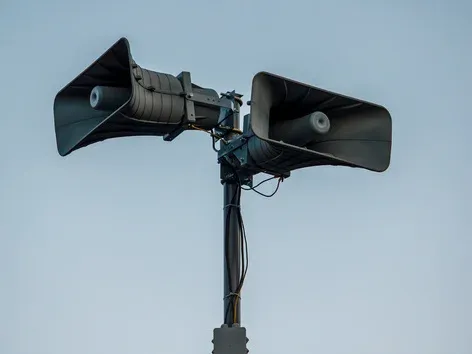
May 2026 served as a reminder to Europeans that civil protection systems can be activated at any moment—even in countries where the threat seems unlikely. Over the course of two days, Lithuania issued two air raid alerts, halted transportation, and directed people to shelters—and this experience is relevant to everyone who lives in or travels through EU countries. Learn more about air raid alert levels in Lithuania, the warning system, and how to prepare for an emergency abroad

In May 2026, Lithuania activated its civil alert system twice in two days due to suspicious unmanned aerial vehicles near its borders. Air traffic in Vilnius was suspended, public transportation was partially shut down, and government officials were moved to shelters. Relocate.to recently reported on this.
For the millions of Ukrainians currently living in European Union countries, these events serve as a reminder: it is worth knowing in advance how civil defense works in your country of residence.
Planning a trip abroad?
Get reliable medical insurance on the Visit Ukraine portal!

What happened in Lithuania on May 20–21, 2026?
On May 20, Lithuanian authorities declared an air threat after detecting a suspicious drone near the eastern border regions. The alert initially covered the Ignalina, Utena, Zarasai, and Švenčionys districts, and then spread to the capital, Vilnius. Residents were urged to immediately take shelter or move to safe locations.
The following day (May 21), a similar situation occurred in the Utena County in the northeast of the country. Authorities declared a red alert following the detection of drones and again issued a call for evacuation to shelters.
Neither of these incidents constituted a direct attack on Lithuania. However, both cases clearly demonstrated how the country (an EU and NATO member) responds to a potential air threat: through a coordinated warning system, temporary transportation restrictions, relocating officials to secure locations, and clear instructions for the civilian population.
We recently reported that the EU will begin accession negotiations with Ukraine as early as June.
Three levels of air threat in Lithuania
The Lithuanian civil protection system provides for three distinct statuses, each accompanied by specific instructions for the public:
- Yellow Level (“Tikėtinas oro pavojus” — probable air threat): a threat is possible, but the object is not yet over Lithuanian territory. It is recommended to remain calm, identify the nearest safe location, and call 112 if suspicious objects are detected.
- Red Level (“Oro pavojus” — air danger): an unknown object is already in Lithuanian airspace or is highly likely to enter it. You must immediately take shelter. If no shelter is available nearby, the “two-wall rule” applies: stay in an interior room without windows, separated from the exterior wall by at least two partitions.
- White level (“Oro pavojaus nėra” — no air threat): the threat has passed; you may leave the shelter while remaining vigilant.
Don't want to miss important updates and useful articles? Subscribe to our weekly newsletter!
How is the public alerted in Lithuania?
Sirens are just one of the alert channels. In parallel, Lithuania uses the Cell Broadcast mobile notification system: alerts are sent to phones via the networks of operators Bitė, Telia, and Tele2 without the need to install a separate app—all you need is the Cell Broadcast / EU-Alert feature enabled. The system is tested at least twice a year.
The main civil protection information resource is the LT72 portal (lt72.lt) and the app of the same name. It publishes official warnings, instructions on what to do in emergencies, explanations of danger levels, as well as a map of the nearest shelters and evacuation points.
You shouldn’t rely solely on a single channel: during an active threat, websites and apps may temporarily be unable to handle the load. Therefore, you should also monitor:
- the official pages of the municipality and the 112 service;
- the accounts of the police and the fire and rescue service;
- the Ministry of National Defense and the Lithuanian Armed Forces;
- the National Crisis Management Center;
- broadcasts by the public broadcaster LRT (radio and television).
Interesting! Most Ukrainians support the participation of the Armed Forces of Ukraine in defending European countries against Russia.
What should you prepare in advance?
The situation in Lithuania is relevant not only to its residents. Anyone living in any EU country could find themselves in similar circumstances—and it’s better to have answers to basic questions before they become urgent.
Minimum preparation includes:
- Find out how the emergency alert system works in your country of residence—through which apps, websites, or radio frequencies.
- Locate the nearest shelter or designate a safe room in your own home.
- Save the emergency service contacts for the relevant country in your phone.
- Prepare a 72-hour emergency kit at home: water, basic food items, medication, cash, a power bank, a flashlight, and copies of important documents.
Travel Health Insurance from Visit Ukraine
Staying abroad always means taking on additional responsibility for your own safety. Travel medical insurance from Visit Ukraine lets you travel with confidence: in case of unforeseen situations, from injuries to emergency hospitalization, you’ll have financial protection and access to medical care.
Get medical insurance for travel abroad on the Visit Ukraine website—quickly, online, and without any extra steps!
Reminder! In our previous article, we explained how to transfer money from Ukraine to Europe in 2026.
Photo: Magnific
Want to know more? Read the latest news and useful materials about Ukraine and the world in the News section.
Our recommendation for a safe and comfortable trip:
Visit Ukraine Insurance - insurance for a safe stay abroad without unnecessary expenses;
Green Card - compulsory car insurance for traveling abroad;
Visit Ukraine Tickets - book tickets for buses, trains, and airplanes to/from Ukraine and between cities around the world;
Private Lawyer service - professional legal support on visa and migration issues;
Visit Ukraine Merch - buy patriotic clothing and accessories with worldwide delivery.
© 2018-2026, Visit Ukraine. Use, copying or reprinting of materials on this site is permitted only with a link (hyperlink for online publications) to Visit Ukraine.
All rights reserved.
Recommended articles
2 min
Popular
Following the change of government in Hungary and the lifting of the long-standing political veto, Brussels is ready to launch formal accession negotiations as early as this summer. Find out what negotiation clusters are and when to expect tangible results from European integration
28 May. 2026
More details2 min
Emigration
Europe is stepping up the deportation of migrants: here’s what you need to know
Whilst the influx of refugees into Europe has fallen to a minimum, the number of actual deportations is reaching record levels. EU countries are tightening their border controls, issuing hundreds of thousands of removal orders and sending people back. Find out which countries deport the most foreign nationals and why they are being turned away at the border
30 May. 2026
More details2 min
Finance
Ukraine and Germany to Renew Double Taxation Agreement: What This Means for Businesses and Employees
Ukraine and Germany are preparing to update their double taxation agreement, which is intended to simplify business operations, attract new investment, and make tax rules more transparent. The new terms are also expected to have a positive impact on Ukrainians who work or run a business in Germany. Learn more about what changes may take effect in the near future and who they will affect
29 May. 2026
More details2 min
Transport
The EU requires manufacturers to equip cars with an interface for breathalyzers
Starting in July 2026, all new cars sold in the EU must have a built-in interface for connecting an ignition interlock device. Find out how this system works, what other safety standards have become mandatory, and how this will affect drivers
29 May. 2026
More details