


.gif)
February 21 - International Mother Language Day: history of the holiday, traditions and significance for the world and Ukraine
- How and why did the International Mother Language Day come about?
- How many languages are there in the world and why are they disappearing?
- How is International Mother Language Day celebrated around the world?
- Ukrainian in the context of the global language preservation movement
- Important dates, events, and figures for the Ukrainian language
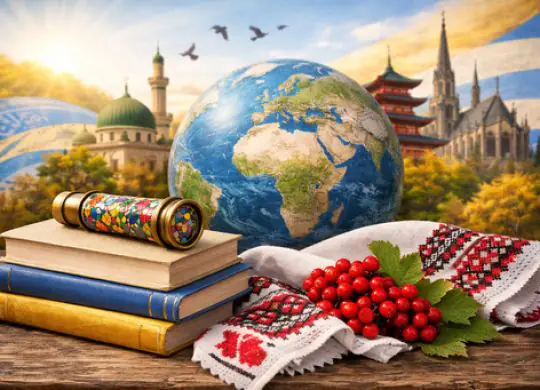
On February 21, the world celebrates International Mother Language Day, a date that reminds us of the value of linguistic and cultural diversity. This holiday is intended to draw attention to the problem of language endangerment and support for languages spoken by millions of people in different countries. Learn more about the history of this day, its traditions and significance for the world and Ukraine

Language is not only a means of communication, but also a part of a people's identity, memory, and culture. Language transmits the experience of generations, shapes worldviews, and keeps us connected to the past, which is why the issue of language preservation is becoming increasingly important in the world of globalization and migration.
International Mother Language Day, celebrated annually on February 21, was established by UNESCO in the late 1990s to draw attention to linguistic diversity in the world and the problem of language extinction. For Ukraine, this topic is of particular importance both in terms of preserving cultural heritage and in the context of modern challenges.
In the previous article, we provided detailed answers to the questions about Ukraine that foreigners are most interested in.

How and why did the International Mother Language Day come about?
The history of International Mother Language Day begins with events in East Pakistan (now Bangladesh). On February 21, 1952, students went on peaceful protests against the government's decision to make Urdu the only official language of the country. For millions of people, Bengali was their mother tongue, but its use in education and government institutions was restricted, causing massive outrage.
During the dispersal of the demonstrations, police opened fire on protesters, killing students. These events have become a symbol of the struggle for the right to speak one's mother tongue and protect one's cultural identity. Subsequently, February 21 began to be commemorated as Language Martyrs' Day in Bangladesh, and the memory of the victims became an important part of the country's national history.
In 1999, at the initiative of Bangladesh, UNESCO proclaimed February 21 as International Mother Language Day. The organization emphasized that languages are a key element of the cultural heritage of mankind, and their disappearance means the loss of unique traditions, knowledge and forms of expression. That is why this day is intended to remind us of the value of multilingualism, the need to support linguistic diversity and the development of education in native languages.
In our previous article, we described how Ukraine is turning its resources into an instrument of revival and international recognition.
How many languages are there in the world and why are they disappearing?
According to UNESCO and linguistic research, there are about 7,000 languages in the world. At the same time, more than 40% of them are endangered, meaning that fewer and fewer people speak them and the language is not being passed on to future generations. Experts estimate that every few weeks, one language disappears in the world, along with the cultural heritage of the community that used it.
The main reasons for the disappearance of languages are related to globalization, migration, and the dominance of several “world” languages in education, media, and the economy. Small communities often switch to more widespread languages for the sake of work, education, or social integration, and the use of their native language is gradually limited to everyday life or ceases altogether.
The disappearance of languages means the loss of unique traditions, oral history, and knowledge about the world around us. That is why international organizations emphasize the importance of supporting multilingual education, preserving indigenous languages, and creating conditions under which the mother tongue can be used not only in the family but also in public space.
Don't want to miss important updates and useful articles? Subscribe to our weekly newsletter!
How is International Mother Language Day celebrated around the world?
The International Mother Language Day has no single “mandatory” traditions - the format of the celebration depends on the country, educational and cultural institutions. Most often, on February 21, thematic events are held on linguistic diversity, the role of language in culture, and the problem of the disappearance of small languages.
On this day, schools and universities organize open lectures, language clubs, dictations, poetry readings in native languages, and discussions of the history of language communities. In many countries, cultural centers and museums hold exhibitions dedicated to writing, translation, and the preservation of linguistic heritage.
UNESCO and other international organizations use this date to launch educational campaigns, publish research, and draw attention to endangered languages. For individuals, it is an occasion to speak their native language more often, read books, listen to music, or get acquainted with the languages of other nations.
Earlier, we told you that two-thirds of Ukrainians believe that Ukraine will be prosperous in the EU in 10 years.
Ukrainian in the context of the global language preservation movement
The issue of language preservation concerns not only small peoples, but also languages with millions of speakers. The Ukrainian language is one of the largest Slavic languages in Europe, but its development and use have long been subject to restrictions, which has affected the linguistic situation in different regions of the country.
In the global context, the Ukrainian language is part of a broader movement to preserve linguistic diversity and support people's right to use their mother tongue in education, public space, and culture. Modern initiatives to promote the Ukrainian language (in the media, education, and digital environment) are in line with global approaches supported by UNESCO.
Using the mother tongue in everyday life, creating content in Ukrainian, supporting cultural projects and translations are practical ways to contribute to the preservation of linguistic heritage. In this sense, Ukraine's experience fits into the global trend of restoring the role of national languages in public and cultural space.
To learn more about the results of the Gradus study “Ukraine 2035: Strength, Vulnerability and Potential of the Country”, please follow the link.
Important dates, events, and figures for the Ukrainian language
The history of the Ukrainian language has been shaped over centuries and is closely linked to the development of culture, education, and statehood. One of the key symbolic dates is the Day of Ukrainian Writing and Language, which is celebrated every November. It is dedicated to the memory of Nestor the Chronicler, one of the first known chroniclers of Kievan Rus, whose works played an important role in shaping the written tradition.
Cultural and literary figures made a significant contribution to the development and popularization of the Ukrainian language. Taras Shevchenko laid the foundations of the modern Ukrainian literary language, while Ivan Franko and Lesya Ukrainka significantly expanded its stylistic possibilities, showing that Ukrainian can be used not only for writing about everyday life but also for writing about complex philosophical and social topics.
In recent history, events related to the establishment of the Ukrainian language as the state language and its wider use in education, media, and public space have become important. These processes are in line with the global practice of supporting national languages as an important element of cultural identity and part of the global movement to preserve linguistic diversity.
The International Mother Language Day is a good reason not only to think about the importance of language in our lives, but also to support our own culture through daily actions. By choosing content in Ukrainian, joining cultural initiatives, or simply consciously using your native language, everyone contributes to the preservation of linguistic heritage. And if you want to emphasize your position and make a useful gift at the same time, pay attention to the patriotic merchandise from Visit Ukraine - stylish items with Ukrainian symbols that help support culture and spread Ukrainian identity around the world.
Honor the heroes of the past and support those who defend Ukraine today - purchase patriotic merchandise at Visit Ukraine!

We remind you! Are you planning to visit Ukraine? Learn about the main cultural characteristics of Ukrainians to help you better understand the country and the local mentality. Hospitality without weakness, toasts with meaning, strong family ties and love of traditions - all you need to know before you travel!
Want to know more? Read the latest news and useful materials about Ukraine and the world in the News section.
We recommend purchasing it for a safe and comfortable trip to Ukraine:
Visit Ukraine Insurance – insurance covering military risks for entry and travel in Ukraine;
Visit Ukraine Car Insurance – car insurance with extended coverage in Ukraine;
Visit Ukraine Legal Advice – comprehensive legal support on entry to Ukraine;
Visit Ukraine Tickets – bus and train tickets to/from Ukraine;
Visit Ukraine Tours – the largest online database of tours to Ukraine for every taste;
Visit Ukraine Hotels – hotels for a comfortable stay in Ukraine;
Visit Ukraine Merch – patriotic clothing and accessories with worldwide delivery.
© 2018-2026, Visit Ukraine. Use, copying or reprinting of materials on this site is permitted only with a link (hyperlink for online publications) to Visit Ukraine.
All rights reserved.
Recommended articles
1 min
Education
Ukrainian language to be taught in Europe: PACE adopts resolution
EU countries should give immediate priority to teaching Ukrainian in European schools. Find out how PACE plans to integrate Ukrainians into the European educational system and what challenges this process faces
28 Jun. 2024
More details1 min
For foreigners in UA
How do I pass the Ukrainian language and history exam to obtain Ukrainian citizenship?
Starting in 2023, exams in the Ukrainian language, the Constitution, and history have become mandatory for obtaining Ukrainian citizenship. Find out more about the full instructions on how to register, pass the exams, pay the fee, and what you need to know to successfully complete all the stages
21 Apr. 2025
More details1 min
Popular
In which cities of Ukraine are language laws most frequently violated: data from the ombudsman
In the first half of 2025, the language ombudsman recorded hundreds of violations of the law on the state language, conducting hundreds of inspections across the country. Find out in which areas and regions language legislation is most often violated
10 Aug. 2025
More details1 min
Events
The Ukrainian language is the soul of a nation that has gone through centuries of prohibitions and revivals. Find out how the Ukrainian Language and Literature Day holiday came about, why it honors Nestor the Chronicler, and when and how Ukrainians celebrate this event today
27 Oct. 2025
More details