


.gif)
The Day of the State Emblem of Ukraine: the path of the trident through the centuries and its significance today
- What is the Day of the National Emblem of Ukraine and when is it celebrated?
- History of the trident: from Kyivan Rus to modern Ukraine
- What does the trident symbolize: the meaning of its shape and image
- Interesting facts about the State Emblem of Ukraine
- The importance of the State Emblem for Ukrainian identity and patriotism
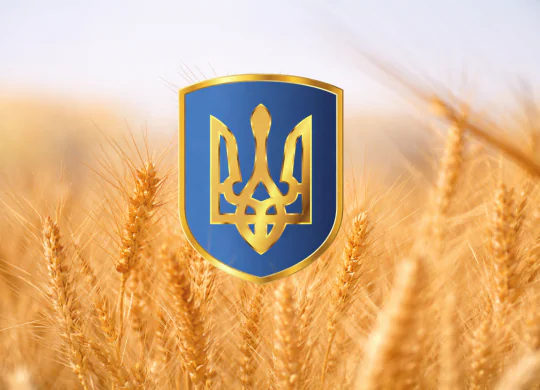
The State Emblem of Ukraine is not just a sign on documents and flags, but a symbol with deep historical roots and powerful meaning. On the Day of the National Emblem, we remember the path of the trident through the centuries, its significance for Ukrainian identity and its role in shaping the national consciousness. Learn more about the history, symbolism and meaning of the State Emblem of Ukraine

State symbols form a sense of unity and common identity of the people, even in the most difficult periods of history. For Ukrainians, the trident is not just an element of the coat of arms, but a sign that connects the princely heritage, the struggle for independence, and modern statehood. It can be seen on official documents, military chevrons, buildings, and public spaces across the country.
The Day of the State Emblem of Ukraine is an occasion to remember where this symbol originated, what meanings have been put into it over the centuries, and why it is of particular importance to every Ukrainian today.
In our previous article, we described how Ukraine is turning its resources into an instrument of revival and international recognition.

What is the Day of the National Emblem of Ukraine and when is it celebrated?
The Day of the State Emblem of Ukraine is a memorable date dedicated to one of the main symbols of Ukrainian statehood. It is celebrated every year on February 19 - on this day in 1992, the Verkhovna Rada of Ukraine approved the trident as the Small State Emblem of Ukraine and the main element of the Great Emblem. Since then, this date has become a symbolic day of honoring the state symbols and historical heritage of Ukraine.
The holiday is not an official day off, but it is of great social importance. On this day, educational and awareness-raising events, thematic lessons in schools, lectures, exhibitions, online events and flash mobs dedicated to the history of the trident and its significance are held in Ukraine. Often, publications about state symbols are timed to coincide with this date to remind us of their origin and role in shaping national identity.
The Day of the State Emblem of Ukraine is not only about the historical event of 1992, but also about respect for the symbol that unites different generations of Ukrainians. For many people, this day is an occasion to reflect on what it means to be part of the Ukrainian state and why state symbols matter not only at the official level but also in everyday life.
In our previous article, we talked about the history of the approval of the National Flag of Ukraine.
History of the trident: from Kyivan Rus to modern Ukraine
The trident has deep historical roots that date back to the times of Kyivan Rus. Archaeological findings show that similar signs were used by princes from the Rurik dynasty as family symbols and signs of power. Images similar in shape to the modern trident can be found on the coins of Prince Volodymyr the Great, seals, weapons, and household items of the 10th and 11th centuries. At that time, this sign served more as a princely identifying sign than a state coat of arms in the modern sense.
Over the centuries, the trident did not have a permanent official status, but remained an important part of the symbolic heritage of Ukrainian lands. Interest in it revived in the early twentieth century during the Ukrainian Revolution of 1917-1921. In 1918, the trident was approved as the national emblem of the Ukrainian People's Republic, a move that emphasized the continuity of the newest Ukrainian statehood with the traditions of Kievan Rus.
During the Soviet period, the use of the trident was banned, and the symbol itself became a sign of national resistance and identity preservation in the diaspora and underground movement. After Ukraine declared its independence in 1991, the trident returned to public space as the official state symbol. In 1992, it was approved as the Small State Emblem of Ukraine, consolidating the historical continuity of Ukrainian statehood from princely times to the modern independent state.
Don't want to miss important updates and useful articles? Subscribe to our weekly newsletter!
What does the trident symbolize: the meaning of its shape and image
The trident is perceived not only as a historical sign, but also as a strong visual symbol in which many people see clear images and meanings. Its shape is simple, recognizable, and easy to reproduce, making it a universal symbol for official use and popular culture. It is the appearance of the trident that has helped it become one of the most famous national symbols of Ukraine.
The following meanings are most often distinguished in the visual image of the trident:
1. Three peaks as unity. The shape with three “teeth” is associated with the idea of unity and balance, which is often perceived as a symbol of the integrity of the state and the people.
2. Vertical composition as an image of strength and stability. The central element is directed upward, which visually conveys the idea of support, development and striving forward.
3. Geometric clarity as a symbol of order. The laconic lines of the trident create a sense of structure and stability, which is well suited to the role of the state symbol.
4. The symbol of the falcon or anchor-cross. Some researchers see in the trident shape a stylized image of a bird in flight or a combination of anchor and cross symbols that connect the sign with protection and faith.
5. Emotional perception as a sign of freedom. For many Ukrainians, the very silhouette of the trident evokes associations with freedom, dignity, and independence without reference to specific historical interpretations.
This approach to the perception of the trident shows why this symbol remains relevant and recognizable in the contemporary public space. Its shape works not only as a heraldic sign, but also as a powerful visual code that is easily read on an emotional level.
Earlier, we told you that two-thirds of Ukrainians believe that Ukraine will be prosperous in the EU in 10 years.
Interesting facts about the State Emblem of Ukraine
The trident is so familiar in everyday life that it is often taken for granted. But this symbol hides many unobvious details that make it even more interesting and multidimensional.
Here are some facts that usually surprise even Ukrainians:
1. The trident is one of the oldest state symbols in Europe. Its prototypes were used on Ukrainian lands more than a thousand years ago, long before most modern European coats of arms appeared.
2. The same trident never had a “single correct” appearance in ancient times. In princely times, the sign varied in shape - there were dozens of versions that differed in the details of lines and proportions.
3. The trident did not disappear even when it was banned. In the twentieth century, the symbol was preserved in the Ukrainian diaspora, in underground publications, and on personal items as a sign of national identity.
4. The symbol is often “hidden” in modern design. Some artists and brands create stylized images where the trident is inscribed in landscapes, letters, or ornaments so that it is not visible at first glance.
5. The trident has become part of contemporary popular culture. It can be seen in street art, digital illustrations, tattoos, and even minimalist jewelry as a symbol of belonging and support for Ukraine.
The State Emblem of Ukraine lives not only in official documents. The trident is constantly intertwined with modern culture and continues to be a relevant sign for new generations.
To learn more about the results of the Gradus study “Ukraine 2035: Strength, Vulnerability and Potential of the Country”, please follow the link.
The importance of the State Emblem for Ukrainian identity and patriotism
The State Emblem of Ukraine has long ceased to be just an official attribute on documents and government buildings. For many Ukrainians, the trident has become a personal symbol of belonging to the country, a sign that unites people regardless of their place of residence or circumstances. Its presence in everyday space creates a sense of common identity and reminds us of the historical continuity of Ukrainian statehood.
In difficult periods of history, the significance of the trident is felt especially acutely. It turns into a visual marker of resistance, dignity, and internal resilience, which is associated with the right to one's own state and freedom of choice. That is why the symbol often appears not only in official contexts but also in volunteer initiatives, on personal belongings, in art projects, and in public solidarity actions.
For Ukrainians, the trident is a way to quietly but confidently express their position. Even without loud words, this sign conveys a sense of community and responsibility for the country's future. On the Day of the National Emblem of Ukraine, many people perceive this symbol not just as an element of state attributes, but as a reminder of the values that unite the nation and shape its modern identity.
Ukrainian identity can be supported not only with words but also with actions, even through simple everyday things. Patriotic merchandise with national symbols helps to gently but confidently show your position and sense of belonging to Ukraine wherever you are. It can be laconic accessories, clothing or souvenirs with Ukrainian symbols that are appropriate both for yourself and as a gift. By choosing high-quality themed merchandise, you are supporting Ukrainian initiatives and spreading Ukrainian culture around the world together with Visit Ukraine!
Honor the heroes of the past and support those who defend Ukraine today - purchase patriotic merchandise at Visit Ukraine!

We remind you! Ukraine is undergoing a moment of rethinking itself — a country that defends freedom while opening its culture, nature, and history to the world as a source of inspiration and strength. From art to sustainable tourism, every direction is becoming part of the global conversation about modern identity and development. Read more about how Ukraine is transforming its resources into a tool for revival and international recognition.
Want to know more? Read the latest news and useful materials about Ukraine and the world in the News section.
We recommend purchasing it for a safe and comfortable trip to Ukraine:
Visit Ukraine Insurance – insurance covering military risks for entry and travel in Ukraine;
Visit Ukraine Car Insurance – car insurance with extended coverage in Ukraine;
Visit Ukraine Legal Advice – comprehensive legal support on entry to Ukraine;
Visit Ukraine Tickets – bus and train tickets to/from Ukraine;
Visit Ukraine Tours – the largest online database of tours to Ukraine for every taste;
Visit Ukraine Hotels – hotels for a comfortable stay in Ukraine;
Visit Ukraine Merch – patriotic clothing and accessories with worldwide delivery.
© 2018-2026, Visit Ukraine. Use, copying or reprinting of materials on this site is permitted only with a link (hyperlink for online publications) to Visit Ukraine.
All rights reserved.
Recommended articles
2 min
Culture
Day of Approval of the State Flag of Ukraine: How the main symbol of the state was formed
The national flag of Ukraine is not only an official symbol, but also the embodiment of freedom, struggle and national dignity. The day it was approved was an important milestone in the history of Ukrainian statehood and self-determination. Find out more about how the blue and yellow flag came to be, what it means to Ukrainians, and why its significance is especially evident today
28 Jan. 2026
More details2 min
Events
Kolodii 2026: where to celebrate Shrovetide in Kyiv and the outskirts of the capital
Kolodii, or Shrovetide, is one of the most colorful folk festivals, symbolizing the farewell to winter and the welcome of spring. In 2026, several large-scale celebrations with traditional rituals, music, and treats are planned in Kyiv and near the capital. Find out more about where to celebrate Maslenitsa in 2026 in Kyiv and near the city
17 Feb. 2026
More details3 min
Events
On February 21, the world celebrates International Mother Language Day, a date that reminds us of the value of linguistic and cultural diversity. This holiday is intended to draw attention to the problem of language endangerment and support for languages spoken by millions of people in different countries. Learn more about the history of this day, its traditions and significance for the world and Ukraine
21 Feb. 2026
More details2 min
Culture
Maslenitsa 2026 in Ukraine: dates, rituals, dishes, and spiritual preparation for Great Lent
Maslenitsa Week in 2026 will last from February 16 to 22 and end with Forgiveness Sunday. This period combines ancient Ukrainian customs, from baking pancakes to the Kolodiy ritual, with church preparations for Great Lent. Learn more about traditional dishes, folk omens, and the spiritual meaning of Zagovin
19 Feb. 2026
More details