


.gif)
How the EU is responding to the war in the Middle East: evacuations, energy reserves, and protecting the economy
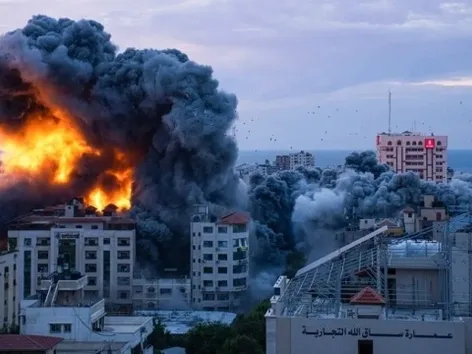
The escalation of the war in the Middle East is forcing the European Union to activate crisis mechanisms to protect its citizens and economy. Find out what measures the EU is already taking, how this is affecting the energy sector, and what the conflict means for European security

The escalation of the war between Israel, the United States, and Iran is forcing the European Union to respond quickly to new risks. The conflict poses a threat to Europeans in the region and could also affect the EU's energy security and economic stability.
In response, Brussels and the governments of member states have activated a number of crisis mechanisms, from evacuating citizens to controlling energy reserves. This was reported by Euronews.
Why is the conflict in the Middle East a threat to Europe?
On March 6, European Union foreign ministers said that the escalation of the conflict in the Middle East could pose a danger to EU citizens in the region and cause global economic turmoil.
One of the main causes for concern is the impact of the war on global energy markets. In particular, disruptions in the Strait of Hormuz, a key oil transport route, have already led to higher energy prices.
For Europe, this means potential risks to energy security, as a significant portion of global oil supplies pass through this region.
What measures is the European Union already taking?
In response to the escalating situation, EU countries have activated crisis mechanisms aimed at protecting citizens and the economy.
First of all, the diplomatic missions of EU countries in the region have issued travel warnings. Embassies are in constant contact with their citizens abroad and are helping to organize evacuation flights for those who have decided to leave dangerous areas.
In the most serious scenarios, member states can resort to the EU Civil Protection Mechanism. In such cases, countries pool their resources: they share evacuation aircraft, medical equipment, generators, and other necessary resources. Such operations are coordinated from Brussels around the clock.
Some countries have already begun to further strengthen their security systems. For example, the Swedish government is investing in the creation of strategic reserves of essential items such as fuel, food, and generators.
Don't want to miss important updates and useful articles? Subscribe to our weekly newsletter!
How is the EU trying to stabilize the energy market?
One of the main economic threats is possible disruptions to oil supplies. That is why the European Union supports maritime surveillance operations aimed at keeping the Strait of Hormuz open to shipping.
In addition, member states have strategic oil reserves in case of emergencies. In the event of a sharp rise in energy prices, governments can also use additional tools, such as price caps or financial assistance to households.
Such measures are designed to mitigate the impact of energy crises on the economy and social situation in EU countries.
What problems remain?
Despite its active efforts, the European Union faces a number of structural problems. In particular, the EU still lacks a unified system for controlling oil prices. Most countries manage their strategic fuel reserves independently. In addition, there is no real-time exchange of information on energy reserves between all countries. This complicates the coordination of rapid decisions in the event of a large-scale energy crisis.
Although the European Union is trying to minimize risks, the escalation of the conflict may affect energy prices, air travel, and the economic situation in the region.
For Ukrainians living abroad or planning to move, it is important to keep track of changes in migration rules, the security situation, and government decisions. In complex cases — for example, when it comes to changing residency status or legalizing your stay — it is worth consulting with migration lawyers at Visit Ukraine, who can help you understand the rules of residence in Europe and prepare documents in accordance with the requirements of the country of residence.

We remind you! Recent geopolitical upheavals have permanently changed the rules for investing and choosing a place to live. Read about which safe countries in the world remain reliable “concrete safes” for preserving capital and where it is best to wait out global turbulence.
Photo: Fatima Shbair / AP Photo / East News
Want to know more? Read the latest news and useful materials about Ukraine and the world in the News section.
Our recommendation for a safe and comfortable trip:
Visit Ukraine Insurance - insurance for a safe stay abroad without unnecessary expenses;
Green Card - compulsory car insurance for traveling abroad;
Visit Ukraine Tickets - book tickets for buses, trains, and airplanes to/from Ukraine and between cities around the world;
Private Lawyer service - professional legal support on visa and migration issues;
Visit Ukraine Merch - buy patriotic clothing and accessories with worldwide delivery.
© 2018-2026, Visit Ukraine. Use, copying or reprinting of materials on this site is permitted only with a link (hyperlink for online publications) to Visit Ukraine.
All rights reserved.
Recommended articles
2 min
War
The safest regions of the world: where to escape from World War III?
russia's invasion of Ukraine, the escalating conflict between the US, Israel, and Iran, and tensions between the United States and China are increasingly worrying people around the world about the threat of World War III. Find out which countries could be a safe haven for people in the event of a global war
03 Mar. 2026
More details2 min
Finance
Four years of war: how prices, tariffs, salaries, and exchange rates have changed in Ukraine
Four years of full-scale war have significantly changed Ukraine's economy: prices, exchange rates, and public debt have risen. Find out how salaries, tariffs, pensions, and the cost of basic products have changed from 2022 to 2026
07 Mar. 2026
More details2 min
Popular
Is it safe to travel to Cyprus, Egypt, and the Middle East right now?
The escalation of the conflict in the Middle East has affected the safety of travel to Cyprus, Egypt, and the UAE. Find out what recommendations are currently in place, whether flights are being canceled, and what risks to consider before traveling in 2026
04 Mar. 2026
More details2 min
Popular
Due to the conflict in the Middle East, international airlines are changing their flight routes and concentrating flights in narrow air corridors. Find out how the closure of the skies is affecting flight times, global aviation, and routes between Europe and Asia
08 Mar. 2026
More details