


.gif)
Hantavirus: what do you need to know about this disease, and should we expect a new pandemic?
- What is hantavirus and how does human infection occur?
- Where did the hantavirus come from: a history of its origins
- Was the hantavirus created in a laboratory?
- How dangerous is the hantavirus
- What does the WHO say about hantavirus?
- Hantavirus: quarantine in Spain and Poland
- Hantavirus — a new pandemic?
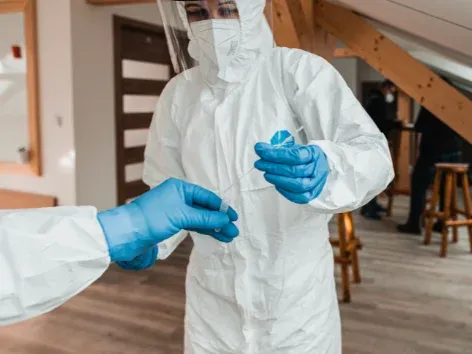
Against the backdrop of worrying news about lockdowns in Spain and Poland, the hantavirus is raising more and more questions. Find out how the virus is transmitted, what the real danger is, and whether we should expect a pandemic

At a time when the world still vividly remembers the consequences of the recent coronavirus pandemic, any news of an outbreak of an unknown or dangerous infection immediately causes alarm. Recently, the term ‘hantavirus’ has been appearing online with increasing frequency. Users are searching for information about its dangers, sharing rumours about its laboratory origin, and discussing news of quarantine measures in Europe.
What is hantavirus and how does human infection occur?
Hantaviruses are a whole family of viruses spread primarily by rodents. Unlike many other respiratory infections we are familiar with, hantavirus is not transmitted from person to person via airborne droplets when coughing or sneezing. The main carriers are mice, rats and voles.
Infection occurs in a rather specific way. Rodents shed the virus through their urine, faeces and saliva. When these secretions dry out, they mix with dust. People become infected by inhaling this contaminated air — for example, whilst cleaning out an old shed, garage, or at a holiday home, or whilst working in the fields. Less commonly, the infection is transmitted through a direct bite from an infected animal or by consuming contaminated food.
Depending on the region, hantaviruses cause two main types of disease. In Eurasia, haemorrhagic fever with renal syndrome (HFRS) is more common, affecting the kidneys and blood vessels. In North and South America, Hantavirus Cardiopulmonary Syndrome (HCPS) is prevalent, affecting the lungs and causing severe respiratory failure.
Where did the hantavirus come from: a history of its origins
Many consider the hantavirus a new threat, yet it has coexisted with humanity for a very long time. Modern medicine first took a close interest in it in the early 1950s during the Korean War. At that time, over three thousand UN soldiers fell ill with an unknown haemorrhagic fever.
For many years, scientists were unable to identify the pathogen, and it was not until 1978 that South Korean virologist Ho Wan Lee succeeded in isolating the virus from the tissues of a field mouse. The virus was named after the Hantaan River in South Korea, near which the first infected rodents were caught. Therefore, the hantavirus is not a modern mutation, but an ancient natural pathogen that humans have simply learned to identify.
Was the hantavirus created in a laboratory?
Conspiracy theories regularly appear online claiming that the hantavirus was artificially created or accidentally ‘escaped’ from a secret laboratory. These rumours usually intensify whenever there is news of an outbreak.
In reality, the hantavirus is exclusively a natural zoonotic disease.
Research into this virus is indeed carried out in laboratories with high levels of biosafety (BSL-3 and BSL-4), as it poses a danger to the researchers themselves when working with concentrated samples. It is precisely the photographs of scientists in protective suits working with the hantavirus that often form the basis for terrifying hoaxes. The virus’s genetic code has been thoroughly studied, and experts from around the world confirm its natural evolution within wild rodent populations without any human intervention.
How dangerous is the hantavirus
The danger of the hantavirus must not be underestimated — it is a serious illness requiring immediate medical attention. In the early stages, the disease is easily mistaken for severe flu. The patient experiences a sharp rise in temperature, muscle pain (particularly in the thighs, back and shoulders), severe weakness, headache and chills.
In the case of pulmonary syndrome, the condition deteriorates rapidly within a few days: a cough, shortness of breath and a feeling of suffocation develop as the lungs begin to fill with fluid. The mortality rate for this form can reach 35–40%.
Renal syndrome, more common in Europe and Asia, is accompanied by lower back pain, a drop in blood pressure and kidney dysfunction, potentially leading to acute renal failure. Although the mortality rate for Hantavirus pulmonary syndrome is significantly lower (usually between 1% and 15%), the disease is very severe and requires prolonged hospitalisation.
Don't want to miss important updates and useful articles? Subscribe to our weekly newsletter!
What does the WHO say about hantavirus?
The World Health Organisation closely monitors hantavirus outbreaks worldwide, but its position remains clear: hantavirus does not have pandemic potential.
The risk of hantavirus spreading among the general public remains ‘extremely low’, and the situation bears no resemblance to the COVID-19 pandemic. Representatives of the World Health Organisation (WHO) made this statement on Friday, 8 May, at a briefing in Geneva.
The main condition for a pandemic is the ease of transmission of the virus from person to person. The hantavirus lacks this ability.
The only exception is one specific strain — the Andes virus in South America, where isolated and extremely limited cases of human-to-human transmission have been recorded during very close contact. The WHO considers hantavirus to be an endemic disease (characteristic of specific natural areas) and urges countries to focus on controlling rodent populations and informing the public about hygiene rules when cleaning potentially hazardous premises, rather than on global restrictions.
Hantavirus: quarantine in Spain and Poland
Both countries have already introduced local quarantine measures. This is linked to a local outbreak of hantavirus on the cruise ship MV Hondius.
A Madrid court has approved a mandatory seven-day quarantine for 14 Spanish citizens who were on board the MV Hondius.
They have been taken to hospitals for isolation and medical observation.
In Poland, one person has been placed in isolation (under medical supervision) due to possible contact with an infected passenger on the same cruise ship. The quarantine will last 7 days; the person in isolation has no symptoms.
Hantavirus — a new pandemic?
In short: no, there is no reason to expect a hantavirus pandemic at this stage. The WHO states that this hantavirus does not pose a threat comparable to the COVID-19 pandemic. Human-to-human transmission is extremely rare; the disease is dangerous mainly for those who have been infected directly from natural carriers.
For the disease to spread worldwide, it would need to be easily transmitted in crowds, on public transport or in the office. The hantavirus is strictly tied to the habitat of its carriers — mice and rats. You won’t catch it by walking past a sick person on the street or sitting next to them on a plane.
For now, the main protection against this disease is not global lockdowns or vaccines (which do not yet exist for widespread use), but simply common-sense precautions. When clearing out neglected summer cottages, basements or sheds where there are signs of mice, you must wear a respirator and carry out wet cleaning with disinfectants, taking care not to stir up dust. Following these simple rules reduces the risk of encountering hantavirus to practically zero.
Health insurance is an important tool for financial protection. The policy can cover the costs of treatment, medicines, transportation to the hospital and other medical services.
Take out insurance before your trip to be prepared for any situations abroad.

Please note! Medical care in Ukraine is available to foreigners, but in most cases it is chargeable and depends on your residency status. Find out how the healthcare system works, where it is best to go – to state or private clinics, what is covered by insurance, how to call an ambulance and how to prepare for a trip to Ukraine.
Want to know more? Read the latest news and useful materials about Ukraine and the world in the News section.
Our recommendation for a safe and comfortable trip:
Visit Ukraine Insurance - insurance for a safe stay abroad without unnecessary expenses;
Green Card - compulsory car insurance for traveling abroad;
Visit Ukraine Tickets - book tickets for buses, trains, and airplanes to/from Ukraine and between cities around the world;
Private Lawyer service - professional legal support on visa and migration issues;
Visit Ukraine Merch - buy patriotic clothing and accessories with worldwide delivery.
© 2018-2026, Visit Ukraine. Use, copying or reprinting of materials on this site is permitted only with a link (hyperlink for online publications) to Visit Ukraine.
All rights reserved.
Recommended articles
2 min
Health
When choosing analogues of Ukrainian medicines in Germany, it is necessary to take into account the rules for the sale and dispensing of medicines. Knowledge of the prescription system and health insurance will help you easily navigate the German medical system and receive the necessary treatment without any difficulties. In this article, we have tried to explain what analogues of Ukrainian medicines are available in Germany and what you need to know about the rules of their sale
08 May. 2026
More details3 min
Health
Healthcare in Ukraine for Foreigners: Hospitals, Insurance and Emergency Help
Medical care in Ukraine is available to foreigners, but in most cases it is paid and depends on the status of residence. Find out how the healthcare system works, where to go - public or private clinics, what insurance covers, how to call an ambulance and how to prepare for a trip to Ukraine
06 May. 2026
More details2 min
Health
Spain is making it easier for undocumented foreigners to access healthcare: details
Spain is making its healthcare system more accessible: new rules allow undocumented migrants to receive medical care more quickly and with less red tape. In this article, we explain how the ‘declaration of responsibility’ works, who is guaranteed access to treatment, and what will change in practice. Find out how to take advantage of these new opportunities and avoid any complications
21 Mar. 2026
More details2 min
Health
Hantavirus outbreak: Spain is the first country to impose a lockdown due to the new disease
A rare and dangerous infection on board the MV Hondius has forced Europe to take drastic measures. The Spanish authorities were the first to impose strict compulsory isolation on tourists to prevent the spread of hantavirus. Find out how the quarantine is being implemented in Madrid and what the symptoms of this disease are
09 May. 2026
More details