


.gif)
May 14 – Day of Remembrance for Ukrainians Who Rescued Jews: A Story of Heroism During World War II
- How did the Day of Remembrance for Ukrainians Who Saved Jews come about?
- How Ukrainians Saved Jews During the Holocaust: Risks, the Scale of the Tragedy, and Human Choice
-
Stories of Ukrainians Who Rescued Jews During the Holocaust
- The Makar family from the Lviv region saved at least eight people
- The Andriyevskys from Vinnytsia Region sheltered 13 people under one roof
- The Omelchenkos helped a family survive after the Babyn Yar tragedy
- The Zubkovs saved a Jewish girl in Dnipropetrovsk
- The Dyuk Family Saved a Future Nobel Laureate
- Why is the memory of Ukrainian rescuers important today?
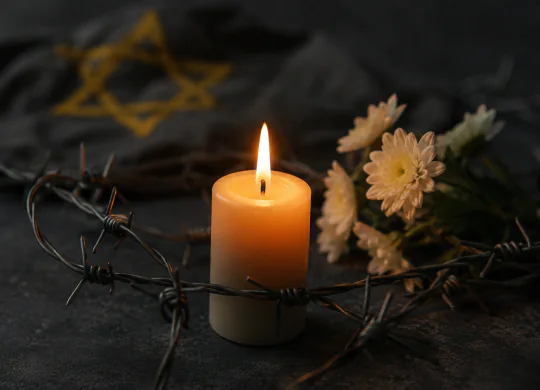
On May 14, Ukraine honors those who risked their lives during World War II to save Jews from Nazi persecution. Thousands of Ukrainian families, priests, doctors, and ordinary villagers hid children and adults, despite the threat of the death penalty. Learn more about the history of the Day of Remembrance for Ukrainians Who Saved Jews, the scale of the Holocaust in Ukraine, and the heroic deeds of the Righteous Among the Nations

During World War II, Ukraine became one of the main centers of the Holocaust in Europe. According to various estimates by historians, approximately 1.5 million Jews were killed here during the Nazi occupation, and mass shootings took place in hundreds of cities and villages—from Kyiv and Odesa to Kharkiv, Lviv, and Dnipro. One of the most famous symbols of the tragedy is Babyn Yar, where in just two days in September 1941, the Nazis shot over 33,000 Jews.
Despite the mortal danger, thousands of Ukrainians dared to help the persecuted Jews: they hid children, passed on food, forged documents, and helped them escape from the ghettos. For such actions, the occupying authorities punished not only the rescuers themselves but also their family members. However, many people consciously risked their own lives to save others.
Today, Ukraine honors the memory of these people with a special commemorative date—the Day of Remembrance for Ukrainians Who Saved Jews During World War II. This is not only a reminder of the tragedy of the Holocaust, but also of humanity, courage, and moral choice during the darkest periods of history.
In our previous article, we described how Ukraine is turning its resources into an instrument of revival and international recognition.

How did the Day of Remembrance for Ukrainians Who Saved Jews come about?
The Day of Remembrance for Ukrainians Who Saved Jews During World War II was officially established in Ukraine in 2021. The Verkhovna Rada of Ukraine adopted a resolution to honor, at the state level, those who helped Jews survive under Nazi occupation during the Holocaust.
May 14 was chosen as the commemorative date. It was on this day in 1948 that the establishment of the State of Israel was proclaimed. It is symbolic that the date honoring Ukrainian rescuers is linked to the history of the Jewish people and the memory of the millions of victims of the Holocaust.
The Israeli memorial complex Yad Vashem plays a special role in preserving the stories of the rescuers. It is Yad Vashem that bestows the honorary title of “Righteous Among the Nations” upon people of non-Jewish origin who saved Jews during the Holocaust, risking their own lives.
Ukraine ranks among the top countries in the world in terms of the number of Righteous Among the Nations. According to Yad Vashem, over 2,600 Ukrainians have received this title. Among them are priests, teachers, doctors, farmers, nuns, and entire families who hid Jews in their homes, monasteries, hospitals, and even in the forests.
Every year on May 14, Ukraine hosts memorial events, exhibitions, lectures, and wreath-laying ceremonies. Schools, museums, and cultural centers are increasingly hosting educational projects dedicated to stories of rescue during the Holocaust to preserve the memory of those who were not afraid to resist an inhumane system.
In our previous article, we discussed why there are two dates of surrender in World War II, how the Kremlin uses May 9 for its imperial ambitions, and why our departure from the myths of the USSR is final.
How Ukrainians Saved Jews During the Holocaust: Risks, the Scale of the Tragedy, and Human Choice
After Nazi Germany invaded the USSR in 1941, the territory of Ukraine became one of the main centers of the Holocaust in Europe. The occupying authorities established ghettos, carried out mass shootings, and deported the Jewish population. In many cities and villages, people were killed right near their homes—without trials and with no chance of survival.
According to estimates by historians and memorial organizations, approximately 1.5 million Jews were killed during the Holocaust on the territory of modern-day Ukraine. Mass executions took place in Kyiv, Kharkiv, Lviv, Odesa, Dnipro, Kamianets-Podilskyi, and hundreds of other settlements. One of the most famous symbols of the tragedy is Babi Yar, where in just two days—September 29 and 30, 1941—the Nazis shot over 33,000 Jews.
Extremely harsh rules were in effect in the occupied territories. Any assistance to Jews was considered a crime and punishable by death. Despite this, thousands of Ukrainians still dared to help people hiding from persecution.
Most often, this help took the following forms:
- Hiding children and adults in homes, basements, or outbuildings;
- Providing food, medicine, and warm clothing;
- Assisting with forged documents;
- Escorting people to safer regions;
- Concealing the Jewish heritage of children and passing them off as members of their own family.
Significantly, the rescuers were ordinary people: peasants, teachers, doctors, priests, monastery workers, and even teenagers. Many had no connection to Jewish communities before the war, yet they still chose to help, risking their own lives and the safety of their loved ones.
Historians emphasize that the actual number of Ukrainians who saved Jews may be significantly higher than the officially recorded figure. Some documents were lost during the war, and many witnesses never publicly spoke about their actions. At the same time, Ukraine is now among the countries with the highest number of Righteous Among the Nations recognized by Yad Vashem.
In our previous article on the fourth anniversary of the full-scale invasion, we described how Ukrainians commemorate the bloody events and tirelessly fight for their right to independence.
Stories of Ukrainians Who Rescued Jews During the Holocaust
During the Nazi occupation, helping Jews meant a deadly risk not only for one person but for their entire family. Despite this, thousands of Ukrainians agreed to hide people, share food, and help them avoid executions and deportations. Many of these stories remained unknown for decades, and some of the rescuers were officially recognized as Righteous Among the Nations only many years after the war.
The Makar family from the Lviv region saved at least eight people
Roman and Hanna Makari lived in Boryslav in the Lviv region. During the German occupation, they set up a hiding place in the basement of their own home, where they sheltered Jews who were trying to avoid arrest and execution. According to various sources, the family saved at least eight people.
The Makars not only provided shelter but also fully supplied them with food, clothing, and essential items. For those who had been forced to live in a confined space for years, they even organized a small library to boost morale and help maintain, at least in part, a sense of normal life.
After the war ended, the rescued Jews emigrated from Ukraine, and the story of the Makar family eventually came to the attention of international memorial organizations. In 2015, Roman and Hanna Makar were officially recognized as Righteous Among the Nations.
Don't want to miss important updates and useful articles? Subscribe to our weekly newsletter!
The Andriyevskys from Vinnytsia Region sheltered 13 people under one roof
Vasyl and Maria Andriyevsky from Vinnytsia Oblast had themselves endured difficult times—the family had suffered from dispossession and repression even before the start of World War II. However, despite their own hardships, they decided to help the Jewish family of their fellow villager, Froim Chmelik.
Eight Ukrainians and five Jews were hiding together in the Andriyevskys’ home. For over 30 months, the family shared food, medicine, and shelter with people who could be exposed by the occupying authorities at any moment.
It was particularly dangerous because there were always many people in the house, and any denunciation by neighbors could lead to the execution of all the residents. Despite this, the Andriyevskys did not refuse to help. In 2006, Yad Vashem recognized Vasyl and Maria as Righteous Among the Nations.
The Omelchenkos helped a family survive after the Babyn Yar tragedy
Konstantin and Olga Omelchenko lived on the outskirts of Kyiv near some unfinished buildings. In late September 1941, following the mass shootings at Babyn Yar, a Jewish woman named Ethel Oppenheim approached them with her two young children.
The Omelchenko family agreed to shelter the fugitives, even though they fully understood the consequences if they were discovered. They shared food and clothing, helped set up a living space, and even repaired the house where the family was hiding. Konstantin Omelchenko also protected those he had saved from blackmail and suspicion from those around them.
Thanks to the Omelchenkos’ support, the Jewish family was able to survive the Nazi occupation of Kyiv. Many years later, the couple was recognized as Righteous Among the Nations.
In our previous article, we talked about the history of the approval of the National Flag of Ukraine.
The Zubkovs saved a Jewish girl in Dnipropetrovsk
Maria and Vasyl Zubkov lived in Dnipropetrovsk and saved the life of 9-year-old Nelly Gordon. The girl was brought by a neighbor who asked them to temporarily shelter the child, as her Jewish heritage put her in mortal danger.
The most dangerous part was that the neighbors knew about Nelly’s background. To avoid exposure, the couple managed to convince the occupying authorities that the girl was their distant relative, and later effectively took her under their care as their own child.
Prior to that, Nelly had already miraculously survived after escaping from the area of mass shootings near Dovha Balka—a place locals called “Babi Yar.” In 1998, the Zubkov family was officially recognized as Righteous Among the Nations.
The Dyuk Family Saved a Future Nobel Laureate
Mykola and Maria Dyuk from the Lviv region hid several Jews, among whom was the future Nobel Prize laureate in chemistry, Roald Hoffmann. At the time of the occupation, the boy was only four years old.
After escaping the ghetto, the Hoffmann family found refuge in the village of Univ near Zolochiv. Mykola Dyuki worked as the principal of the local school, and it was in the attic of the school building that the fugitives hid. It is important to note that classes continued even during the occupation, so any careless word or accidental suspicion could have cost people their lives.
The Dyuk family did everything possible to keep the hiding place a secret. Many years later, it was Roald Hoffman who approached Yad Vashem with a request to officially recognize his rescuers as Righteous Among the Nations.
To learn more about the results of the Gradus study “Ukraine 2035: Strength, Vulnerability and Potential of the Country”, please follow the link.
Why is the memory of Ukrainian rescuers important today?
The Day of Remembrance for Ukrainians who rescued Jews during World War II has not only historical but also profound social significance today. This date serves as a reminder that even in times of mass violence and fear, people are capable of making moral choices and preserving their humanity.
The stories of the rescuers have become a symbol of courage and responsibility for the lives of others. Many Ukrainians helped Jews without weapons, without state support, and without any chance of a safe future for themselves. They acted in defiance of fear, knowing that entire families could be killed for their help.
Today, the topic of the Holocaust and the memory of the Righteous Among the Nations remains particularly important due to the rise of xenophobia, antisemitism, and hate speech in various countries around the world. That is why museums, memorial centers, and educational projects are increasingly focusing on the personal stories of people who saved others during the war.
In Ukraine, the memory of Holocaust victims and rescuers is honored in various ways:
- Memorial events and moments of remembrance are held;
- New monuments and memorial plaques are unveiled;
- Exhibitions, lectures, and documentary projects are organized;
- Topics related to the Holocaust and the Righteous Among the Nations are added to school curricula;
- Archives and eyewitness accounts of the war are digitized.
One of the most famous memorial sites remains the Babyn Yar National Historical and Memorial Reserve, where memorial ceremonies and international commemorative events are held regularly. Regional museums and local initiatives that explore stories of rescue in various cities across Ukraine also play an important role.
For modern society, this memory is not merely a part of the history of World War II. It serves as a reminder of the value of human life, our responsibility to future generations, and the importance of combating hatred and discrimination in all forms.
Today, the memory of significant chapters in Ukrainian history is preserved not only in museums and memorials but also in everyday symbols of support and unity. At Visit Ukraine, you can find patriotic merchandise featuring modern Ukrainian designs: clothing, accessories, and souvenirs that help promote Ukrainian culture and remind the world of the strength, resilience, and memory of the Ukrainian people. A portion of the proceeds from the sale of certain items also goes toward supporting important humanitarian and social initiatives.
Honor the heroes of the past and support those who defend Ukraine today - purchase patriotic merchandise at Visit Ukraine!

We remind you! Ukraine is undergoing a moment of rethinking itself — a country that defends freedom while opening its culture, nature, and history to the world as a source of inspiration and strength. From art to sustainable tourism, every direction is becoming part of the global conversation about modern identity and development. Read more about how Ukraine is transforming its resources into a tool for revival and international recognition.
Want to know more? Read the latest news and useful materials about Ukraine and the world in the News section.
We recommend purchasing it for a safe and comfortable trip to Ukraine:
Visit Ukraine Insurance – insurance covering military risks for entry and travel in Ukraine;
Visit Ukraine Car Insurance – car insurance with extended coverage in Ukraine;
Visit Ukraine Legal Advice – comprehensive legal support on entry to Ukraine;
Visit Ukraine Tickets – bus and train tickets to/from Ukraine;
Visit Ukraine Tours – the largest online database of tours to Ukraine for every taste;
Visit Ukraine Hotels – hotels for a comfortable stay in Ukraine;
Visit Ukraine Merch – patriotic clothing and accessories with worldwide delivery.
© 2018-2026, Visit Ukraine. Use, copying or reprinting of materials on this site is permitted only with a link (hyperlink for online publications) to Visit Ukraine.
All rights reserved.
Recommended articles
2 min
Events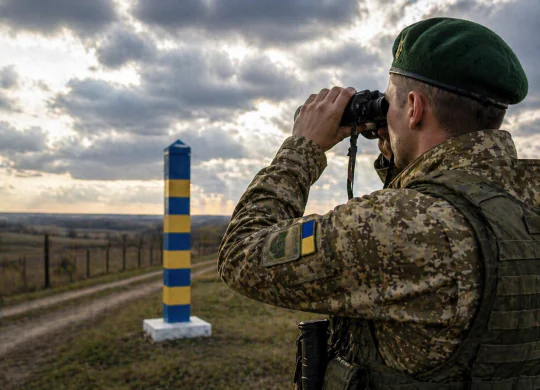
Ukrainian Border Guard Day is not only a professional holiday but also a reminder of the people who stand on the front lines of the nation’s defense every day. In 2026, the role of border guards has become even more crucial: they patrol the borders, participate in combat operations, and ensure the safety of millions of citizens. Learn more about the history of the holiday, the duties of the service, and its significance today
30 Apr. 2026
More details2 min
Events
Europe Day: history, meaning and significance of the holiday for Ukraine
Europe Day is a symbol of unity, peace and shared values that shape the future of the continent. Learn about the history of the holiday, its significance for Ukraine and how European support is reflected in modern initiatives and symbols of solidarity
09 May. 2026
More details3 min
Events
Ukrainian Armed Forces Infantry Day is not just a date on the calendar, but a reminder of those who hold the most challenging sections of the front line every day. It is the infantry who are the first to enter battle, hold their positions, and liberate Ukrainian territories. Learn more about the significance of this holiday, the role of the infantry in the war, and how Ukrainians can support the military
06 May. 2026
More details2 min
Events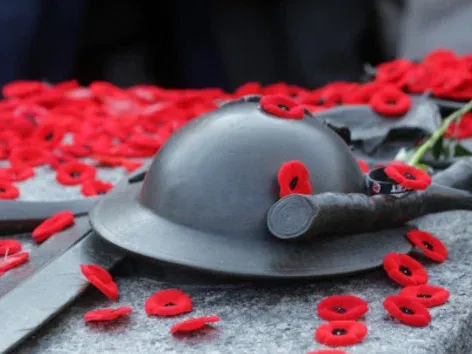
For decades, the Soviet authorities and the Russians turned the tragedy of the Second World War into an aggressive cult. But three years ago, Ukraine finally decided that on this day it would commemorate the victims alongside a free Europe. Find out why there are two dates for the surrender, how the Kremlin uses 9 May for its imperial ambitions, and why our departure from the myths of the USSR is final
08 May. 2026
More details