


.gif)
Child Removal in EU Countries: Under What Circumstances Can a Child Be Taken Away, and How Can You Protect Your Family?
-
How do social services operate in Europe?
- Physical punishment: even a “slap” can have consequences
- Unsupervised children: where does responsibility lie?
- School is not a formality: truancy can be a warning sign
- Medical Neglect: “It’ll go away on its own” Is Not an Argument
- Psychological abuse and loud arguments
- Living conditions: what may be inspected
- What should parents do to avoid problems?
- Steps to take if social services have reached out
- If the child has already been removed: first steps
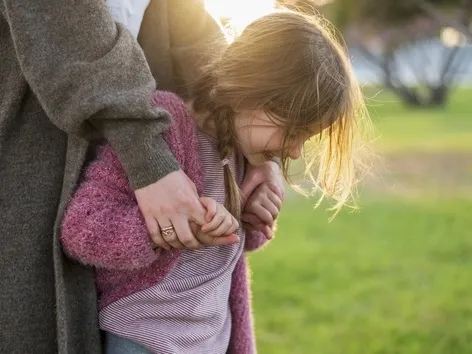
Ukrainian parents in the EU face different rules regarding child-rearing and supervision than they do at home. Find out under what circumstances social services may intervene in family life, how to avoid problems, and what to do if a child has already been removed

For Ukrainian families who have moved to EU countries, adapting is not just about language, school, and paperwork. There is another area where the rules differ drastically and where a lack of knowledge can be very costly: raising children and dealing with social services.
What has been viewed in Ukraine for years as a “family matter” is often a child safety issue in Europe. Schools, doctors, neighbors, and the police have a legal obligation to intervene if they see signs of abuse or neglect.
As noted by relocate.to, the issue of Ukrainian children being taken into custody has become a topic of public debate. In Italy alone, over the past four years, according to available data, 43 Ukrainian children have been removed: 18 of them have already been returned to their parents or relatives, 2 have been placed with Italian families with the consent of their legal guardian, and 3 reached the age of majority during the court proceedings. A high-profile case involved a refugee from Sumy who is trying to get her daughter back through the courts: the adoption decision was overturned, but the mother’s parental rights have not yet been restored.
Read also: In which countries can a child obtain citizenship by birth in 2026?
How do social services operate in Europe?
These agencies have different names in different countries: Jugendamt in Germany, Aide Sociale à l'Enfance in France, and child protection services in Poland, the Czech Republic, Italy, and the Netherlands. But the logic is the same everywhere: the state intervenes if there is a suspicion that a child may be in danger.
It is important to understand: social services do not automatically remove children because of a single incident. But they initiate an investigation if reports are repeated. And in situations where the threat is considered serious, a child may indeed be temporarily removed—until the circumstances are clarified or a court decision is made.
Approaches in Europe are primarily preventive: services do not wait for irreparable harm to occur, but instead offer psychological counseling, social support, and work with the family. Removal is a last resort. But grounds for intervention can include not only obvious violence but also systematic neglect of the child’s needs: lack of care, a dangerous environment, regular truancy, ignoring medical needs, or constant conflicts at home.
Physical punishment: even a “slap” can have consequences
One of the most significant differences from Ukrainian norms is the attitude toward corporal punishment. In most EU countries, any form of physical punishment is unacceptable—even if parents justify it as “discipline” or “tradition.”
A slap, a smack on the back of the head, a tug on the arm, a blow with a belt, a shove, or rough physical restraint can be classified as violence. Especially if it happened in public and was witnessed by bystanders.
In Germany, a child has a legally enshrined right to non-violent upbringing: physical punishment, psychological trauma, and humiliating treatment are expressly prohibited. Similar principles apply throughout the EU. Here, a child is not the “property” of their parents, but an individual with rights that the state is obligated to protect.
Unsupervised children: where does responsibility lie?
There is no single age in the EU at which a child can be left alone—the rules depend on the country, the child’s maturity, and the specific situation. But the general principle remains the same: if a child is unable to care for themselves, the parents are responsible.
Problematic situations can arise when a young child is left home alone, locked in an apartment, left in a car, entrusted to the care of an older minor who is not yet ready for this responsibility, or allowed to wander for extended periods without contact or adult supervision. Even if “everyone did it that way in Ukraine”—in the host country, this may be interpreted as negligence, especially if the child became frightened, got lost, or neighbors called the police.
Don't want to miss important updates and useful articles? Subscribe to our weekly newsletter!
School is not a formality: truancy can be a warning sign
In Germany, Schulpflicht—compulsory schooling—is in effect. Similar rules exist in most other EU countries. Unexcused absences, chronic tardiness, ignoring letters from the school, or attempting to take a child on vacation during the school semester—all of these can have consequences.
Schools in Europe are often the first to notice that something is wrong with a child. Teachers pay attention not only to academic performance but also to behavior, fatigue, appearance, bruises, emotional state, withdrawal, or constant hunger. If a child is absent from school without explanation, the school may notify the relevant authorities.
Medical Neglect: “It’ll go away on its own” Is Not an Argument
Parents in the EU are required to provide their child with medical care. Ignoring serious symptoms, refusing necessary treatment, or not having a pediatrician can raise suspicion.
A particular area of concern is self-medication. For example, when parents give their child antibiotics brought from Ukraine without a prescription from a local doctor. In many countries, this is perceived not as care, but as dangerous interference.
Injuries that parents cannot explain, or for which their explanations seem unconvincing, can also raise suspicion. Bruises alone are not grounds for accusation: children fall and get hurt. But it is better to explain immediately to the school or doctor what happened—especially if the injury is visible.
Psychological abuse and loud arguments
For many Ukrainians, it is unusual that neighbors in Europe might call the police because of shouting coming from behind the wall. But if people hear prolonged crying from a child, loud arguments, or the sounds of a fight—this is a normal and legitimate reaction.
The problem is not only physical punishment but also psychological pressure: humiliation, threats, constant shouting, intimidation, and aggressive arguments between adults in the child’s presence—all of these are “red flags.”
In European practice, a child is considered a victim even when they live in an atmosphere of fear, hear threats, or witness violence between adults—even if the blows are not directed at them.
Living conditions: what may be inspected
Social services may examine living conditions if there is a report of a dangerous environment. This is not about perfect order—families with children are often messy, and that is normal. Problems arise when there is unsanitary living conditions, dangerous objects within easy reach, a lack of a place to sleep, insufficient food, or a child who is consistently unkempt or hungry.
Services react with particular concern when several red flags coincide: a child skips school, looks exhausted, lacks proper clothing, and is afraid to return home.
What should parents do to avoid problems?
The best strategy is not to fear the system, but to understand its rules. Learn the local regulations. Check at what age a child is allowed to walk to school on their own, stay home, or go out without an adult. Don’t rely on unverified advice from Ukrainian chat rooms—rules can vary even between regions within the same country.
Avoid physical punishment. If you feel like you can’t handle it, it’s better to ask for help. In Europe, asking for psychological or social support is a sign of responsibility, not weakness.
Stay in touch with the school. If your child gets sick, notify the school the same day. If they’re having a hard time adjusting, don’t know the language, or are having conflicts, talk to the teacher—don’t wait until things reach a breaking point.
Have a local pediatrician. If your child has chronic health conditions, special needs, or psychological difficulties stemming from the war and relocation, it’s best for both the doctor and the school to be aware of this.
Steps to take if social services have reached out
If you receive a letter, a phone call, or social service representatives visit your family:
1. Do not ignore the contact. Refusing to communicate may be seen as an additional red flag.
2. Request an interpreter. Do not sign documents in a language you do not understand.
4. Remain calm and open. Show a willingness to cooperate, provide documents, and explain the situation.
5. Seek legal assistance. If the situation is serious, look for a family law attorney.
6. Document everything. Record the dates of calls and visits, the names of staff members, and keep letters from the school, medical certificates, and confirmations from doctors.
If your family is abroad and needs legal support—whether regarding immigration status or protecting your rights in dealings with government agencies — Visit Ukraine’s lawyers are ready to provide personalized consultation.

If the child has already been removed: first steps
The Ministry of Foreign Affairs and the Ombudsman recommend the following steps:
1. Do not sign anything without an interpreter.
2. Immediately notify the Ukrainian Embassy or Consulate in your region.
4. Call the hotline of the Office of the Ombudsman of Ukraine: 0 800 50 17 20 or email [email protected].
5. Find a local lawyer who is familiar with the specific operations of the social services in your city.
The most important thing — remember: no matter how complex the system may seem, it is designed to ensure the child’s safety. Transparency, openness, and a willingness to engage in dialogue are the best protection for the family.
We remind you! Obtaining a foreign passport for a child in a family where one parent has foreign citizenship requires additional steps. In particular, you must provide documentary proof of the child’s Ukrainian citizenship. Read more about the procedure for confirming citizenship and submitting documents for a child’s foreign passport.
Photo: Freepik
Want to know more? Read the latest news and useful materials about Ukraine and the world in the News section.
Our recommendation for a safe and comfortable trip:
Visit Ukraine Insurance - insurance for a safe stay abroad without unnecessary expenses;
Green Card - compulsory car insurance for traveling abroad;
Visit Ukraine Tickets - book tickets for buses, trains, and airplanes to/from Ukraine and between cities around the world;
Private Lawyer service - professional legal support on visa and migration issues;
Visit Ukraine Merch - buy patriotic clothing and accessories with worldwide delivery.
© 2018-2026, Visit Ukraine. Use, copying or reprinting of materials on this site is permitted only with a link (hyperlink for online publications) to Visit Ukraine.
All rights reserved.
Recommended articles
2 min
Popular
How Many Ukrainian Children in the EU Have Temporary Protection: Current Data
There are over 1.3 million Ukrainian children with temporary protection in EU countries. Find out which countries have the highest numbers, how the statistics are changing, and what rights they have in Europe
29 Apr. 2026
More details2 min
For refugees
Returning Ukrainians from the EU in 2026: What Ukraine and Europe Are Negotiating
Ukraine and the EU are negotiating financial support for Ukrainians who decide to return home. Find out what is known about the possible payments, who will finance them and what conditions for return can be expected in the coming months
01 Jun. 2026
More details2 min
For refugees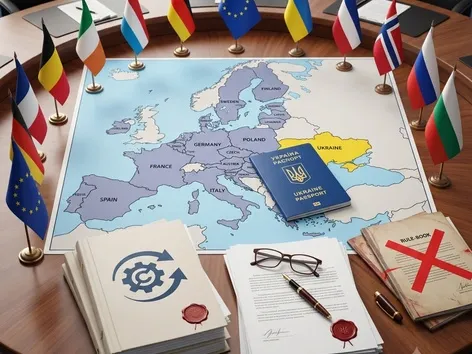
Ukrainians of Conscription Age in the EU Will Not Lose Temporary Protection: What Is Known in 2026
Ukrainians of military age in the EU who have already received temporary protection will not lose their status. Find out what changes the European Commission is discussing, who they may affect after 2027, and what is important for Ukrainians in Europe to know
03 Jun. 2026
More details2 min
For refugees
Brussels is considering revising the rules on residence in the EU for Ukrainians of conscription age following an official request from Kyiv. Men who entered the EU illegally may face the risk of losing their legal status, although the overall duration of the protective measures will be extended until 2028. Find out exactly who will be affected by these restrictions
14 Jun. 2026
More details