


.gif)
February 25 - Ukrainian Women's Day: history, meanings and contemporary significance
- Ukrainian Women's Day: why February 25 is of particular importance
- Lesya Ukrainka - a symbol of intelligence and resilience
- Outstanding Ukrainian women who changed history
- Modern Ukrainian women: the power of the present
- Ukrainian woman as part of national identity
- National merchandise as a way to support Ukrainian strength
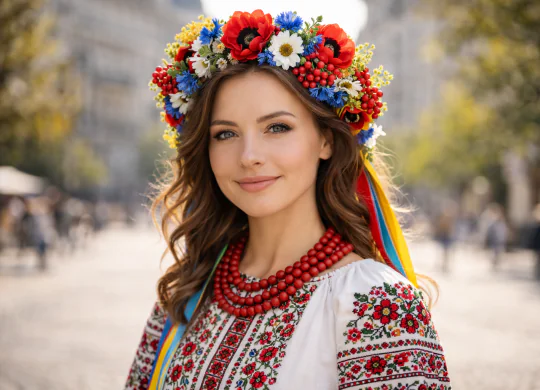
Ukrainian Women's Day is increasingly associated with the birthday of Lesya Ukrainka, a symbol of intelligence, strength of spirit, and national dignity. It is not just a new date in the calendar, but a rethinking of the role of women in the history and modernity of Ukraine. Learn more about the significance of the Ukrainian Women's Day and its cultural context

The calendar of commemorative dates is gradually changing as society itself changes. The Ukrainian Women's Day, which is increasingly associated with February 25, Lesya Ukrainka's birthday, is becoming an informal but eloquent symbol of respect for the contribution of Ukrainian women to the country's development. This date allows us to look at the role of women more broadly: not only as family caretakers, but also as cultural figures, civic leaders, defenders, and scientists. Today, the image of a Ukrainian woman combines strength, responsibility and the ability to change reality. That is why the meaning of this day goes far beyond the usual celebration.
In our previous article, we described how Ukraine is turning its resources into an instrument of revival and international recognition.

Ukrainian Women's Day: why February 25 is of particular importance
The idea of celebrating the Ukrainian Women's Day on February 25 was formed as a response to the need for a symbolic date associated with the national cultural context. Lesya Ukrainka's birthday is gradually being perceived not only as a memorable date for the famous writer, but also as a generalized image of women's strength, intelligence, and civic position in the history of Ukraine. That is why February 25 is increasingly mentioned as a day that can unite different generations of Ukrainian women around common values.
- An alternative symbolic date. February 25 is not an official holiday, but it is increasingly mentioned in the cultural and educational space as a day dedicated to the role of women in Ukrainian history.
- Lesya Ukrainka as the personification of female power. The poet's figure combines intellectual courage, personal endurance, and active citizenship, making her a symbol for the modern rethinking of the role of women.
- Difference from the March 8 tradition. Unlike the usual date, which has a complicated historical background, February 25 offers a different cultural focus - through national figures, language, and historical context, without denying the importance of international traditions.
Lesya Ukrainka - a symbol of intelligence and resilience
Lesia Ukrainka became one of the key figures in Ukrainian culture who shaped the modern understanding of national identity. Born on February 25, 1871, into an intelligent family that fostered education, language, and a European outlook, she was involved in the intellectual community from an early age. Her knowledge of foreign languages and deep knowledge of world literature and philosophy allowed her to take the Ukrainian word beyond the local context and integrate it into the broader cultural space.
Lesya Ukrainka's life was accompanied by a long struggle with a serious illness that required constant treatment and significantly limited her physical capabilities. At the same time, it was this struggle that shaped the image of inner resilience that is evident in many of her works. Despite the difficult circumstances, she created drama and poetry that raised the themes of freedom, dignity, personal responsibility, and resistance to injustice.
Lesia Ukrainka's work was not only literary but also socially important. Her texts became a tool for shaping national consciousness in the face of oppression of the Ukrainian language and culture. Through her strong female characters and philosophical depth, she showed women not as passive figures but as subjects of history capable of influencing the course of events. That is why Lesya Ukrainka's figure is perceived today as a symbol of intellectual freedom and indomitability that transcends the boundaries of a particular era.
Don't want to miss important updates and useful articles? Subscribe to our weekly newsletter!
Outstanding Ukrainian women who changed history
Ukrainian history knows many women whose influence went beyond professional achievements and became part of broader cultural and social changes. Their biographies are examples of overcoming the limitations of the era, reaching the international level, and forming a new understanding of the role of women in culture and public space.
Olga Kobylianska
Olha Kobylianska was one of the first Ukrainian writers to consistently raise the issue of women's equality and their right to self-realization. In her novels The Princess and Valse mélancolique, she portrayed heroines who consciously chose education, independence, and inner freedom, which was atypical of the social norms of the late nineteenth century. Her prose became an important part of Ukrainian modernism and influenced the formation of a new women's literary tradition in Ukraine.
Solomiya Krushelnytska
Solomiya Krushelnytska gained international recognition as an opera singer, performing at La Scala, the Metropolitan Opera, and theaters in Paris, Vienna, and Buenos Aires. She participated in the restoration of the reputation of Puccini's Madama Butterfly after its disastrous premiere, which became one of the most famous chapters in the history of opera. Krushelnytska consistently emphasized her Ukrainian origins, preserving her cultural identity even in the international environment.
Kateryna Bilokur
Kateryna Bilokur is an example of a self-taught artist whose talent has received international recognition. Her work has been shown at international exhibitions, including in Paris, and Bilokur was admired by Pablo Picasso, who noted her unique sense of form and color. Despite her lack of academic education and difficult living conditions, she created a recognizable style that is now considered part of Ukraine's national artistic heritage.
Lina Kostenko
Lina Kostenko became one of the key figures of the Sixties movement and fundamentally refused to accept creative compromises with Soviet censorship. Her works were not published officially for a long time, but were distributed among readers informally, forming an alternative cultural space. Kostenko's poetry combines artistic depth with a clear civic position, and her public statements have repeatedly become markers of the moral responsibility of the intelligentsia.
Kira Muratova
Kira Muratova has created her own cinematic language, which is characterized by a non-standard structure, psychological depth and bold themes. Her films were repeatedly censored during the Soviet period, and some of her works were limited in distribution or not officially screened. Despite this, Muratova received international recognition at film festivals and is now considered one of the most influential directors of Ukrainian auteur cinema.
Modern Ukrainian women: the power of the present
Today, Ukrainian women play a prominent role in areas that until recently were considered predominantly “male”. The full-scale war has only made this presence more visible: women are taking part in combat operations, working in frontline medical teams, organizing large-scale volunteer networks, and running businesses under constant risk.
Women serve in the Armed Forces of Ukraine in combat and command positions, as UAV operators, medics, communications officers, analysts, and instructors. They undergo military training on an equal footing with men and take part in combat missions in various areas. In recent years, the number of women who consciously choose a military career or join the defense on a contract basis has increased.
Volunteering and paramedical assistance are a separate dimension of the modern female presence. Ukrainian women volunteers coordinate logistics, procurement of equipment, medical supplies and transportation, and work to evacuate the wounded and civilians from dangerous areas. Paramedics and medics often work close to the front line, providing first aid in conditions where the price of a mistake is a human life.
Outside the military context, Ukrainian women remain active in science, education, and entrepreneurship. They lead research projects, launch startups, support small businesses in an unstable economy, and create initiatives to support internally displaced persons and veterans. In many cases, it is women who initiate local changes in communities, combining professional activities with social responsibility.
Earlier, we told you that two-thirds of Ukrainians believe that Ukraine will be prosperous in the EU in 10 years.
Ukrainian woman as part of national identity
The image of the Ukrainian woman was formed not only through individual biographies of famous figures, but also through everyday practices, language, and culture. Women were often the bearers of traditions in families, preserving and passing on folklore, customs, songs, and elements of national dress. Through the everyday life and upbringing of the next generations, a sense of cultural belonging was formed, which was not interrupted even during periods of political oppression.
In the modern context, the role of Ukrainian women goes beyond the private space. She is present in education, the public sector, cultural initiatives, and local government, shaping the public space with the Ukrainian language and values. It is through these daily practices - choosing a language, supporting cultural projects, participating in volunteer and educational initiatives - that national identity becomes not an abstract concept but a living part of everyday life.
Today, identity is increasingly manifested through symbols that people choose consciously: elements of traditional clothing, modern interpretations of embroidery, jewelry and accessories with national motifs. Such details are becoming a way to quietly but visibly declare one's position and belonging to a culture. It is at this intersection of everyday life and symbolism that a modern reading of Ukrainian identity is formed, in which the image of a woman plays a key role.
To learn more about the results of the Gradus study “Ukraine 2035: Strength, Vulnerability and Potential of the Country”, please follow the link.
National merchandise as a way to support Ukrainian strength
Symbols of national identity are increasingly moving from the museum space to everyday life. Clothes and accessories with Ukrainian symbols are becoming a way to quietly but recognizably declare one's position and support for cultural values. In today's context, national merchandise is perceived not as an attribute of the holidays, but as part of everyday choices - through the style, details, and meanings that people put into their image.
Supporting Ukrainian producers also has a practical dimension. Buying things created by local brands helps to save jobs, support creative industries and the economy in times of war. For many Ukrainian women, it is also a way to combine personal style with a value position - without being ostentatious, but with a clear inner meaning.
Visit Ukraine supports initiatives aimed at promoting Ukrainian identity through modern formats, including thematic collections and national merchandise. Such projects help to combine cultural meaning with practical things for everyday life, showing that supporting Ukrainian can be part of everyday decisions.
Wearing Ukrainian today is not just about memory, but about continuing the tradition of strong women who shaped culture through their own choices and actions. Even small symbolic details in clothing or accessories become markers of cultural belonging in modern life.
Honor the heroes of the past and support those who defend Ukraine today - purchase patriotic merchandise at Visit Ukraine!

We remind you! Ukraine is undergoing a moment of rethinking itself -a country that defends freedom while opening its culture, nature, and history to the world as a source of inspiration and strength. From art to sustainable tourism, every direction is becoming part of the global conversation about modern identity and development. Read more about how Ukraine is transforming its resources into a tool for revival and international recognition.
Want to know more? Read the latest news and useful materials about Ukraine and the world in the News section.
We recommend purchasing it for a safe and comfortable trip to Ukraine:
Visit Ukraine Insurance – insurance covering military risks for entry and travel in Ukraine;
Visit Ukraine Car Insurance – car insurance with extended coverage in Ukraine;
Visit Ukraine Legal Advice – comprehensive legal support on entry to Ukraine;
Visit Ukraine Tickets – bus and train tickets to/from Ukraine;
Visit Ukraine Tours – the largest online database of tours to Ukraine for every taste;
Visit Ukraine Hotels – hotels for a comfortable stay in Ukraine;
Visit Ukraine Merch – patriotic clothing and accessories with worldwide delivery.
© 2018-2026, Visit Ukraine. Use, copying or reprinting of materials on this site is permitted only with a link (hyperlink for online publications) to Visit Ukraine.
All rights reserved.
Recommended articles
2 min
Culture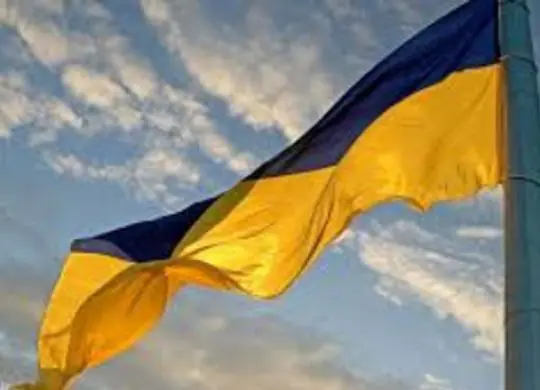
Day of Approval of the State Flag of Ukraine: How the main symbol of the state was formed
The national flag of Ukraine is not only an official symbol, but also the embodiment of freedom, struggle and national dignity. The day it was approved was an important milestone in the history of Ukrainian statehood and self-determination. Find out more about how the blue and yellow flag came to be, what it means to Ukrainians, and why its significance is especially evident today
28 Jan. 2026
More details3 min
Events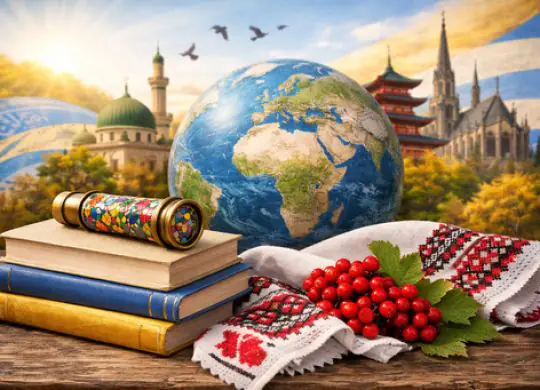
On February 21, the world celebrates International Mother Language Day, a date that reminds us of the value of linguistic and cultural diversity. This holiday is intended to draw attention to the problem of language endangerment and support for languages spoken by millions of people in different countries. Learn more about the history of this day, its traditions and significance for the world and Ukraine
21 Feb. 2026
More details3 min
Events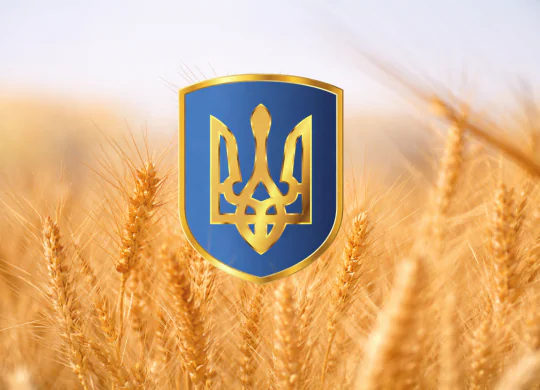
The State Emblem of Ukraine is not just a sign on documents and flags, but a symbol with deep historical roots and powerful meaning. On the Day of the National Emblem, we remember the path of the trident through the centuries, its significance for Ukrainian identity and its role in shaping the national consciousness. Learn more about the history, symbolism and meaning of the State Emblem of Ukraine
19 Feb. 2026
More details3 min
War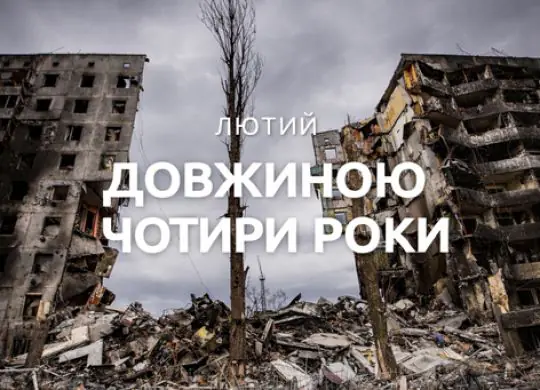
February 24 became a date for Ukraine that divided life into “before” and “after” but did not break the will to freedom. This day unites the memory of losses, gratitude to the defenders, and a common belief in victory and the restoration of the country. Learn more about how Ukrainians commemorate the beginning of the full-scale invasion and turn pain into action
24 Feb. 2026
More details