


.gif)
Coming of Age Abroad: How the Legal Status of Migrant Children in the EU Changes After They Turn 18

Millions of migrant children in Europe grow up without citizenship in their country of residence, and upon reaching adulthood, their legal status becomes even more vulnerable. European countries have different approaches to protecting these young people, but most of them terminate these protections precisely at age 18. Learn more about what awaits migrant children in the EU after they turn 18 and what new legislative initiatives could impact their future

Millions of minors live in European Union countries without citizenship in their host country. Until a child turns 18, European law guarantees them a certain level of protection—a temporary residence permit or a suspension of deportation proceedings. However, upon reaching the age of majority, the situation changes dramatically, and young people face a real threat of deportation. This was recently reported on the Relocate.to portal.
How many migrant children are in the EU, what risks does turning 18 entail, and what do new legislative initiatives entail—we discuss this further in the article.
Planning a trip abroad?
Get reliable medical insurance on the Visit Ukraine portal!

How many migrant children live in the European Union?
As of January 1, 2024, approximately 7.5 million minors in the EU did not hold citizenship of the country where they actually reside. A significant portion of these children are with their families, though there are also those who arrived in Europe on their own, unaccompanied by adults. According to Eurostat data for 2024, over 41,500 minors crossed the EU’s external borders illegally, of whom more than 12,400 were unaccompanied. This figure was the second highest in the history of record-keeping.
In total, approximately 112,000 minors without legal status were identified within the European Union during 2024. The highest numbers of such children were recorded in Greece (34,100), Germany (30,800), and Italy (13,200). The highest relative rates—per million population—were recorded in Slovenia, Greece, Croatia, and Cyprus. Minors accounted for 12.3% of the total number of irregular migrants, with boys (76%) predominating, mostly aged 14 to 17. Among girls, 70% were under 14 years old. These figures point to a trend: teenagers are more likely to migrate on their own, while younger children travel with family members.
Temporary protection in the EU for Ukrainians may be extended. Read about the decisions being discussed at the link.
What is “aging out” and why does reaching adulthood pose a threat to young migrants?
Most EU member states provide certain guarantees to migrant minors: temporary residence permits or a suspension of deportation orders. This approach remains in effect until the individual turns 18. After that, the young person effectively loses these guarantees and may receive a deportation notice. It is this transitional period—from being a minor to becoming an adult—that has been dubbed “aging out.” As noted by Infomigrants, it creates a legal loophole in which young migrants are left without adequate protection.
Even where legislation provides legal pathways to permanent residency, these often prove inaccessible in practice. In Sweden, young people are required to provide proof of full-time employment, which is difficult to balance with their studies. In the United Kingdom, one must demonstrate that they have spent at least half of their life in the country.
Additionally, bureaucratic procedures can be too costly for young people who have just left state care. Thus, the formal existence of integration mechanisms does not mean they actually work for this category of migrants.
How to transition from temporary protection to permanent residence in the EU — we explain at the link.
Don't want to miss important updates and useful articles? Subscribe to our weekly newsletter!
Case of deportation from Sweden: a real-life example of “aging out”
A telling illustration of this problem is the story of Ilya Takheraki, who arrived in Sweden from Iran at the age of eight. The young man grew up in this country, but immediately after turning 18, he received a deportation notice. His case attracted widespread public attention and sparked a wave of criticism.
Under public pressure, the Swedish government announced in early March 2026 a temporary suspension of deportations of migrant teenagers whose families remain in Sweden. This decision was a response to a specific situation, but it clearly demonstrated the systemic nature of the problem: children who have effectively grown up in European countries may, after turning 18, be deprived of the right to remain where they spent their childhood.
We covered financial assistance for Ukrainians in Europe in 2026 and how much is paid in different countries in a previous article.
The New EU Return Directive: What Risks Does It Pose for Minors?
The situation regarding the rights of young migrants could become even more complicated due to the European Union’s plans to adopt a new Return Directive. According to official data, in 2024, 25,200 minors received orders to leave the EU. Among them, 63% were boys. Most of these decisions concerned citizens of Turkey, Syria, Afghanistan, Russia, and Georgia.
According to Letitia Van der Ven, a senior researcher at the children’s rights organization PICUM, the new law could affect hundreds of thousands of children across the European Union, most of whom live in EU countries with their families. The potential adoption of the directive is causing concern among human rights organizations, as it could increase pressure on migrant families and lead to more forced returns—including for young people who have spent a significant part of their adult lives in Europe.
Staying abroad always involves health risks, especially for families with children. Having health insurance allows you to receive timely medical care without significant financial costs and is a mandatory requirement for staying in many EU countries. The Visit Ukraine portal offers convenient health insurance plans for a safe stay abroad.
Get a policy online and ensure your family’s protection today!
Reminder! After the war, only 10–15% of Ukrainian refugees may return home, an expert predicts. How many people will actually return, why most will remain abroad, and how this will affect Ukraine—find out by following the link.
Photo: Freepik
Want to know more? Read the latest news and useful materials about Ukraine and the world in the News section.
Our recommendation for a safe and comfortable trip:
Visit Ukraine Insurance - insurance for a safe stay abroad without unnecessary expenses;
Green Card - compulsory car insurance for traveling abroad;
Visit Ukraine Tickets - book tickets for buses, trains, and airplanes to/from Ukraine and between cities around the world;
Private Lawyer service - professional legal support on visa and migration issues;
Visit Ukraine Merch - buy patriotic clothing and accessories with worldwide delivery.
© 2018-2026, Visit Ukraine. Use, copying or reprinting of materials on this site is permitted only with a link (hyperlink for online publications) to Visit Ukraine.
All rights reserved.
Recommended articles
2 min
For refugees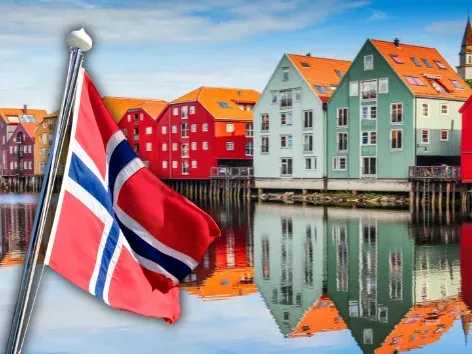
Norway will not grant temporary protection to men from Ukraine: who will this affect?
Norway is changing its rules on admitting Ukrainians, tightening controls on the granting of temporary protection. From now on, some men will no longer be eligible for simplified status and will have to go through the standard asylum procedure. Find out who will be affected by the new restrictions and what exceptions apply
27 Mar. 2026
More details2 min
For refugees
When will temporary protection in the UK end: how Ukrainians can avoid losing their legal status
Future plans for Ukrainians in the UK are no longer just a distant prospect — now is the time to make a decision. Visas have expiry dates, and there is no automatic route to permanent residency. Find out which visa routes actually lead to permanent residency
28 Mar. 2026
More details3 min
For refugees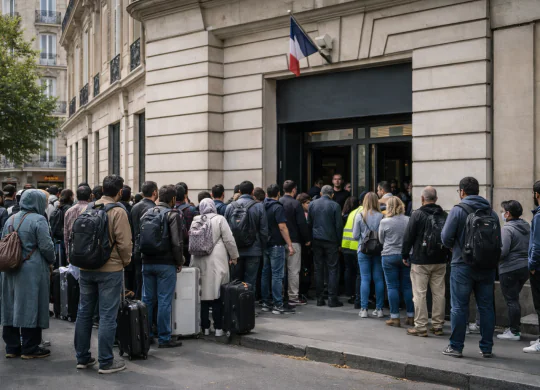
France has temporarily suspended the processing of some asylum applications, particularly those from Iranian and Lebanese nationals. The decision is due to the unstable situation in the region and the difficulty in assessing risks. Learn more about how the asylum system in Europe is changing and whether this will affect Ukrainians
30 Mar. 2026
More details2 min
For refugees
Ukrainians Are Leaving Finland: Why 40,000 Refugees Have Already Left and Where They Are Heading
Ukrainians are leaving Finland in large numbers due to difficulties finding work and the language barrier. Find out how many people have already left, why this is happening, and which countries Ukrainians are choosing
30 Mar. 2026
More details