


.gif)
Best cycling routes in Europe 2026: where to go on a bike trip
- Porto – Lisbon, Portugal
- Flanders, Belgium
- Utrecht – Amsterdam – The Hague, Netherlands
- Tuscany, Italy
- Catalonia, Spain (Grand Tour Catalunya Gravel)
- Danube Cycle Route Austria–Hungary
- La Voie Bleue, France
- Lake Constance, Germany – Austria – Switzerland
- Mallorca, Spain
- Black Forest, Germany
- Gothenburg – Falchöping (Ljungleden), Sweden
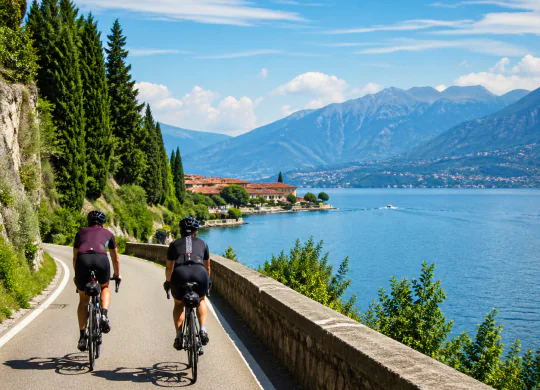
Europe is actively developing its cycling infrastructure, making cycling accessible even to beginners. By 2026, routes featuring moderate distances, convenient stops, and scenic locations will become increasingly popular. Learn more about the most interesting destinations for cycling trips in Europe

In 2026, cycling tourism in Europe is changing: instead of challenging athletic routes, travelers are opting for comfortable distances, safe roads, and the ability to ride at their own pace. The focus is not on speed or mileage, but on the experience of the journey.
European countries are actively developing cycling infrastructure: new routes are emerging, navigation is improving, and the number of services for cyclists is growing. As a result, even beginners can plan multi-day trips without extensive preparation. This article compiles the best cycling routes in Europe for 2026: from the Atlantic coast to river and wine regions.
Planning a trip abroad?
Get reliable travel insurance from the Visit Ukraine portal!

Porto – Lisbon, Portugal
One of Europe’s most popular coastal routes, connecting Portugal’s two key cities—Porto and Lisbon. This isn’t a challenging athletic trail, but a balanced journey with comfortable daily distances and plenty of stops.
The route runs along the Atlantic coast, alternating between beaches, fishing villages, and natural landscapes. The terrain gradually flattens out as you head south, so riding gets easier with each passing day.
- Daily distance: approximately 50–90 km
- Route type: coastal, mixed terrain
- Surface: asphalt + local roads
- Level: suitable for beginners and enthusiasts
The main advantage is flexibility. Here, it’s easy to adapt the route to your own pace: you can shorten the distances, make stops in coastal towns, or stay for a few days at the most beautiful spots. This is the perfect option for your first cycling trip through Europe.
Flanders, Belgium
One of the most convenient regions in Europe for cycling trips, with an almost perfectly flat terrain and a dense network of routes. The routes connect key cities—Brussels, Antwerp, Ghent, and Bruges. The distances between them are 50–80 km, so they’re easy to combine into a multi-day trip.
- Surface: mostly asphalt, with some sections along car-free canals
- Terrain: almost entirely flat
- Navigation: clear cycling signs throughout the region
- Infrastructure: rentals, repairs, cafes—every 10–20 km
Flanders is the center of professional cycling (Tour of Flanders), but most tourist routes are much simpler and tailored for amateurs. The main advantage is its compactness: in a single trip, you can visit several historic cities at once without complicated logistics.
Utrecht – Amsterdam – The Hague, Netherlands
The Netherlands is one of the best countries in the world for cycling trips: over 35,000 km of bike paths and fully adapted infrastructure.
The route between Utrecht, Amsterdam, and The Hague allows you to combine city trips with nature and the coast. The distances between the cities are 40–70 km, which is ideal for daily rides.
- Navigation system: knooppunten (routes by node numbers, making it easy to plan your route)
- Surface: dedicated bike lanes for nearly 100% of the route
- Terrain: completely flat
- Difficulty: suitable even for complete beginners
There are more bicycles in the country than people, so drivers are used to cyclists—this improves road safety. A practical advantage is complete freedom in planning: you can change your route along the way, shorten or extend the distance without being tied to a single track.
Tuscany, Italy
One of the most picturesque cycling regions in Europe, but with a caveat—the terrain here is undulating. It’s not a difficult sport, but the constant climbs are noticeable. Routes usually combine Florence, Siena, and Pisa, passing through wine-growing regions and historic cities.
- Distance: 30–70 km per day
- Terrain: hills, short climbs
- Surface: asphalt + rural roads
- Level: intermediate (or easier on an e-bike)
Tuscany has a well-developed network of bike-friendly hotels—many of them have repair shops, bike storage, and even menus for cyclists.
The key feature is the travel format: here, you don’t ride “for speed.” The route can easily be broken down into short segments with frequent stops for food, wine, and sightseeing.
Catalonia, Spain (Grand Tour Catalunya Gravel)
A new format for cycling tours in Europe—gravel routes—and Catalonia became one of the main destinations in 2026.
Grand Tour Catalunya Gravel is a route divided into separate stages that can be combined. It passes through quiet roads, the coast, and inland regions that are not typically included in classic tourist routes.
- Surface type: gravel + secondary roads
- Format: modular (you can choose individual stages)
- Distances: flexible, easily shortened
- Level: intermediate, but accessible to beginners as well
The popularity of gravel bikes in Europe has surged in recent years, which is why such routes are emerging. The main advantage is the lack of traffic. It’s a more peaceful alternative to classic bike paths.
Don't want to miss important updates and useful articles? Subscribe to our weekly newsletter!
Danube Cycle Route Austria–Hungary
One of Europe’s most convenient routes for multi-day cycling trips. The route runs along the Danube, so almost the entire path is flat with no steep elevation changes.
Daily segments are usually 40–80 km. There are many towns and villages along the route, making it easy to plan stops, overnight stays, and meals without complicated logistics. The most popular section is between Vienna and Budapest.
- Distance: 40–80 km per day
- Terrain: flat
- Surface: bike paths + roads with minimal traffic
- Level: ideal for beginners
The route is well-marked, with bike rentals, repair shops, and convenient train connections—you can shorten distances or create a flexible itinerary.
La Voie Bleue, France
One of France’s longest and most convenient routes, running from the border with Luxembourg to Lyon. The total length is about 700 km, but it’s easy to break it down into separate stages.
The route follows rivers and canals, so most sections are flat and comfortable even for beginners. A major advantage is that a significant portion of the route is completely separated from motor vehicle traffic.
- Distance: 40–70 km per day
- Terrain: flat
- Surface: bike paths + car-free waterfronts
- Level: suitable for beginners
Along the way, you’ll pass through the wine-growing regions of Burgundy, historic towns, and small villages where it’s easy to make frequent stops. This is a classic “slow travel” route where the focus isn’t on the kilometers, but on comfort and the local scenery.
Lake Constance, Germany – Austria – Switzerland
The circular route around Lake Constance is one of the most convenient in Europe for leisurely cycling trips. It is about 260 km long but can easily be broken down into short stages.
The route passes through three countries—Germany, Austria, and Switzerland—and you’ll ride along the water almost the entire time without any difficult climbs.
- Distance: 30–60 km per day
- Terrain: flat
- Surface: bike paths + waterfronts
- Level: ideal for beginners and families
A major advantage is the logistics: ferries operate across the lake, allowing you to shorten the route or change direction. Along the way, there are many beaches, rest areas, and towns with well-developed infrastructure for cyclists.
Mallorca, Spain
Mallorca is one of the most popular cycling destinations in Europe, where you can ride almost year-round. The island combines challenging mountain climbs with peaceful flat routes, making it suitable for riders of all skill levels.
The most comfortable routes run through inland areas and along the coast, where there is less traffic and more options for stops.
- Distance: 40–80 km per day
- Terrain: from flat to mountainous
- Surface: high-quality asphalt
- Level: from beginners to experienced
The infrastructure is highly developed: bike rentals, bike-friendly accommodations, repair services, and dedicated routes. The main starting points are Palma and Alcudia, from which it’s easy to plan routes of varying difficulty.
Black Forest, Germany
A less touristy but very comfortable region for leisurely cycling trips. The Black Forest is a combination of forest trails, valleys, and traditional German villages.
The terrain here is hilly, but most popular routes run through valleys, allowing you to avoid difficult climbs. E-bikes are also common, which significantly simplify the trip.
- Distance: 40–70 km per day
- Terrain: moderately hilly
- Surface: asphalt + forest roads
- Level: moderate (or easier with an e-bike)
The region attracts fewer tourists than the Alps or Tuscany and offers a more peaceful atmosphere. It’s a good option if you want to avoid crowds and ride at your own pace.
Gothenburg – Falchöping (Ljungleden), Sweden
A new 2026 route about 170 km long, combining bike paths, rural roads, and gravel sections. It can be completed in a few days or broken down into shorter trips.
The route passes through small towns and natural landscapes, including Alingsås—a town known for its coffee culture.
- Distance: 30–60 km per day
- Surface: mixed (asphalt + gravel)
- Terrain: moderate
- Level: versatile
The main advantage is flexibility. The route easily adapts to different fitness levels and is suitable for both short trips and a full-fledged cycling tour.
When planning a cycling tour through Europe, it’s important to consider not only the route but also safety. Travel insurance from Visit Ukraine covers medical expenses, injuries during outdoor activities, and other unforeseen situations on the road. This is especially important for multi-day trips, where physical exertion and changing conditions can affect your well-being. You can purchase a policy online in just a few minutes and travel with greater peace of mind, focusing on the route itself.
We remind you! Insurance is one of the mandatory documents when traveling abroad. Do Ukrainians need to purchase a policy when they plan to travel without a visa, what are the conditions and possible risks—we explain it here.
Want to know more? Read the latest news and useful materials about Ukraine and the world in the News section.
Our recommendation for a safe and comfortable trip:
Visit Ukraine Insurance - insurance for a safe stay abroad without unnecessary expenses;
Green Card - compulsory car insurance for traveling abroad;
Visit Ukraine Tickets - book tickets for buses, trains, and airplanes to/from Ukraine and between cities around the world;
Private Lawyer service - professional legal support on visa and migration issues;
Visit Ukraine Merch - buy patriotic clothing and accessories with worldwide delivery.
© 2018-2026, Visit Ukraine. Use, copying or reprinting of materials on this site is permitted only with a link (hyperlink for online publications) to Visit Ukraine.
All rights reserved.
Recommended articles
2 min
Travel
The Best European Destinations for Last-Minute Trips: Where Are Travelers Booking Last-Minute Trips?
Last-minute trips around Europe are becoming increasingly popular, with travelers increasingly choosing Eastern Europe, the Baltics, and the Balkans. Find out which destinations have seen the biggest increase in bookings and why they appeal to travelers
02 May. 2026
More details3 min
Transport
Which car to choose for travel: ranking of the best models in 2026
British experts have identified the best cars for travel. The list includes both budget models and modern electric and hybrid vehicles. Find out which cars offer the best balance of comfort, fuel efficiency, and practicality
03 May. 2026
More details3 min
Travel
Traveloffpath has named five cities in Southern Europe where you can relax without the crowds of tourists, even in the height of summer—from Cartagena, Spain, to Piran, Slovenia. Among them are destinations featuring UNESCO-listed Roman ruins, Venetian architecture, a Napoleon house-museum, and Greek heritage. Learn more about each of these cities and their main attractions
27 Apr. 2026
More details3 min
Where to go?
The most beautiful castles in Ukraine that are worth seeing in person
Medieval fortresses, Renaissance palaces, and mysterious ruins—dozens of castles have been preserved in Ukraine, each with its own centuries-old history. Ready-made itineraries have been developed for travelers, covering the most interesting castle complexes in Lviv, Volyn, Ternopil, and Zakarpattia regions. Learn more about Ukraine’s most beautiful castles and the tours that will help you visit them
28 Apr. 2026
More details