


.gif)
Food prices in Ukraine are almost on par with those in the EU: why are food prices rising, and what can we expect next?
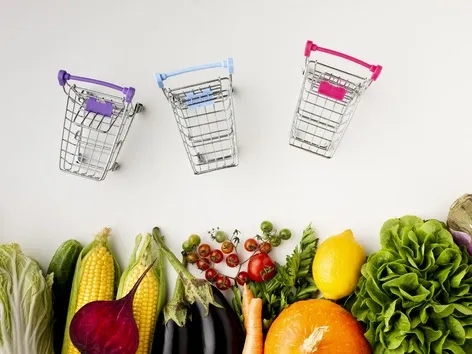
Food prices in Ukraine are increasingly approaching European levels, yet Ukrainians’ incomes remain significantly lower. Find out why food prices are rising rapidly, which products already cost as much as in the EU, and what to expect from prices in 2026

Just a few years ago, the price difference between Ukrainian and European supermarkets was obvious even without doing the math. However, in 2026, the situation changed dramatically: the cost of basic food items in Ukraine is increasingly approaching that of goods in Poland or Germany. This is discussed in an analytical article by Finance.ua.
At the same time, the main problem lies not only in high prices but also in the fact that Ukrainians’ incomes are still significantly lower than those in Europe.
How have food prices in Ukraine changed in recent years?
The full-scale war became a turning point for the Ukrainian food market. But even after 2023–2024, price increases did not stop. According to Finance.ua, between February 2022 and April 2026, basic food items saw the sharpest price increases:
● eggs — from 35 to 78 hryvnias per dozen;
● sunflower oil — from 52 to 82 hryvnias per liter;
● chicken breast — from 115 to 225 hryvnias per kilogram;
● pork — from 120 to 240 hryvnias per kilogram;
● milk — from 28 to 56 hryvnias per liter;
● wheat bread — from 22 to 48 hryvnias per loaf.
Thus, over four years, prices for basic food items have risen by 1.5–2.2 times. And this does not account for seasonal spikes in vegetable prices or specific crisis periods, as was the case with eggs.
The trend has been particularly noticeable in the meat and dairy products segment. In some categories, Ukrainian prices have already nearly caught up with European ones. As of April 2026:
● chicken breast in Ukraine costs about 225 hryvnias per kilogram, in Poland—approximately 198 hryvnias, and in Germany—228 hryvnias;
● pork in Ukraine costs 240 hryvnias, in Poland—225 hryvnias;
● milk in Ukraine costs 54 hryvnias, while in Poland—about 44 hryvnias;
● hard cheese in Ukraine costs 488 hryvnias, in Poland—approximately 417 hryvnias.
Analysts explain: European producers operate under more stable conditions and have significantly larger production scales. As a result, production costs are often lower than those of Ukrainian producers, who are forced to operate amid war, high fuel prices, and an unstable power grid.
Read also: Europe’s richest and poorest countries — new Eurostat data.
Don't want to miss important updates and useful articles? Subscribe to our weekly newsletter!
Why are food prices rising so rapidly in Ukraine?
Experts cite several reasons that have contributed to the sharp rise in prices:
1. Energy costs. Businesses are increasingly relying on generators, which significantly increases production costs. This is particularly felt by dairy plants, poultry farms, and meat processing plants, where refrigeration equipment must operate continuously.
2. Expensive logistics. Due to high fuel prices and complex delivery routes, transporting goods across Ukraine has become more expensive. In some cases, importing products from Poland is cheaper than transporting them between Ukrainian regions.
4. Rising costs of fertilizers and raw materials. A significant portion of fertilizers and plant protection products is imported. Therefore, any currency fluctuations automatically affect the cost of production and the final price of products.
5. Labor shortage. Mobilization and migration have created a serious labor shortage. Businesses are forced to raise wages for drivers, technicians, and production workers, and these costs are factored into the price of products.
6. Retail chains’ markups. A separate factor is marketing fees and bonuses charged by retail chains, which can add up to 20% to the cost of goods. In EU countries, such mechanisms are more strictly regulated by the state.
Why do Ukrainians feel the price hikes more acutely than Europeans?
The main problem is the imbalance between prices and incomes. Although certain products in Ukraine already cost almost as much as in Europe, wage levels remain significantly lower. That is why food expenses account for a much larger share of Ukrainian families’ budgets.
For their analysis, experts used the so-called “healthy diet basket” for an adult, comparing it to the average salary in Ukraine—30,356 hryvnias—and average incomes in EU countries.
The results showed that Ukrainians are forced to spend a significantly larger portion of their income on basic food items than residents of European countries.
What to expect from food prices in 2026?
According to macroeconomic forecasts, overall inflation in Ukraine in 2026 will be approximately 8–9%. But food inflation will traditionally be higher. The most sensitive to price increases remain:
● dairy products;
● bread;
● vegetables at the end of the storage season;
● products dependent on logistics and energy sources.
Economists note: this is not about sharp monthly spikes, but about a gradual yet steady rise in prices. Even during relatively stable periods, prices continue to rise by 1–1.7% each month.
Mykhailo Nepran, First Vice President of the Ukrainian Chamber of Commerce and Industry, believes that it is practically impossible to completely halt price increases under current conditions, as they are simultaneously influenced by the war, energy issues, logistics, and global economic trends.
Indeed, Ukraine has effectively entered the zone of European food prices, yet it has not come close to European income levels. It is this imbalance that Ukrainian consumers feel most acutely today. As long as costs for energy, logistics, and production remain high, prices in supermarkets are unlikely to start falling. On the contrary—even moderate inflation will mean a further gradual rise in food prices.
We remind you! European countries with a high quality of life continue to attract people from all over the world. Read about which countries topped the ranking of the best European countries to live and work in, how much it costs to live there, and what attracts foreigners to them.
Photo: Freepik
Want to know more? Read the latest news and useful materials about Ukraine and the world in the News section.
We recommend purchasing it for a safe and comfortable trip to Ukraine:
Visit Ukraine Insurance – insurance covering military risks for entry and travel in Ukraine;
Visit Ukraine Car Insurance – car insurance with extended coverage in Ukraine;
Visit Ukraine Legal Advice – comprehensive legal support on entry to Ukraine;
Visit Ukraine Tickets – bus and train tickets to/from Ukraine;
Visit Ukraine Tours – the largest online database of tours to Ukraine for every taste;
Visit Ukraine Hotels – hotels for a comfortable stay in Ukraine;
Visit Ukraine Merch – patriotic clothing and accessories with worldwide delivery.
© 2018-2026, Visit Ukraine. Use, copying or reprinting of materials on this site is permitted only with a link (hyperlink for online publications) to Visit Ukraine.
All rights reserved.
Recommended articles
2 min
Finance
Fuel cashback: Ukrainians have started receiving their first payments
The global oil market is in turmoil due to the situation in the Middle East, leading to a sharp rise in fuel prices at Ukrainian petrol stations. To protect motorists from price shocks, the government is continuing to operate a partial compensation scheme. Find out how the fuel cashback scheme works and how much you can save
09 May. 2026
More details2 min
Finance
Eurozone 2026: Which European countries will accept the euro?
Europe’s financial borders have changed in 2026. Bulgaria has officially adopted the euro, but many EU countries still retain their national currencies. To avoid losing money on currency conversion and to plan your travel budget properly, it is important to know the current composition of the Eurozone. Find out which countries accept the euro and where you will still need the local currency
04 May. 2026
More details1 min
Finance
The payment of 1,500 UAH has been postponed until May: who will receive the money by the 25th
Not all Ukrainians received the one-time payment of 1,500 UAH in April. For certain groups, the payment was postponed until May due to specific calculation procedures. Find out who qualifies and by what date the funds will be received
05 May. 2026
More details2 min
Finance
National cashback scheme extended: for how long?
The government is stepping up its support for the domestic market by extending the cashback scheme. The Cabinet of Ministers has updated the rules for awarding bonuses and approved the scheme’s operating schedule under martial law. Find out for how long the National Cashback scheme has been extended and how the payout rates have changed
06 May. 2026
More details