


.gif)
June 22 – Day of Mourning and Commemoration of War Victims: History, Facts and Significance for Ukrainians
- When is the Day of Mourning and Remembrance for War Victims observed in Ukraine?
- What was the cost of World War II for Ukraine?
- Ukraine in World War II: Facts Worth Remembering
- Why is the memory of war victims particularly important for Ukrainians today?
- How is the memory of war victims honored in Ukraine?
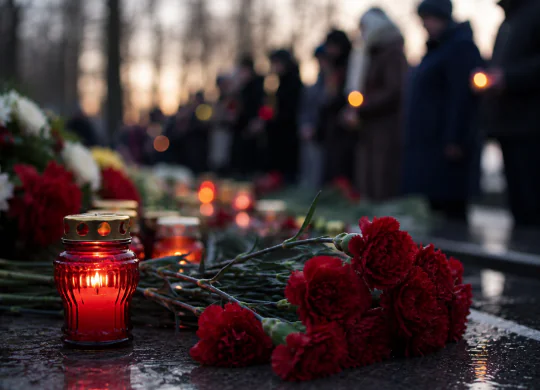
On June 22, Ukraine honors the memory of the millions of people who lost their lives in World War II. This date serves as a reminder not only of the tragic chapters of the past, but also of the value of peace, freedom, and human life. We explain why the Day of Mourning and Remembrance of War Victims remains relevant to Ukrainians today

The history of Ukraine is inextricably linked to the events of World War II. It was on June 22, 1941, that hostilities reached Ukrainian soil, marking the beginning of one of the most tragic periods of the 20th century. Millions of people lost their homes, were forced to flee their hometowns, or perished on the front lines and under occupation.
Today, the Day of Mourning and Remembrance for the Victims of War in Ukraine holds special significance. It serves as a reminder of the immense human losses, destruction, and suffering that war brings. At the same time, this date helps preserve historical memory and pass it on to future generations.
In our previous article, we described how Ukraine is turning its resources into an instrument of revival and international recognition.

When is the Day of Mourning and Remembrance for War Victims observed in Ukraine?
The Day of Mourning and Remembrance for War Victims in Ukraine is observed annually on June 22. This commemorative date was established by a Decree of the President of Ukraine in 2000 to honor the memory of the millions of people who died during World War II.
It was on June 22, 1941, that Nazi German troops launched a large-scale offensive against the Soviet Union. In the very first hours of the war, Kyiv, Odesa, Lviv, Zhytomyr, and other Ukrainian cities came under attack. Due to its geographical location, Ukraine quickly became one of the main theaters of war in Europe.
On this day, memorial events are held across the country, including the laying of flowers at monuments and military memorials, moments of silence, and ceremonies honoring the fallen. The Day of Mourning is intended not only to remind us of the tragedy of the past but also to preserve the memory of those whose lives were shattered by the war.
It is important to understand that this date is not dedicated solely to military personnel. Ukrainians honor all victims of the war—soldiers, civilians, children, and people who died under occupation, in concentration camps, during bombings, or during forced deportations. That is why the Day of Mourning remains one of the most important commemorative dates on the Ukrainian calendar.
In our previous article on the fourth anniversary of the full-scale invasion, we described how Ukrainians commemorate the bloody events and tirelessly fight for their right to independence.
Don't want to miss important updates and useful articles? Subscribe to our weekly newsletter!
What was the cost of World War II for Ukraine?
Ukraine was one of the hardest-hit countries in Europe during World War II. Hostilities raged on its territory for several years, and the front line crossed Ukrainian lands twice. The result was enormous human losses, the destruction of settlements, and economic catastrophe.
According to the Ukrainian Institute of National Remembrance, Ukraine’s total demographic losses are estimated at more than 8 million people. Millions of people died on the front lines or fell victim to the occupation regime, the Holocaust, mass executions, famine, and forced labor.
Among the most striking facts about Ukraine’s losses during the war:
- Approximately one in five residents of Ukraine perished
- More than 700 cities and urban-type settlements were destroyed or severely damaged
- More than 28,000 villages were affected
- About 2.4 million Ukrainians were deported to Germany for forced labor
- Thousands of enterprises, schools, hospitals, and cultural sites were destroyed
The fate of the civilian population was particularly tragic. Mass punitive operations, deportations, and the destruction of entire settlements left deep scars in the history of many regions of the country. Babi Yar in Kyiv, the Koryukivka tragedy in the Chernihiv region, and hundreds of other memorial sites have become symbols of these crimes.
It took Ukraine decades to overcome the consequences of the war. Rebuilding cities, reviving the economy, and returning to peaceful life required enormous efforts. That is why the memory of these events remains an important part of national history and serves as a reminder of the price society pays for war.
In our previous article, we talked about the history of the approval of the National Flag of Ukraine.
Ukraine in World War II: Facts Worth Remembering
The events of World War II on Ukrainian territory were among the most extensive in Europe. It was here that major offensive and defensive operations took place, influencing the course of the war far beyond the country’s borders. Many facts about Ukraine’s role in these events remain little known to the general public.
Ukraine became one of the main theaters of war in Europe
Virtually the entire territory of modern-day Ukraine found itself in a zone of combat or occupation. The front line crossed Ukrainian lands twice—first during the German advance in 1941, and later during the large-scale Soviet counteroffensive in 1943–1944. As a result, many cities and villages were destroyed more than once.
The Battle of Kyiv became one of the largest operations at the start of the war
In 1941, Kyiv became the site of one of the largest encirclement operations of World War II. After prolonged fighting, the city was occupied, and hundreds of thousands of soldiers found themselves surrounded. Today, historians consider this event one of the most tragic chapters of the war’s early stages.
Ukrainians fought on various fronts and in various armies
Millions of people from Ukraine took part in combat operations against Nazism. They fought not only as part of the Red Army but also in Allied military units, as well as in the resistance movement in occupied territories. The contribution of Ukrainians to the victory over Nazism is recognized by historians around the world.
The war affected nearly every Ukrainian family
For most Ukrainians, World War II is not just an abstract page in a textbook. The loss of loved ones, occupation, evacuation, forced labor, or life under constant threat became part of the family history of millions of people. That is why the memory of those events continues to be passed down from generation to generation and remains an important component of national memory.
To learn more about the results of the Gradus study “Ukraine 2035: Strength, Vulnerability and Potential of the Country”, please follow the link.
Why is the memory of war victims particularly important for Ukrainians today?
For Ukraine, the issue of remembering war victims has not only historical but also contemporary significance. Russia’s full-scale invasion in 2022 once again reminded the world of the suffering endured by civilians during armed conflicts.
Millions of Ukrainians were forced to flee their homes, thousands of people lost their lives, and many cities and villages suffered widespread destruction.
That is why the Day of Mourning and Remembrance of War Victims is now seen as more than just a reminder of the events of World War II. This date also prompts us to reflect on the tragedies that war brings to people, regardless of time or generation.
Historical memory helps society better appreciate the value of peace. Knowledge of past events allows us to understand why the protection of human life, human rights, and national independence remains one of the top priorities for any country.
Museums, archives, educational projects, and memorial complexes play a special role in preserving this memory. They not only preserve evidence of past events but also help new generations learn about their country’s history and draw their own conclusions from the lessons of the past.
For many Ukrainians, June 22 is a day when the memory of the fallen unites different generations. Honoring the victims of war is not only a tribute to those who survived the most tragic events of the 20th century, but also a reminder of our responsibility to preserve peace and prevent similar tragedies in the future.
How is the memory of war victims honored in Ukraine?
Every year on June 22, events are held throughout Ukraine dedicated to the Day of Mourning and the commemoration of war victims. This date serves as an opportunity to remember the millions of people who died on the front lines, fell victim to occupation, Nazi crimes, deportations, and other wartime tragedies.
In various regions of the country, ceremonies are held to lay flowers at memorials, mass graves, and monuments to the fallen. Government officials, veterans, military personnel, civic organizations, and ordinary citizens participate in these commemorative events to pay tribute to the victims of war.
Educational and cultural initiatives remain an important part of commemorating the past. Museums, libraries, archives, and educational institutions organize themed exhibitions, lectures, and informational projects dedicated to the events of World War II and the lives of those it affected.
Today, the memory of war victims is preserved not only through official ceremonies. Family histories, eyewitness accounts, photographs, and archival documents play a major role in helping to pass on knowledge of the past to future generations.
The Day of Mourning serves as a reminder that behind every statistic lie human lives. That is why preserving historical memory remains an important part of national culture and helps society understand the true cost of war.
The memory of significant events in Ukrainian history is preserved not only in archives and memorials but also in symbols that unite people around shared values. On the Visit Ukraine platform, you can find patriotic merchandise featuring modern Ukrainian symbols, which helps support national culture and promote Ukraine around the world. Clothing, accessories, and souvenirs can serve as a symbolic reminder of the resilience of the Ukrainian people, their history, and their pursuit of freedom.
Honor the heroes of the past and support those who defend Ukraine today - purchase patriotic merchandise at Visit Ukraine!

We remind you! Ukraine is undergoing a moment of rethinking itself — a country that defends freedom while opening its culture, nature, and history to the world as a source of inspiration and strength. From art to sustainable tourism, every direction is becoming part of the global conversation about modern identity and development. Read more about how Ukraine is transforming its resources into a tool for revival and international recognition.
Want to know more? Read the latest news and useful materials about Ukraine and the world in the News section.
We recommend purchasing it for a safe and comfortable trip to Ukraine:
Visit Ukraine Insurance – insurance covering military risks for entry and travel in Ukraine;
Visit Ukraine Car Insurance – car insurance with extended coverage in Ukraine;
Visit Ukraine Legal Advice – comprehensive legal support on entry to Ukraine;
Visit Ukraine Tickets – bus and train tickets to/from Ukraine;
Visit Ukraine Tours – the largest online database of tours to Ukraine for every taste;
Visit Ukraine Hotels – hotels for a comfortable stay in Ukraine;
Visit Ukraine Merch – patriotic clothing and accessories with worldwide delivery.
© 2018-2026, Visit Ukraine. Use, copying or reprinting of materials on this site is permitted only with a link (hyperlink for online publications) to Visit Ukraine.
All rights reserved.
Recommended articles
2 min
War
Whilst propaganda reports a successful defence, Russian officers are secretly selling off their property and evacuating their wives from Sevastopol. Those remaining from the fleet command are already packing their bags. Find out what has forced the Russian army to rush preparations for their departure to Novorossiysk
15 Jun. 2026
More details2 min
Culture
Attack on the Kyiv-Pechersk Lavra: A neutral European country is ready to help with the restoration
Ukraine’s priceless cultural heritage was targeted during an overnight shelling of the capital: an enemy drone damaged historic sites at the Kyiv-Pechersk Lavra. One of the European Union member states will help restore the sacred sites to their former glory. Find out all the details
16 Jun. 2026
More details2 min
War
NATO countries continue to step up their defense activities on the Alliance’s eastern flank. The Suwalki Corridor is one of the key areas where the allies regularly conduct joint exercises. Learn more about the “Brave Boar” exercise involving Lithuania, Poland, and France in June 2026
17 Jun. 2026
More details2 min
War
Who can return from AWOL without facing charges: Defense Ministry gives a clear answer
The government is offering a second chance to service members who have temporarily left their posts. The new mechanism allows them to legally resume service by independently selecting a unit through the “Army+” app. Find out who will be completely exempt from punishment for leaving their unit without permission and how to properly file a report by September 20
21 Jun. 2026
More details