


.gif)
The EU may extend temporary protection for Ukrainians, but in a different format
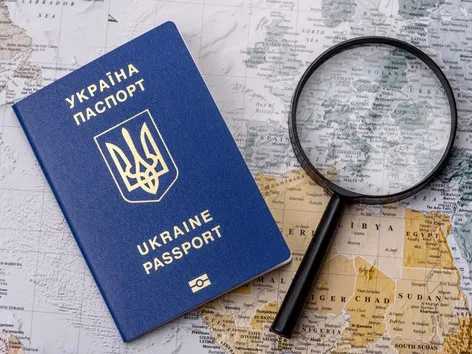
The EU is preparing to discuss the future of temporary protection for Ukrainians and has not ruled out another extension. Find out why the current model might be changed, what “residual status” means, and what Ukrainians can expect in EU countries

The European Union will soon revisit the issue of future temporary protection for Ukrainians. However, this time the discussion will focus not only on a possible extension of the current mechanism but also on potential changes to it. euractiv.com reports on this.
What exactly will be discussed in the EU?
At the technical level, a meeting of European diplomats and officials is planned, during which they will consider the possibility of another extension of temporary protection for Ukrainians.
However, the discussion is already moving beyond the simple question of “whether to extend or not.” There is growing talk within the EU that the current model could be changed, and the protection itself transformed into a new format.
Why has the EU started talking about new rules?
Last year, member states agreed on a recommendation to gradually phase out the temporary protection mechanism through the so-called coordinated transition of Ukrainians to more stable legal statuses. Specifically, this refers to:
● work-related residence permits;
● statuses tied to education;
● long-term forms of legal residence;
● support for voluntary return to Ukraine when conditions permit.
However, in practice, this transition is proceeding slowly and unevenly.
Why aren’t Ukrainians transitioning en masse to other statuses?
An internal EU document notes that the number of transitions to other legal statuses remains low. In addition, opportunities for obtaining a new status vary greatly depending on the country.
Some countries have already begun to establish mechanisms for transitioning from temporary protection to other forms of residence. But many countries do not yet have a clear procedure for action after the current model ends. It is precisely this unevenness that has become one of the main reasons for the new phase of discussions.
If you are planning to move to another EU country, change your status, or travel abroad, it is worth taking care of health insurance in advance. A policy for travel abroad on Visit Ukraine will help cover costs in case of emergency care and avoid additional financial risks while staying outside Ukraine.

Don't want to miss important updates and useful articles? Subscribe to our weekly newsletter!
What extension format is currently considered most likely?
Among the options currently under discussion is not simply extending temporary protection in its current form, but transforming it into a more limited format. Specifically, this refers to a possible “residual status”—a social protection mechanism for those Ukrainians who:
● belong to the most vulnerable categories;
● are not yet able to transition to another type of residence;
● objectively require further protection.
In other words, in the event of a new extension, the rules may become more narrowly defined and may not cover everyone in the same format as they do now.
Who will make the decision—the EU or individual states?
Another question that remains open is at what level the decision should be made. There is currently a discussion within the EU about whether the future approach should be centralized—that is, uniform for all member states—or whether states will be allowed to independently determine the mechanisms for legalizing the stay of Ukrainians after the current system expires.
This means that even with a common political decision, the practical rules may vary from country to country.
What has the European Commission said so far?
The European Commission’s Special Envoy for Ukrainians previously stated that five years of temporary protection is sufficient, and even in the event of a prolonged war, a different approach is needed. According to her, if there is an extension, it must have new parameters—both in terms of duration and content.
There is no final decision yet. But the very fact of this new discussion means that the EU is seeking a model for the period after the current approach ends.
We remind you! Ukrainians in the EU face risks when transitioning from temporary protection to a residence permit. Read about which mistakes most often lead to a loss of time or status and how to properly prepare for the change in documents.
Photo: chernikovatv / Freepik
Want to know more? Read the latest news and useful materials about Ukraine and the world in the News section.
Our recommendation for a safe and comfortable trip:
Visit Ukraine Insurance - insurance for a safe stay abroad without unnecessary expenses;
Green Card - compulsory car insurance for traveling abroad;
Visit Ukraine Tickets - book tickets for buses, trains, and airplanes to/from Ukraine and between cities around the world;
Private Lawyer service - professional legal support on visa and migration issues;
Visit Ukraine Merch - buy patriotic clothing and accessories with worldwide delivery.
© 2018-2026, Visit Ukraine. Use, copying or reprinting of materials on this site is permitted only with a link (hyperlink for online publications) to Visit Ukraine.
All rights reserved.
Recommended articles
1 min
Work
EU labor market: which professions and countries lead in terms of job vacancies
In 2026, the European labor market is showing uneven growth depending on the sector and country. The greatest demand is observed in applied professions, while some technological areas are shrinking. Find out where in the EU there are the most vacancies and which specialists are in demand today
02 Mar. 2026
More details3 min
For refugees
European countries are gradually changing their residency rules for Ukrainians, particularly for men of conscription age. Some countries are introducing additional checks, requiring proof of military status, or redirecting applicants to more complex asylum procedures. Find out which countries are tightening their residency requirements and who this might affect
13 Mar. 2026
More details2 min
Health
The End of Free Healthcare in the EU? What Will Ukrainians Now Have to Pay for Out of Pocket
The rules for access to medicine for Ukrainians are gradually changing in EU countries. Find out which medical services remain free for refugees in Europe, and which ones you increasingly have to pay for yourself
16 Mar. 2026
More details2 min
For refugees
The status of Ukrainian children in the EU depends on their parents’ legal residence and does not change automatically. Find out if a child can be deported, what will happen after 2027, and how families can retain their right to reside in Europe
17 Mar. 2026
More details