


.gif)
Temporary protection in the EU is coming to an end: 5 mistakes Ukrainians make when transitioning to a residence permit
- Why is the issue of transitioning to a residence permit relevant right now?
- How does temporary protection differ from a residence permit?
- Mistake #1: Putting off the transition “until later”
- Mistake #2: Holding dual temporary protection in different countries
- Mistake #3: Assuming that temporary protection counts toward the residency period for permanent residence
- Mistake #4: Listing social assistance as your primary income
- Mistake #5: Prolonged absence from the country without notification
- What to do right now: a brief action plan
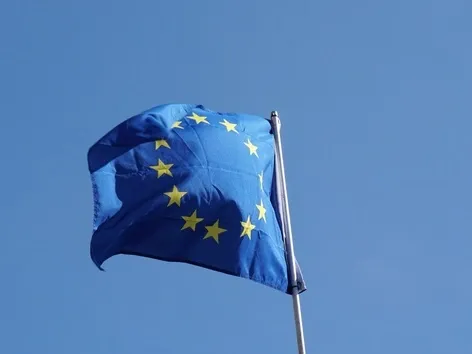
Ukrainians in the EU will soon have to transition from temporary protection to a residence permit. Find out what the 5 most common mistakes are and how to avoid them so you don’t lose your status

Millions of Ukrainians are currently residing in European Union countries under temporary protection. However, this status is not permanent: the EU directive, introduced in March 2022, is valid for a limited period, and it is already known that it has been extended for the final time until 2027. This means that the issue of transitioning to a national residence permit is becoming urgent right now. relocate.to writes about this.
Why is the issue of transitioning to a residence permit relevant right now?
Until recently, temporary protection was viewed as a stable solution: the right to residence, work, healthcare, and education were already guaranteed. However, legally, this status has always been temporary and tied to the circumstances of the war.
Despite the extension until 2027, EU countries are already preparing their own procedures for exiting this regime. This means that the transition to a residence permit is not a formality but a full-fledged process with clear requirements and deadlines.
In such circumstances, it is especially important to stay ahead of the curve: consulting with experts helps avoid critical mistakes. In particular, Ukrainians can contact immigration lawyers through Visit Ukraine to assess their chances in advance and prepare their documents correctly.

How does temporary protection differ from a residence permit?
Temporary protection (TP) is a collective status granted without individual review. It provides basic rights but does not establish long-term grounds for residence. At the same time, a residence permit is a personal authorization issued based on specific criteria; it requires proof of income, insurance, and sometimes language proficiency, and it opens the path to permanent residence and citizenship.
It is precisely during the transition between these statuses that Ukrainians most often make mistakes.
Don't want to miss important updates and useful articles? Subscribe to our weekly newsletter!
Mistake #1: Putting off the transition “until later”
The most common strategy is to wait until temporary protection expires. However, in most countries, the application process for a residence permit begins well before the expiration date. For example:
● In Poland, you can submit documents until the last day of the status’s validity, but not after that;
● In the Czech Republic, there may be short application windows (e.g., 30 days);
● In Germany, the waiting period for processing can last 3–6 months.
What to do: Check the deadlines now, start preparing your documents, and schedule your application.
Mistake #2: Holding dual temporary protection in different countries
Some Ukrainians are registered in several EU countries at once. This violates the rules, as temporary protection is permitted in only one country. Due to data sharing between countries, this fact is easily detected. Consequences:
● denial of a residence permit,
● revocation of one or both statuses,
● possible additional sanctions.
How to fix it: officially renounce the extra status and obtain confirmation.
Mistake #3: Assuming that temporary protection counts toward the residency period for permanent residence
Many people mistakenly believe that a few years of residence in the EU already entitle them to permanent residence.
In reality:
● years spent under temporary protection do not count,
● the count begins only after obtaining a residence permit,
● permanent residence typically requires at least 5 years.
That is, if you switch to a residence permit in 2026, you will not be able to apply for permanent residence until at least 2031.
Mistake #4: Listing social assistance as your primary income
Another common mistake is assuming that social benefits are sufficient proof of financial capacity. In most EU countries:
● social assistance is not considered income,
● it may even negatively impact the decision,
● you must prove a stable income or savings
For example, the Czech Republic sets a minimum annual income, Poland requires a salary or funds, and in Germany, the key condition is financial independence.
Mistake #5: Prolonged absence from the country without notification
Many Ukrainians lose their status due to a long absence from the country. Typically:
● more than 90 days without notification — grounds for revoking temporary protection,
● in some countries — even 30–60 days.
The reason — temporary protection is tied to actual presence in the country.
What to do: be sure to notify immigration authorities or consult a lawyer before traveling.
What to do right now: a brief action plan
To avoid risks, it’s best to act in advance:
● check the expiration date of your status,
● make sure you don’t have duplicate temporary protection,
● start gathering documents for a residence permit,
● seek advice from a lawyer or relevant organizations.
These steps will help you navigate the transition without losing your status or rights.
We remind you! The EU may change the rules for Ukrainian refugees and review temporary protection after 2027. Read about what restrictions are being discussed, who they might affect, and what this means for Ukrainians.
Photo: stockeraxel / Freepik
Want to know more? Read the latest news and useful materials about Ukraine and the world in the News section.
Our recommendation for a safe and comfortable trip:
Visit Ukraine Insurance - insurance for a safe stay abroad without unnecessary expenses;
Green Card - compulsory car insurance for traveling abroad;
Visit Ukraine Tickets - book tickets for buses, trains, and airplanes to/from Ukraine and between cities around the world;
Private Lawyer service - professional legal support on visa and migration issues;
Visit Ukraine Merch - buy patriotic clothing and accessories with worldwide delivery.
© 2018-2026, Visit Ukraine. Use, copying or reprinting of materials on this site is permitted only with a link (hyperlink for online publications) to Visit Ukraine.
All rights reserved.
Recommended articles
1 min
Documents
Ukrainians abroad will receive a new convenient way to obtain passports without repeated trips to consulates. Find out how the service will work through VFS Global, in which countries it is available and what will change for citizens
28 Mar. 2026
More details1 min
For refugees
Voting abroad: How Ukrainians can change their voting address
Ukrainians living abroad are urged to update their voter registration address in advance through the State Voter Registry. The opening of additional polling stations, the compilation of voter lists, and the overall quality of the voting process depend on the number of updated records. Find out how to correctly change your voter registration address and why you should do it now
27 Mar. 2026
More details2 min
For refugees
Coming of Age Abroad: How the Legal Status of Migrant Children in the EU Changes After They Turn 18
Millions of migrant children in Europe grow up without citizenship in their country of residence, and upon reaching adulthood, their legal status becomes even more vulnerable. European countries have different approaches to protecting these young people, but most of them terminate these protections precisely at age 18. Learn more about what awaits migrant children in the EU after they turn 18 and what new legislative initiatives could impact their future
30 Mar. 2026
More details2 min
Popular
New EU Rules Effective April 1, 2026: What Will Change for Ukrainians and How to Prepare
In April 2026, the EU’s residency rules for Ukrainians will change. Find out what new regulations will apply in the Czech Republic, Poland, Germany, and France, and what you need to do now
02 Apr. 2026
More details