


.gif)
Can You Obtain Renewed Protection in the EU: Current Rules for Ukrainians in 2026
- What is temporary protection in the EU and how does it work?
- Until what date has protection been extended in 2026?
- Is it possible to obtain temporary protection again?
- In which EU countries can temporary protection be renewed in 2026?
- What is important to consider before moving to another EU country?
- Who to turn to for help when obtaining renewed temporary protection?
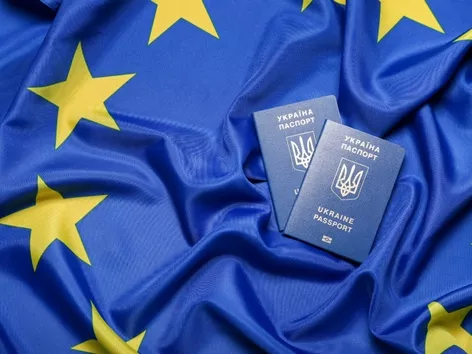
Temporary protection in the EU for Ukrainians has been extended, but the rules have become stricter in 2026. The eligibility criteria have changed, new restrictions have been introduced, and there are now differences between countries. Learn more about how temporary protection works in Europe and what you need to consider before moving

Following the start of the full-scale invasion, the European Union activated a temporary protection mechanism for Ukrainians. In 2026, it remains in effect, but the rules are no longer as straightforward as they once were.
Today, it is important to understand not only that protection is available but also its limitations. In particular, Ukrainians can no longer freely “choose” a country, and living conditions vary significantly by country.
In this article, we will explore how temporary protection works in the EU, what rules apply in 2026, and what to consider before moving.
Need help with migration issues?
Get professional support from Visit Ukraine lawyers!

What is temporary protection in the EU and how does it work?
Temporary protection is a special legal mechanism of the European Union, introduced after the start of the full-scale war to quickly protect Ukrainian citizens. It allows them to legally reside in EU countries without going through the standard asylum procedure.
This mechanism operates under the Temporary Protection Directive 2001/55/EC, which the EU activated in 2022 for the first time in history. In other words, Ukrainians automatically receive temporary protection status after registering in an EU country.
This status grants basic rights:
- Legal residence;
- Access to the labor market;
- Medical care;
- Education for children;
- Social support (depending on the country).
It is important to understand, however, that this is not the classic refugee status. The procedure is significantly simpler: there is no need to prove individual persecution or undergo a lengthy application review.
However, in 2026, the system became more regulated. Each EU country independently determines the conditions of residence, the level of benefits, and access to assistance. That is why the same status can mean a completely different standard of living depending on the chosen country.
Another key rule: temporary protection is granted in only one EU country. After receiving this status, a person cannot simply move to another country and reapply for it—to do so, they must officially renounce their previous status.
As of 2026, over 4 million Ukrainians are under temporary protection in EU countries, making this system one of the largest protection programs in Europe in recent decades.
Previously, we explained how Ukrainians can transition from temporary protection to Temporary Residence Permit (TRP) in the EU in 2026.
Until what date has protection been extended in 2026?
Temporary protection for Ukrainians in the EU has been officially extended until March 4, 2027. This decision was made at the European Union level and applies to all member states.
Important: the extension is automatic. In most countries, you do not need to reapply—the status is extended without any additional action, but there may be technical requirements (such as updating documents or registration).
At the same time, countries may establish their own rules for confirming status:
- Renewal of ID cards or residence permits;
- Confirmation of residential address;
- Verification of actual presence in the country.
It is also worth noting that temporary protection is not a permanent status. In 2026, the EU is already discussing scenarios for the period after 2027, including the transition to other types of residence permits.
Don't want to miss important updates and useful articles? Subscribe to our weekly newsletter!
Is it possible to obtain temporary protection again?
In 2026, formally obtaining temporary protection again in another EU country is possible, but it is not automatic and has significant restrictions.
The main rule is the “one EU country—one protection” principle. A person cannot hold status in two countries simultaneously. To apply in another country, you must first terminate or lose your previous status.
After that, the new country reviews the application as if it were being submitted for the first time. However, approval is no longer guaranteed: in 2026, EU countries began to take a more cautious approach to repeat applications, especially if the person has already received assistance in another country.
In fact, repeat protection can be obtained:
- In any EU country that continues to apply the directive;
- But only after exiting the previous system;
- And provided that the applicant meets the criteria.
The best chances for reapplying are in countries with more flexible policies toward Ukrainians. At the same time, even there, difficulties may arise: delays, additional checks, or a lack of social support at the outset.
It is important to understand that in 2026, renewed protection is no longer a “transition” but a full-fledged new procedure with its own risks. That is why most countries recommend choosing a country for long-term residence right away.
Learn more about the 5 most common mistakes Ukrainians make when transitioning from temporary protection to a residence permit and how to avoid them by following the link.
Don't risk your health and financial well-being while travelling! Take out reliable health insurance now and travel to Europe with complete peace of mind!

In which EU countries can temporary protection be renewed in 2026?
In 2026, renewing temporary protection will not be automatic. The key condition is that the person must not have active status in another EU country. Before moving, you must officially close your previous protection or ensure it has been terminated. After that, the new country will review the application according to its own rules.
Germany
In Germany, Ukrainians receive a residence permit under §24 of the Aufenthaltsgesetz. It grants the right to legally live, work, study, access health insurance, and receive social assistance.
Germany’s main advantage is its robust support system. Ukrainians without sufficient income can apply for Bürgergeld, housing assistance, and health insurance. At the same time, the country has a complex bureaucracy: you must register your address, file documents with the immigration office, register with the Jobcenter, and regularly confirm your status.
The most difficult issue is housing. In large cities, especially Berlin, Munich, Hamburg, and Cologne, finding an apartment on your own is difficult and expensive. Some new arrivals may be housed through municipalities, but the choice of city or region is often limited.
For families with children, Germany remains a convenient option: children have access to schools, daycare, and medical care. But adaptation often takes time due to the language barrier, long wait times for doctors, and the difficulty of finding housing.
In our previous article, we discussed possible options for transitioning from Paragraph 24 for Ukrainians in Germany.
Poland
Poland remains one of the most practical options for Ukrainians due to its proximity to Ukraine, a similar language, well-developed Ukrainian infrastructure, and a large labor market. PESEL UKR status grants the right to legal residence, work, medical care, and access to certain social programs.
Poland’s main advantage is rapid integration through employment. Ukrainians do not need a separate work permit, so finding a job is easier than in many other EU countries. The most vacancies are in logistics, manufacturing, retail, caregiving, services, and construction.
At the same time, social support in Poland is more limited than in Germany or the Netherlands. Public housing for newcomers is not guaranteed, so most people rent apartments or rooms on their own. In major cities—Warsaw, Kraków, Wrocław, and Gdańsk—rent remains expensive.
Poland is a good option for those planning to work and travel frequently to Ukraine. But for people without income or in need of long-term social support, this country may be more challenging.
We previously reported that Ukrainians in Poland will be able to apply for a CUKR card starting May 4, 2026.
Czech Republic
Czech Republic attracts Ukrainians with a stable labor market, relatively high salaries, and a large Ukrainian community. Temporary protection grants the right to residence, work, health insurance, and education for children.
A distinctive feature of the Czech Republic is stricter control over residency status. It is important to have a registered address, update documents on time, and report any changes. If a person leaves for an extended period or fails to meet registration requirements, problems with residency status or benefits may arise.
Housing is one of the main challenges. In Prague, Brno, and other major cities, rent is expensive and demand is high. Government-provided free housing is limited and typically not intended for long-term stays. Social assistance has also become more targeted: it is primarily received by those who truly cannot support themselves.
The Czech Republic is suitable for Ukrainians who are ready to start working quickly. The country is also convenient for families with children, but it is worth noting that spots in kindergartens and schools in major cities may be limited.
Learn more about the application process for a 5-year residence permit in the Czech Republic for Ukrainians by following the link.
The Netherlands
The Netherlands provides Ukrainians with temporary protection, including the right to residence, work, healthcare, education, and municipal support. The country has a strong social system, but housing remains the main challenge in 2026.
Ukrainians are often housed through municipalities, but there are not enough places. New arrivals may be offered temporary or shared housing, and not always in their desired city. Renting on one’s own is difficult due to high prices and a housing shortage.
An advantage of the Netherlands is the ability to work without a separate permit. Speaking English often helps in finding a job, especially in the service sector, logistics, agriculture, IT, and international companies. However, living in the country is expensive without a stable income.
For families with children, the Netherlands provides access to schools and basic healthcare. However, due to the strain on the system, there may be waiting lists to see doctors, and the registration process through the municipality sometimes takes time.
Learn more about the minimum wage in the Netherlands in 2026 by following the link.
Spain
Spain remains one of the more flexible options for Ukrainians. Temporary protection grants the right to residence, work, medical care, education for children, and basic social support.
The main advantage of Spain is relatively easier adaptation in terms of climate, safety, and quality of life. In major cities, there are Ukrainian communities, weekend schools, volunteer organizations, and support centers. However, social benefits are generally lower than in Germany or the Netherlands.
The job market varies by region. In tourist areas, there are more job openings in the service sector, hotels, restaurants, and caregiving, but the work is often seasonal. For stable employment, it is important to know Spanish, although in some regions the local language may also be required.
Housing in major cities and on the coast is expensive, especially in Barcelona, Madrid, Valencia, and Málaga. Therefore, Spain is better suited for those who have financial reserves, remote work, or are willing to look for work not only in major cities.
In our previous article, we discussed entry and residence rules, the procedure for obtaining temporary protection in Spain in 2026, and what assistance Ukrainians can expect.
What is important to consider before moving to another EU country?
In 2026, moving between EU countries to reapply for temporary protection is no longer simply a change of location but a legal process with risks. The first thing to check is whether your previous status has been terminated. Without this, your new application may not be accepted or may be rejected.
The second important point is housing. In most EU countries in 2026, there is no guarantee of free housing. Even if your status is granted, the first weeks or months may pass without stable housing, so it’s best to have a financial cushion.
It’s also worth realistically assessing your employment prospects. In countries with high levels of social support, it’s usually harder to find a job without knowing the language. Conversely, in places where it is easier to find work, social assistance may be minimal.
Bureaucracy is another factor to consider. In some countries, processing paperwork takes a few days; in others, weeks. This affects access to healthcare, employment, and benefits.
Another risk is a temporary loss of access to assistance. After having their status revoked in one country and before obtaining a new one in another, a person is effectively left without systematic support.
Therefore, before moving, it is important not only to choose a country but also to clearly understand exactly how the process will unfold: from closing the previous status to obtaining a new one and starting life from scratch.
Who to turn to for help when obtaining renewed temporary protection?
In difficult times, when you are forced to seek refuge abroad, every detail matters. Moving to a new country, adapting to a different culture, and, most importantly, obtaining legal status—these are challenges that require not only determination but also in-depth knowledge of international and national laws. This is where the assistance of immigration lawyers becomes indispensable.
Why is an immigration lawyer your key ally?
For refugees seeking to enter European countries and obtain protection there, an immigration lawyer is not just an advisor, but your guide through a complex legal system. Here’s why their help is critically important:
1. Navigating the legislative maze. Legislation regarding refugees and temporary protection varies in each EU country. An experienced immigration lawyer thoroughly understands these regulations, the rules for submitting documents, deadlines, and potential pitfalls, helping you avoid common mistakes that could cost you your status.
2. Proper preparation of documents. From initial registration to submitting an application for temporary protection or refugee status—every document must be filled out flawlessly. A lawyer will help you gather the necessary documents, verify that they meet the requirements, and ensure your interests are properly represented.
3. Protection of your rights. Unfortunately, during the process of obtaining protection, situations may arise where your rights are violated or you face a denial. An immigration lawyer will stand up for you, representing your interests at all levels—from immigration services to court—and challenging unfair decisions.
4. Personalized approach. Every refugee’s story is unique. A professional lawyer will examine your specific situation, provide personalized advice, and develop the optimal strategy for obtaining the necessary status.
5. Saving time and stress. Handling all issues related to immigration law on your own can be extremely exhausting. By entrusting this responsibility to professionals, you can focus on adapting to and settling into your new life.
What do our immigration lawyers offer?
Our specialists are ready to provide a full range of legal services for refugees heading to Europe:
1. Consultations on the procedures for obtaining temporary protection, refugee status, and other forms of protection available in EU countries.
2. Assistance in preparing and completing all necessary documents, applications, and forms.
3. Support during interviews with immigration authorities.
4. Representation of your interests before government agencies and in court.
5. Explanation of your rights and obligations in the host country.
Don’t face the challenges of the migration process alone. Entrust your future to experienced specialists who will help you navigate this journey with confidence and safety!
Reminder! For Ukrainians traveling to Ukraine via Poland, it is important to check your documents and residency status in advance. What Ukrainians need to know before traveling to Poland in 2026 — find out more at the link.
Want to know more? Read the latest news and useful materials about Ukraine and the world in the News section.
Our recommendation for a safe and comfortable trip:
Visit Ukraine Insurance - insurance for a safe stay abroad without unnecessary expenses;
Green Card - compulsory car insurance for traveling abroad;
Visit Ukraine Tickets - book tickets for buses, trains, and airplanes to/from Ukraine and between cities around the world;
Private Lawyer service - professional legal support on visa and migration issues;
Visit Ukraine Merch - buy patriotic clothing and accessories with worldwide delivery.
© 2018-2026, Visit Ukraine. Use, copying or reprinting of materials on this site is permitted only with a link (hyperlink for online publications) to Visit Ukraine.
All rights reserved.
Recommended articles
3 min
Finance
Pensions in Poland for Ukrainians in 2026: Who Is Eligible and How to Receive Benefits
Poland remains one of the key destinations for Ukrainians working abroad, so the issue of pensions is becoming increasingly relevant. As of 2026, clear rules apply: work experience in both countries is taken into account, and benefits may be calculated separately. Learn more about who is eligible for a pension in Poland and how to apply for it
26 Apr. 2026
More details2 min
Documents
Ukrainians living abroad can apply for or renew their passport at a Ukrainian embassy or consulate. To do so, you must submit an application in person, prepare the required documents, and take into account specific requirements for certain categories of applicants. Learn more about the required documents, the processing time, and how to expedite the process
21 Apr. 2026
More details2 min
For refugees
Ireland Is Ready to Pay Ukrainians to Return Home: Here’s How Much They’re Offering
Ireland plans to pay Ukrainians to return home. Find out what payments are being offered, why the policy is changing, and what this means for Ukrainians
21 Apr. 2026
More details2 min
For refugees
Ukrainians are leaving one of the EU countries in droves: around 75% of refugees have already left
Whilst millions of Ukrainians are settling in specific parts of Europe, nearly 75% of migrants have already left certain EU countries. Meanwhile, demographers are sounding the alarm, predicting a second wave of migration. Find out which European country Ukrainians are leaving en masse and why experts believe that 80% of citizens may remain abroad permanently
22 Apr. 2026
More details