


.gif)
Deportation instead of work: how Ukrainians from Poland are being turned away in Germany
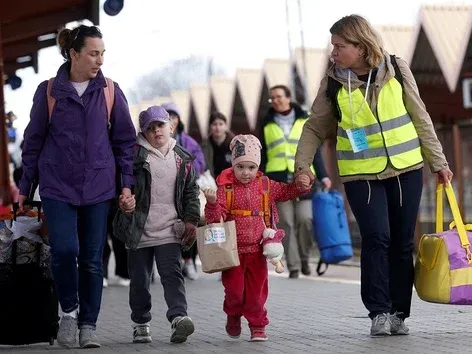
Ukrainian citizens who work legally in Poland are increasingly facing deportation during business trips to Germany. The reason for this is special migration rules and the requirement for an additional visa, which not all employers and employees are aware of. Find out why Germany is returning Ukrainians to the border, what a Vander Elst visa is, and how this decision may change in the near future

Recently, there have been increasing reports in the media about cases where Ukrainian workers sent from Poland to Germany are being detained and sent back. Despite having legal documents for residence and work in Poland, some of them are being banned from re-entering Germany or even the Schengen area. The situation has prompted a reaction at the European Union level, writes inpoland.net.pl.
Ukrainians with Polish documents: why they are not allowed to work in Germany
This concerns third-country nationals (in particular from Ukraine) who work legally in Polish companies and have a residence permit or long-term visa issued by Poland. Polish employers send them on short-term business trips to Germany to perform work or provide services.
However, Germany has a rule that such workers must obtain an additional German visa, known as a Vander Elst visa. Without it, staying and working even for less than 90 days is considered a violation of national regulations.
Don't want to miss important updates and useful articles? Subscribe to our weekly newsletter!
What is a Vander Elst visa?
A Vander Elst visa is a special permit required for workers from countries outside the EU if they are already legally employed in one EU member state but are sent to work in another.
The application must be submitted in person at a German diplomatic mission. The procedure involves:
making an appointment in advance (which is often a problem due to the lack of available slots),
the applicant's personal presence,
submitting a large package of documents,
filling out a separate application for each employee.
In practice, this complicates or even prevents the rapid transfer of a group of workers from Poland to Germany.
The position of the European Commission
The European Commission has already begun to review the situation. Brussels believes that the requirement for an additional visa may violate the principle of freedom to provide services enshrined in EU treaties.
The Commission has sent an official notice to Germany. Berlin has two months to respond and explain its position or change the rules. If this does not happen, the case may proceed to the next stage of the procedure and ultimately end up in the Court of Justice of the European Union.
Why are deportations happening?
According to experts, the German federal police are treating Vander Elst's lack of a visa as a violation of migration rules. As a result, workers may be:
detained,
forcibly returned to the Polish border,
or banned from re-entering Germany or the Schengen area for two years.
Some cases were accompanied by personal searches and interrogations, even if the workers had valid Polish residence and work permits.
Labor mobility experts emphasize that formally, people did not violate Polish laws or the terms of their stay, but due to the lack of an additional German visa, they found themselves outside the legal field in Germany.
Why is it difficult to obtain a visa?
Company representatives note that in practice, it is almost impossible to obtain a Vander Elst visa. Among the main difficulties are:
lack of available appointments at German consulates;
lengthy document review;
requirement to submit an application for only one employee at a time;
need to be physically present at the diplomatic mission.
For businesses, this effectively blocks the ability to quickly send teams of employees to Germany.
What does this mean for Ukrainians?
For Ukrainians who work legally in Poland, it is important to understand that a Polish residence and work permit does not automatically give them the right to work in Germany, even if it is a short-term assignment.
While the case is still being considered at the EU level, the risk of checks and returns at the border remains. Therefore, employers and employees need to check the requirements in advance and consider the possibility of obtaining an additional visa.
The situation could set a precedent for the entire European Union, as it concerns the balance between national migration control and the freedom to provide services within the EU. If the European Commission succeeds in bringing about change, the rules for posted workers could be significantly simplified.
That is why it is important for Ukrainians in Germany to clearly understand their rights and obligations. In complex or controversial situations, it is worth consulting with specialists. The Visit Ukraine platform offers consultations with immigration lawyers for Ukrainians, who can help you understand your residence status, social benefits, employment, and interaction with German government agencies — without the risk of losing your legal privileges.

We remind you! Germany has significantly tightened its migration rules, changing the procedures for asylum, deportation, and naturalization. Read how the new laws will affect Ukrainians and who is at risk of losing support.
Want to know more? Read the latest news and useful materials about Ukraine and the world in the News section.
Our recommendation for a safe and comfortable trip:
Visit Ukraine Insurance - insurance for a safe stay abroad without unnecessary expenses;
Green Card - compulsory car insurance for traveling abroad;
Visit Ukraine Tickets - book tickets for buses, trains, and airplanes to/from Ukraine and between cities around the world;
Private Lawyer service - professional legal support on visa and migration issues;
Visit Ukraine Merch - buy patriotic clothing and accessories with worldwide delivery.
© 2018-2026, Visit Ukraine. Use, copying or reprinting of materials on this site is permitted only with a link (hyperlink for online publications) to Visit Ukraine.
All rights reserved.
Recommended articles
1 min
Finance
The government is launching a new interest-free loan program for citizens who have changed their place of residence due to extraordinary circumstances. The maximum amount of assistance can reach about 430,000 hryvnia, and the budget will compensate banks for the interest. Find out who is eligible for a loan and how to obtain one
11 Feb. 2026
More details2 min
Documents
Is it possible to obtain a foreign passport without Rezerv+: what Ukrainians abroad need to know
For many Ukrainians, obtaining a foreign passport outside Ukraine has become not just a convenience, but a necessity. However, in 2025, the rules for conscripts changed, and the usual procedures no longer work as before. The new requirements relate to military registration and digital data verification, which raises many questions for applicants abroad. Find out if it is possible to obtain a foreign passport without ‘Reserve+’ and what nuances are important to consider
11 Feb. 2026
More details2 min
Transport
Ukrzaliznytsia is introducing dynamic pricing for premium SV and 1st class Intercity+ carriages. Find out how ticket prices will change depending on the season, day of the week, demand, and date of purchase
12 Feb. 2026
More details2 min
Transport
Winter car washing without risks: how to preserve the body, locks, and mechanisms
In winter, cars quickly become covered in dirt and chemicals, but washing them in cold weather requires a careful approach. Choosing the wrong time or conditions can lead to moisture freezing in the mechanisms and additional problems during operation. Learn more about how to wash your car in winter without damaging the body, locks, and key systems
12 Feb. 2026
More details