


.gif)
Renting apartments in Kyiv after a harsh winter: why prices haven't dropped and what's happening in the market

The rental market in Kyiv has remained stable after a harsh winter, despite power cuts and heating disruptions. Find out why prices haven't dropped, how demand has changed, and what's happening in the affected areas of the capital

After months of power outages and heating disruptions, the rental market in Kyiv did not show the expected drop in prices. As of the end of February 2026, the average cost of renting a one-room apartment in the capital was 17,000 UAH. Over the past month, the price has not changed, and on an annual basis, it has remained at the same level. This is evidenced by data from LUN.
Rental dynamics in Kyiv: from peak to stabilization
Rental rates peaked in August 2025, when the average cost of a one-room apartment reached UAH 20,000. After that, prices gradually declined, and within six months, the market lost about 15% of its peak level.
At the end of autumn, rents began to rise again. However, in January–February 2026, when Kyiv experienced frequent power outages and interruptions in heat supply, the growth stopped.
“We are seeing a situation that is atypical for Kyiv: prices are not rising year on year. For the capital, this is rather an exception,” notes Lyudmila Kiryukhina, head of LUN Statistics.
Don't want to miss important updates and useful articles? Subscribe to our weekly newsletter!
Areas without heating: did the crisis affect prices?
In most areas of the capital, rental rates have increased over the year. At the same time, in the Dniprovskyi and Darnytskyi districts, which were most affected by the lack of heating, prices remained at last year's level.
LUN separately analyzed buildings on the left bank that were disconnected from the heat supply. As of February 24, there were 249 rental listings in such buildings, compared to 274 at the end of January. The change is not statistically significant, meaning that there was no mass influx of apartments onto the market.
Similarly, there has been no significant drop in prices in these buildings — rental costs remain stable.
According to Lyudmila Kiryukhina, the market in the affected areas has effectively taken a wait-and-see approach. For prices to actually fall, tenants would need to move en masse. However, in difficult circumstances, people often choose to wait out the crisis period.
Apartment owners are also in no hurry to lower their rates, focusing on December prices before the shutdowns and hoping for a quick normalization of the situation.
Demand for rentals: decline and recovery
One of the key indicators of demand is the average time it takes to find a tenant. In early January, an apartment in Kyiv was on the market for an average of 9 days. After the shelling on January 11, this figure rose to 15 days. This means that during the period of severe frosts and heating outages, demand fell by about 40%.
However, at the end of February, the average exposure period decreased to 10 days. This indicates a gradual stabilization of the market and a return of demand to almost the level of the winter holidays, which is traditionally not high.
The situation shows that even during a period of energy instability, the capital's rental market did not collapse.
Demand temporarily decreased but quickly recovered.
For tenants, this means that a significant reduction in housing costs is not to be expected at this time. For owners, it means that a wait-and-see strategy can be effective in short-term crises.
Separately, it is worth considering the risks for property owners in wartime. Damage to housing or other force majeure circumstances can have financial consequences. That is why more and more Ukrainians are considering the possibility of taking out express property insurance, including through Visit Ukraine — this allows them to minimize risks and protect their investment even in unstable times.

We remind you! In December, Ukrainian banks issued almost UAH 2 billion in mortgage loans, with the largest amount going to the Kyiv region and the capital. Read about the current rates, where most mortgages are taken out, and how the real estate market is changing.
Photo: freepik
Want to know more? Read the latest news and useful materials about Ukraine and the world in the News section.
We recommend purchasing it for a safe and comfortable trip to Ukraine:
Visit Ukraine Insurance – insurance covering military risks for entry and travel in Ukraine;
Visit Ukraine Car Insurance – car insurance with extended coverage in Ukraine;
Visit Ukraine Legal Advice – comprehensive legal support on entry to Ukraine;
Visit Ukraine Tickets – bus and train tickets to/from Ukraine;
Visit Ukraine Tours – the largest online database of tours to Ukraine for every taste;
Visit Ukraine Hotels – hotels for a comfortable stay in Ukraine;
Visit Ukraine Merch – patriotic clothing and accessories with worldwide delivery.
© 2018-2026, Visit Ukraine. Use, copying or reprinting of materials on this site is permitted only with a link (hyperlink for online publications) to Visit Ukraine.
All rights reserved.
Recommended articles
2 min
Real estate
The eOselya programme: what income do you need to buy a home?
Mortgages under the ‘єОселя’ programme look attractive on paper, but in practice, the key conditions are the level of official income and the region where the property is purchased. How much you need to earn for the bank to approve the loan, what portion of your salary is consumed by the monthly payment, and where the down payment is highest — all of this directly affects the actual affordability of the programme. Find out what income is required to purchase an apartment under the ‘єОселя’ programme in different cities of Ukraine
07 Feb. 2026
More details2 min
Real estate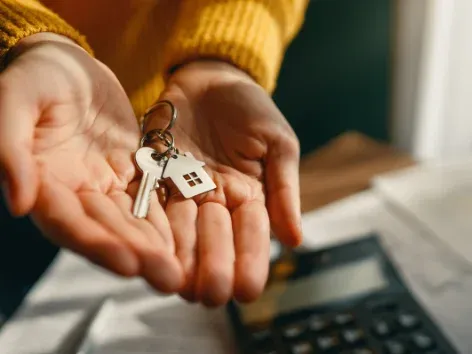
Housing reform in Ukraine: who can now count on free housing
The state is changing its approach to housing policy: the usual queues are becoming a thing of the past, and free flats are no longer common practice. The new housing reform law introduces digital accounting, social rent and clearly defines who can actually count on state-funded housing and who will be offered alternative support mechanisms. Find out who will retain the right to free housing and what options are now available to other citizens
13 Feb. 2026
More details2 min
Real estate
Lease with the right to purchase in Ukraine: how will the mechanism work?
Lease with the right to purchase may become an alternative to a mortgage for Ukrainians without start-up capital. Find out how the mechanism will work, what conditions are necessary for its launch, and what risks should be taken into account
20 Feb. 2026
More details2 min
Real estate
The housing market is already preparing for post-war recovery, and experts are looking for cities where prices are likely to rise the fastest. One Ukrainian metropolis combines economy, port infrastructure and limited supply, creating ideal conditions for a jump in square metre prices. Find out where real estate could rise in price by tens of per cent immediately after the end of the war
25 Feb. 2026
More details