


.gif)
Financial Assistance for Ukrainians in Europe in 2026: How Much Do Different Countries Pay?
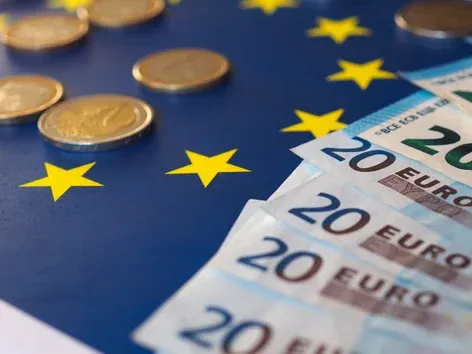
European countries continue to provide financial support to Ukrainians under temporary protection. The amount of monthly payments varies significantly by country—ranging from 200 to over 560 euros per adult. Learn more about the amounts of aid for Ukrainians in Germany, Poland, the Czech Republic, the Netherlands, France, Spain, and Italy in 2026

Millions of Ukrainians who fled abroad due to the full-scale invasion continue to live in European Union countries and neighboring states. For most of them, financial support from their host country remains a vital source of stability, especially during the initial phase of adaptation. The amount of benefits varies significantly depending on the country, family composition, and whether there are children.
We explain below what kind of assistance Ukrainians receive in Germany, Poland, the Czech Republic, the Netherlands, and other countries.

Assistance for Ukrainians in Germany in 2026
Germany remains one of the most generous countries in Europe regarding financial support for Ukrainian refugees. Ukrainians with temporary protection status receive assistance at the same level as citizens of the country—through the Bürgergeld system. The monthly payment for an adult is approximately 563 euros. This amount is intended to cover basic needs—food, clothing, everyday goods, and other expenses.
Families with children are eligible for additional payments, the amount of which depends on the child’s age—ranging from 357 to 471 euros per month. Additionally, housing rent and medical care costs are covered separately. Thus, the total amount of support for a family with children can be significantly higher than the basic rate, making Germany one of the most attractive destinations for Ukrainian migrants in financial terms.
It is worth remembering that Germany is tightening the rules regarding unemployment benefits starting July 1, 2026.
How much do Ukrainians receive in Poland?
Poland, which has accepted the largest number of Ukrainian refugees among all EU countries, has a slightly different approach to financial support. A one-time registration allowance amounts to 300 zlotys, equivalent to approximately 70 euros. This payment is intended to cover immediate needs upon arrival.
The main instrument of regular support is a monthly child allowance of 800 zlotys (about 180 euros). This program applies to all children residing in Poland, regardless of their parents’ citizenship. Overall, the level of direct cash payments in Poland is lower than in Germany or the Netherlands, but the country compensates for this with access to social infrastructure and integration programs.
By the way, Poland has changed the system for obtaining work permits for Ukrainians. Details — follow the link.
Don't want to miss important updates and useful articles? Subscribe to our weekly newsletter!
Benefits for Ukrainians in the Czech Republic and Central European Countries
The Czech Republic provides Ukrainians with monthly assistance of approximately 200–230 euros per adult. In the first few months after arrival, this amount may be slightly higher, as additional settlement costs are taken into account. Children receive between 140 and 170 euros per month. Additional support is provided in the form of coverage for housing costs and basic needs.
The Czech assistance model is designed to gradually reduce payments as refugees integrate into society. This encourages employment and financial independence.
At the same time, during the initial stage, the level of support covers basic expenses, especially for families with children, where the total amount of payments increases proportionally to the number of family members.
Remember! The Czech Republic is changing the rules for the stay of foreigners.
Financial support for Ukrainians in the Netherlands and France
The Netherlands provides Ukrainian refugees with monthly payments of 260–350 euros per person. Additionally, a separate amount for food is provided—about 215 euros. Housing is provided through municipalities, which significantly reduces the overall financial burden on families. The overall support package in the Netherlands is one of the most comprehensive in Europe.
France uses a slightly different model—a daily payment of approximately €6.80, which amounts to about €200 per month. This approach allows refugees to receive funds regularly and allocate them to their current needs. In addition to financial assistance, Ukrainians in France have access to the public healthcare system, which covers basic medical services.
Assistance for Ukrainian Refugees in Spain and Italy
Spain provides Ukrainians with monthly assistance of approximately €400 per adult. An additional payment of 100 euros is provided for each child in the family. In addition to direct financial payments, Spain has integration programs that include language courses and job search assistance. These programs are designed to help refugees become financially independent more quickly.
Italy offers approximately 300 euros per adult and an additional 150 euros per child. The maximum amount of assistance for a single family is capped at approximately 900 euros. It is important to note that specific amounts may vary depending on the city of residence, official status, income level, and family composition. In most of the countries listed, in addition to cash payments, Ukrainians also have access to free healthcare, education for children, and employment assistance programs.
Many Ukrainians living in European countries travel between countries in their own cars—visiting relatives in neighboring countries, commuting to work, or simply exploring the region. To travel on highways in countries such as the Czech Republic, Hungary, Slovakia, Slovenia, Romania, Bulgaria, Moldova, and Switzerland, you must pay a road toll via an electronic vignette—an e-vignette.
An e-vignette is an official digital document confirming payment for the use of toll roads. There is no need to print or affix it: the system automatically records the vehicle’s license plate via cameras on the highways. A separate vignette is issued for each country, and its validity period can range from a few days to one year.
Get your electronic road vignette quickly and conveniently on the Visit Ukraine portal and travel on European roads without unnecessary paperwork!

Reminder! The EU is preparing to discuss the future of temporary protection for Ukrainians and does not rule out a new extension. Why the current model might change, what “residual status” means, and what Ukrainians can expect in EU countries — find out by following the link.
Photo: Freepik
Want to know more? Read the latest news and useful materials about Ukraine and the world in the News section.
Our recommendation for a safe and comfortable trip:
Visit Ukraine Insurance - insurance for a safe stay abroad without unnecessary expenses;
Green Card - compulsory car insurance for traveling abroad;
Visit Ukraine Tickets - book tickets for buses, trains, and airplanes to/from Ukraine and between cities around the world;
Private Lawyer service - professional legal support on visa and migration issues;
Visit Ukraine Merch - buy patriotic clothing and accessories with worldwide delivery.
© 2018-2026, Visit Ukraine. Use, copying or reprinting of materials on this site is permitted only with a link (hyperlink for online publications) to Visit Ukraine.
All rights reserved.
Recommended articles
3 min
For refugees
European countries are gradually changing their residency rules for Ukrainians, particularly for men of conscription age. Some countries are introducing additional checks, requiring proof of military status, or redirecting applicants to more complex asylum procedures. Find out which countries are tightening their residency requirements and who this might affect
13 Mar. 2026
More details2 min
For refugees
The status of Ukrainian children in the EU depends on their parents’ legal residence and does not change automatically. Find out if a child can be deported, what will happen after 2027, and how families can retain their right to reside in Europe
17 Mar. 2026
More details2 min
For refugees
Ukrainians in the EU face risks when transitioning from temporary protection to a residence permit. Find out which mistakes most often lead to delays or loss of status, and how to properly prepare for the change in documentation
20 Mar. 2026
More details2 min
For refugees
The EU may extend temporary protection for Ukrainians, but in a different format
The EU is preparing to discuss the future of temporary protection for Ukrainians and has not ruled out another extension. Find out why the current model might be changed, what “residual status” means, and what Ukrainians can expect in EU countries
23 Mar. 2026
More details