


.gif)
Resumption of Air Travel in Ukraine: A Working Group, Insurance, and the Prospects for the First Flights
- Working Group on the Resumption of Aviation in Ukraine: Composition and Tasks
- Aviation Insurance: The Main Obstacle to Resuming Flights
- Which airport in Ukraine might be the first to reopen?
- International flight permits to Ukraine: why is one country’s decision not enough?
- Signals from airlines and the strategic importance of reopening the skies
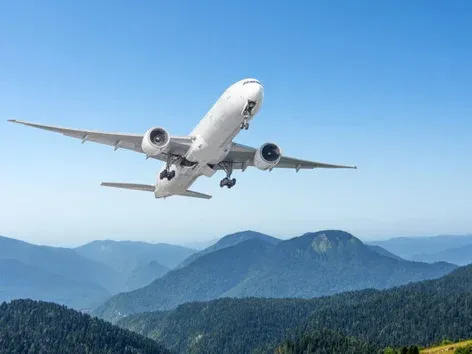
Ukraine has taken a new step toward resuming commercial flights—the government has established a special working group, and some airlines are already declaring their readiness to fly. Complex issues regarding insurance, safety, and international approvals remain to be addressed. Learn more about the prospects for resuming flights, potential airports for the first flights, and the main obstacles along the way

The issue of civil aviation returning to Ukrainian skies has once again taken center stage. UNIAN recently covered this topic in detail, reporting on the creation of a special working group and featuring comments from industry experts. The government has taken another step toward systematizing the process, and some airlines have already announced their readiness to return to the Ukrainian market. However, a number of serious obstacles stand between these declarations and actual flights, ranging from security issues to financial mechanisms.
Who is part of the working group on resuming air travel, why insurance remains the main blocking factor, which airport has the best chance of opening first, and whether Ukraine’s decision alone is enough to launch international flights—we cover these topics below.

Working Group on the Resumption of Aviation in Ukraine: Composition and Tasks
On March 16, it was announced that a special working group had been established under the Ministry of Community and Territorial Development, tasked with developing proposals for the resumption of civil air transport. In addition to preparing scenarios for the return of flights, the group is also to address issues related to the protection of critical aviation infrastructure under martial law.
The group includes representatives from the Recovery Agency, the Ukrainian Air Force, the State Aviation Service, the Ministry of Development, the heads of Boryspil, Kyiv, and Lviv airports, as well as Andriy Yarmak, director of UkSATSE. As noted by the Ministry of Development, the priority is to preserve airport infrastructure and develop practical recommendations for the phased resumption of their operations. Group members are currently refraining from detailed comments, citing the sensitivity of the topic and the decision to communicate externally exclusively through the ministry. Boryspil Airport has confirmed its participation as a key infrastructure facility that has already developed approaches to maintaining operational resilience.
Aviation expert Bohdan Dolintse notes that the topic of resuming flights comes up regularly. Last spring, legislative changes were introduced that established a procedure for obtaining flight permits during wartime, and at the end of 2024, a large-scale event was held with the participation of Western partners, airlines, and airports. However, no actual civilian flights, other than evacuation flights, have been operated since then. According to Iryna Kosse, a research fellow at the Institute for Economic Research and Policy Consulting, the composition of the working group—which includes representatives from airports and the defense sector—indicates an attempt to find a compromise and systematize discussions on the issues blocking the reopening of airspace.
Aviation Insurance: The Main Obstacle to Resuming Flights
Among all the factors hindering the return of flights, the issue of insurance remains the most critical.
According to Bohdan Dolintse, it is precisely the lack of a clear mechanism to ensure compliance with international aviation insurance requirements that makes serious talk of resuming air travel premature. One of the tasks of the newly formed working group is precisely to seek solutions in this area, although previous attempts have yielded no results.
Israel’s experience serves as an example of a partial solution to this problem. Following the Arab-Israeli conflicts of the 1960s and 1970s and a wave of terrorism, the state introduced a special mechanism that allowed for partial compensation of insurance risks at the state’s expense. This reduced the cost of insurance and allowed airlines to return to the market without a sharp increase in ticket prices. Dolintse notes that Israel used a hybrid approach: the state assumed part of the risks for national carriers, while responsibility for foreign companies remained with their respective countries. Similar mechanisms could be considered for Ukraine as well.
At the same time, Iryna Kosse draws attention to an important detail: representatives of insurance companies were apparently not included in the working group. In her view, without insurers’ willingness to cover the relevant risks, reopening the skies will remain impossible. The context of the Ukrainian-Russian war also differs significantly from the Israeli one—the nature of the threats, the types of missile attacks, and the defense systems have fundamental differences, which complicates the direct adoption of the model.
Don't want to miss important updates and useful articles? Subscribe to our weekly newsletter!
Which airport in Ukraine might be the first to reopen?
The prospects for resuming flights depend on the specific airport, and each one will need to be evaluated based on a combination of factors: the security situation, the availability of air defense, passenger traffic, and technical capabilities. Bogdan Dolintse emphasizes that western regions have a clear advantage due to their distance from the front line, although even this does not guarantee a quick reopening given the complexity of the insurance issue.
According to Iryna Kosse, Uzhhorod Airport appears to be the safest option—Transcarpathia experiences the least shelling, and the airport itself is located as close as possible to the border. However, there is a significant obstacle: to land and take off, planes must use Slovak airspace, and obtaining such permission is unlikely given the current tense relations between the countries.
The expert cites Lviv Airport as a more realistic alternative. Despite the more complex security situation, Lviv could serve as the starting point for the gradual resumption of air service—primarily through irregular charter flights, which require less regulation.
Kosse considers Turkey a possible destination: charter flights were already operating from there before the full-scale war, and resuming them requires only permission from the Turkish regulator, which she assesses as having a fairly high chance of being granted.
The capital’s airports, Boryspil and Kyiv, despite their status as the country’s main aviation hubs, appear to be the least likely candidates for an initial reopening. Kyiv is under constant shelling, and even high interception rates do not completely eliminate the threat. The idea of launching cargo operations as an interim step is also unlikely to succeed—air cargo is mostly economically viable when combined with passenger flights, and on its own it may not be profitable. According to Kosse, the capital’s airports will be the last to reopen.
International flight permits to Ukraine: why is one country’s decision not enough?
Ukraine can formally issue a Notice to Airmen (NOTAM) regarding the opening of its airspace. But in practice, this will only work for domestic flights, which are far from a priority for Ukrainian passengers—the main demand is for international flights. To operate flights to EU countries, permission from the European Aviation Safety Agency (EASA) is required, and without it, neither Ukrainian nor European airlines will be able to operate flights.
Aviation lawyer Andriy Huk confirms: foreign aviation authorities must independently recognize Ukrainian airspace as safe and lift flight restrictions. A decision by the Ukrainian side alone is not enough for this—each country and the EASA will conduct its own risk assessment. Iryna Kosse expresses significant doubts about the EASA’s willingness to issue the necessary permission without substantial evidence of safety assurance.
For foreign airlines, the return process involves several stages: lifting the ban by Ukraine and the carrier’s country of registration, obtaining permits from aircraft owners (in the case of leasing), arranging insurance, and concluding agreements with airports and ground handling companies. For Ukrainian carriers, particularly SkyUp, the path is somewhat simpler—they only need internal authorization, insurance, and approval from lessors. By analogy with maritime transport, the state could partially assume the insurance risks, though the financing mechanism for such a solution has not yet been determined.
Signals from airlines and the strategic importance of reopening the skies
In parallel with government steps, some airlines are already signaling their readiness. Hungarian low-cost carrier Wizz Air launched an advertising campaign “Ukraine, we’re coming home”, announcing preparations to resume flights. The next day, the carrier clarified that a quick return is not expected, but the company is already training specialists and plans to resume flights once the security situation stabilizes. Ryanair CEO Eddie Wilson previously stated that the airline could begin selling tickets to Ukraine within two weeks of the airspace opening.
Experts emphasize that even a partial resumption of air service will have significance that goes beyond transportation logistics. According to Iryna Kosse, the opening of even a single airport—even for charter flights—will send a powerful signal to the international community about progress toward stabilization and the country’s confidence in a positive turn of events. Overall, the question of the return of civil aviation remains unresolved for now, and a lengthy process of addressing security, technical, and organizational challenges lies ahead.
Travel with Visit Ukraine!
While air travel in Ukraine is still under discussion, convenient ways to get to Europe and travel between European countries are available today. On the Visit Ukraine portal, you can purchase bus and train tickets from Ukraine to European countries and back, as well as airline tickets between European cities.
Book your tickets in advance and plan your trip hassle-free!
Reminder! Planning trips in 2026 increasingly depends on how you search for and book tickets. Airline algorithms, dynamic pricing, and geographic restrictions can significantly affect the cost of a flight. We discuss 5 effective ways to buy cheap tickets here.
Photo: Pixabay
Want to know more? Read the latest news and useful materials about Ukraine and the world in the News section.
We recommend purchasing it for a safe and comfortable trip to Ukraine:
Visit Ukraine Insurance – insurance covering military risks for entry and travel in Ukraine;
Visit Ukraine Car Insurance – car insurance with extended coverage in Ukraine;
Visit Ukraine Legal Advice – comprehensive legal support on entry to Ukraine;
Visit Ukraine Tickets – bus and train tickets to/from Ukraine;
Visit Ukraine Tours – the largest online database of tours to Ukraine for every taste;
Visit Ukraine Hotels – hotels for a comfortable stay in Ukraine;
Visit Ukraine Merch – patriotic clothing and accessories with worldwide delivery.
© 2018-2026, Visit Ukraine. Use, copying or reprinting of materials on this site is permitted only with a link (hyperlink for online publications) to Visit Ukraine.
All rights reserved.
Recommended articles
2 min
Travel
Where to go in June 2026: the best places for a relaxing summer vacation
June is the perfect month to travel without the crowds and scorching heat. Find out which unexpected destinations to choose for your early summer vacation and why they're perfect
04 Apr. 2026
More details2 min
Travel
Venice to Reintroduce Entry Fees in 2026: When Will Tourists Have to Pay?
In 2026, Venice will once again charge entry fees for day-trippers. Find out on which days the fee applies, how much you’ll have to pay, who needs a QR code, and what fines you could face for violations
05 Apr. 2026
More details2 min
Travel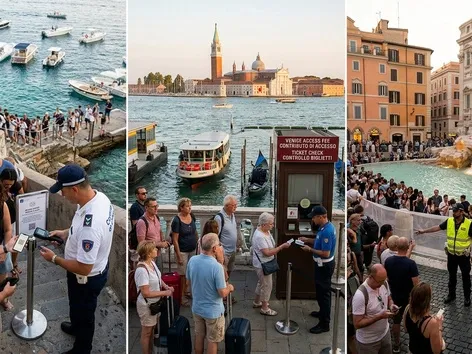
Italy tightens rules for tourists in 2026: new restrictions and fees
Italy is introducing new rules for tourists in 2026: entrance fees for Venice and Rome, restrictions on Capri, Florence and Cinque Terre. Find out what will change for travelers and how to prepare for your trip
03 Apr. 2026
More details1 min
Travel
The 2026 Tourist Season at Sofiyivka: Prices, Hours, and What to Expect This Spring in Uman
The 2026 tourist season has begun at Sofiyivka Arboretum in Uman. Find out how much tickets cost, the park’s hours of operation, and what to expect from a spring visit
11 Apr. 2026
More details