


.gif)
How to Avoid Losing Money When Buying Real Estate: Key Risks and Tips for a Safe Transaction

Buying real estate can involve serious risks and financial losses. Learn how to inspect a property, avoid scams, and complete the transaction safely without unnecessary risks

Buying real estate is one of the biggest financial investments in life. At the same time, along with the opportunity to own a home, buyers face risks—ranging from fraudulent schemes to problems with developers. As Finance.ua notes, citing a comment by lawyer Yana Kuptsova, even a deal that seems “clean” at first glance can end up in years of litigation. However, most problems can be avoided by taking a systematic approach and verifying every step.
Key Risks When Buying Real Estate
Most often, financial losses are linked to legal nuances that buyers ignore or underestimate. Key risks include:
● the seller’s lack of actual title;
● forged documents or powers of attorney;
● hidden encumbrances (mortgages, liens, restrictions on disposal);
● the involvement of third parties (heirs, co-owners, children);
● a problematic history of the property (lawsuits, loans, auctions).
If there have been violations in the property’s history, a court may declare the transaction invalid and return the property to the previous owner.
Common Fraud Schemes in the Market
Fraud schemes are becoming increasingly complex. The most common ones include:
● sales based on forged documents;
● sales without the owner’s knowledge;
● transactions involving “problematic” inheritances;
● double sales, especially in new construction projects.
A separate area of risk involves investing in the early stages of construction. In such cases, there is a risk that the building will not be completed, and the developer may go bankrupt or disappear.
Don't want to miss important updates and useful articles? Subscribe to our weekly newsletter!
What must you check before buying?
Before signing the contract, a comprehensive check must be conducted.
1. Seller’s documents: passport, TIN, power of attorney (if the transaction is being concluded by a representative). Important: if a representative is involved, you should contact the owner directly to confirm their consent.
2. Property documents: title deed, technical passport, verification of square footage, and confirmation of no outstanding utility bills.
3. Verification through registries: a lawyer or notary must verify the data in the debtors’ registry, court registries, enforcement proceedings, sanctions lists, and the Prozorro and SETAM systems.
The property’s history is one of the most important factors. You need to find out about: previous agreements, legal disputes, loans, and auctions. Even a single issue in the past can lead to losing your home.
Encumbrances: what are they and why are they critical?
Encumbrances are restrictions on property rights. These include: mortgages, liens, prohibitions on alienation, and easements. Verification of encumbrances must be confirmed by an official extract, not just the seller’s word.
Contract: where do people most often lose money?
The contract itself often becomes a source of risk. You need to pay attention to:
● who is signing the agreement;
● the parties’ authority;
● the property’s characteristics;
● the payment terms;
● the timeline for completion;
● the parties’ liability.
Phrases such as “the buyer bears all risks” or “the property is transferred as-is” are particularly dangerous.
Critical stages of the transaction
The most mistakes are made at the following stages:
● Preliminary contract — all terms must be clearly documented.
● Payment — be sure to obtain confirmation.
● Transfer and acceptance certificate — from this point on, all risks pass to the buyer.
It is also advisable to avoid undervaluing the property in the contract — in the event of a dispute, only the officially stated amount will be refunded.
What to do if problems arise?
If third parties appear or violations are discovered after the purchase, you should consult a lawyer, assess the risks, and take action through the courts or law enforcement agencies.
In the case of an unfinished construction project: review the contract, register with the creditors’ registry, and file a lawsuit (often more effective collectively).
Tip: By the way, after purchasing a home, you should also think about protecting it. For example, taking out express property insurance through Visit Ukraine will help protect yourself from additional financial risks in the event of unforeseen situations.

We remind you! The real estate market in Ukraine’s frontline cities has undergone significant changes due to the war. Read how prices have changed in Dnipro, Kharkiv, Zaporizhzhia, and Kherson, and what will influence housing costs in 2026.
Photo: snowing / Freepik
Want to know more? Read the latest news and useful materials about Ukraine and the world in the News section.
We recommend purchasing it for a safe and comfortable trip to Ukraine:
Visit Ukraine Insurance – insurance covering military risks for entry and travel in Ukraine;
Visit Ukraine Car Insurance – car insurance with extended coverage in Ukraine;
Visit Ukraine Legal Advice – comprehensive legal support on entry to Ukraine;
Visit Ukraine Tickets – bus and train tickets to/from Ukraine;
Visit Ukraine Tours – the largest online database of tours to Ukraine for every taste;
Visit Ukraine Hotels – hotels for a comfortable stay in Ukraine;
Visit Ukraine Merch – patriotic clothing and accessories with worldwide delivery.
© 2018-2026, Visit Ukraine. Use, copying or reprinting of materials on this site is permitted only with a link (hyperlink for online publications) to Visit Ukraine.
All rights reserved.
Recommended articles
2 min
Real estate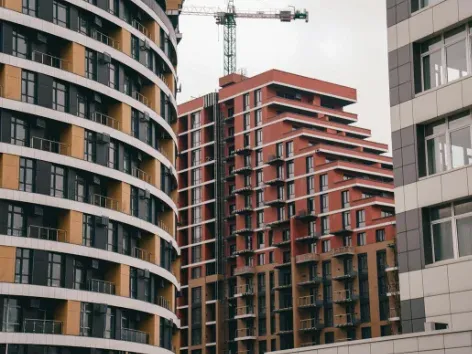
Shelters in every new building: Ukraine tightens building regulations
The era of constructing buildings without bomb shelters has officially come to an end. The new law obliges developers to include protective structures in the designs of all new buildings and infrastructure facilities without exception. Find out how these regulations will change Ukrainian cities and strengthen the civil defence system
10 Mar. 2026
More details2 min
Finance
Mortgages in Ukraine in 2026: Rates Up to 9% and Where Loans Are Most Popular
Mortgages in Ukraine in 2026 remain affordable, with rates up to 9% per year. Find out how many loans banks have issued, where demand is highest, and what conditions are currently in effect in the real estate market
27 Mar. 2026
More details1 min
Finance
How much does land cost in Ukraine in 2026: prices and market trends
The land market in Ukraine in 2026 demonstrates uneven price growth and supply reduction. Find out how much land costs for various purposes, which plots are increasing in price the fastest, and what trends are shaping the market
01 Apr. 2026
More details2 min
Real estate
Housing Demand in Ukraine 2026: Key Real Estate Market Trends
The housing market in Ukraine is changing: demand for houses is gradually recovering, but apartments remain the leaders. Find out how buyer interest is changing, what is the difference between buying and renting, and what price trends are forming in 2026
17 Apr. 2026
More details