


.gif)
EU Passport Through Repatriation: Which Ukrainians Are Eligible for Citizenship?
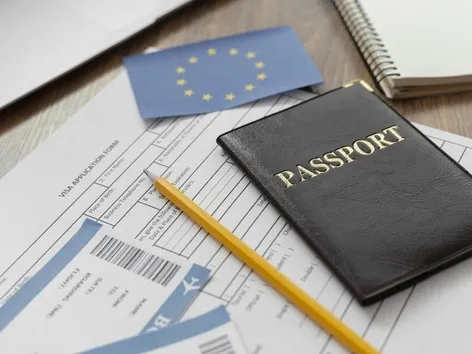
Ukrainians are increasingly interested in obtaining EU citizenship through repatriation. Find out who is eligible for an EU passport, what documents are required, and why DNA tests do not provide legal grounds for obtaining it

The closer we get to 2027, the more often Ukrainians are looking for alternative ways to legalize their status in the EU. One option is obtaining citizenship through repatriation. But there is a complex legal path between a genetic test and an EU passport. This is reported by relocate.to.
What is repatriation and how does it work?
The basis for obtaining citizenship through descent is the principle of jus sanguinis—“the right of blood.” In most EU countries, this means that descendants of former citizens can restore or obtain citizenship.
The key requirement is an unbroken chain of documentation:
● from you to your ancestor;
● with confirmation of each generation;
● with proof of your ancestor’s citizenship.
It is the documents, not “perceived” ancestry or DNA, that determine the outcome.
Where might Ukrainians have a right to EU citizenship?
Historical borders play a key role. A significant part of modern-day Ukraine was previously part of other states:
● Chernivtsi and part of the south — Romania;
● Galicia — Poland or Austria-Hungary;
● Transcarpathia — Hungary or Czechoslovakia.
That is why the place of birth of your ancestors determines which country you should apply to.
Don't want to miss important updates and useful articles? Subscribe to our weekly newsletter!
Is a DNA test enough to obtain an EU passport?
The short answer is no. No EU country grants citizenship based on DNA tests. They can only serve as a tool for research: they suggest a possible region of origin, help locate relatives, and narrow the scope of archival searches.
However, the only legally valid documents are:
● birth, marriage, and death certificates;
● passports or citizenship records;
● archival documents.
Where to look for documents for repatriation?
Searching for documents is the most difficult stage. Sources can vary:
1. Family archives: old passports, pre-war documents, military IDs, letters, or residence permits.
2. Online resources: Ancestry, FamilySearch, MyHeritage—they often contain digitized records that are no longer available in physical archives.
3. State and church archives: civil registry offices, regional archives, church records.
If the documents are abroad, the request is submitted through the consulate.
Important: All documents must be apostilled and translated.
In which EU countries can you obtain citizenship by descent?
Rules vary depending on the country and the number of generations. The most common options:
● Romania — up to 3 generations (for people from former territories);
● Poland — 2–3 generations; continuity of citizenship is required;
● Italy — following the 2025 reform, generally up to 2 generations;
● Ireland — up to 3 generations via the overseas birth register;
● Spain — under the “grandchildren’s law” for descendants of exiles;
● Bulgaria, Slovakia, Slovenia — through proof of origin;
● Malta — for children and grandchildren under certain conditions.
In every case, documentary proof is key.
Common mistakes when applying for citizenship
Most often, applicants encounter the following issues:
● Different spellings of names in documents;
● Lack of a marriage certificate (break in the chain);
● An ancestor’s naturalization in another country;
● Lack of an apostille or translation;
● Confusion regarding old city names.
It is precisely these nuances that often lead to a denial.
Repatriation is not a quick process. Searching for documents, legalizing them, and submitting the application can take years. Therefore, if you have potential grounds for eligibility, it’s best to start now. Especially given that rules in many countries are changing.
If you’re unsure about your chances or don’t know where to start, it’s worth seeking professional advice. Visit Ukraine offers immigration lawyer services for Ukrainians—they help assess your prospects, review your documents, and develop the right application strategy.

We remind you! The EU may change the rules for Ukrainian refugees and review temporary protection after 2027. Read about what restrictions are being discussed, who they might affect, and what this means for Ukrainians.
Photo: Freepik
Want to know more? Read the latest news and useful materials about Ukraine and the world in the News section.
Our recommendation for a safe and comfortable trip:
Visit Ukraine Insurance - insurance for a safe stay abroad without unnecessary expenses;
Green Card - compulsory car insurance for traveling abroad;
Visit Ukraine Tickets - book tickets for buses, trains, and airplanes to/from Ukraine and between cities around the world;
Private Lawyer service - professional legal support on visa and migration issues;
Visit Ukraine Merch - buy patriotic clothing and accessories with worldwide delivery.
© 2018-2026, Visit Ukraine. Use, copying or reprinting of materials on this site is permitted only with a link (hyperlink for online publications) to Visit Ukraine.
All rights reserved.
Recommended articles
2 min
Documents
How to apply for a passport outside Ukraine in 2026? Current rules
The number of cases when Ukrainians need to apply for a passport outside Ukraine is growing, and the rules for such issuance are constantly changing. Find out who needs to return to Ukraine to get a passport and who can get a document abroad
11 Apr. 2026
More details2 min
For refugees
The status of Ukrainian children in the EU depends on their parents’ legal residence and does not change automatically. Find out if a child can be deported, what will happen after 2027, and how families can retain their right to reside in Europe
17 Mar. 2026
More details2 min
War
The Return of Ukrainians After the War: Expert Predicts Only 10–15% — What Does This Mean
After the war, only 10–15% of Ukrainian refugees may return home, an expert predicts. Find out how many people will actually return, why most will remain abroad, and how this will affect Ukraine
26 Mar. 2026
More details2 min
Popular
New EU Rules Effective April 1, 2026: What Will Change for Ukrainians and How to Prepare
In April 2026, the EU’s residency rules for Ukrainians will change. Find out what new regulations will apply in the Czech Republic, Poland, Germany, and France, and what you need to do now
02 Apr. 2026
More details