


.gif)
Temporary protection for Ukrainians in Europe in 2026: which countries are accepting refugees and what you need to know about the conditions
- What does temporary protection mean in 2026 and why do the rules differ?
- What documents are Ukrainians most often required to provide to apply for or confirm their status?
- Germany: support with a focus on employment and integration
- Poland: PESEL UKR ends and transition to other grounds for legalization
- Czech Republic: extension until 2027, but confirmation is required every year
- Spain: status retained until 2027, but financial assistance discontinued
- Italy: protection until March 2027 and payments for new arrivals
- Bulgaria: extension until 2027 and the importance of re-registering documents
- More useful information for Ukrainians in Bulgaria:
- Romania: a wide range of rights and benefits, but with regular confirmation of residence
- Ireland: status until 2027, but housing for newcomers is not free
- Finland: unrestricted right to work and support through reception centers and municipalities
- Norway: collective protection for one year and changes due to regional security assessments
- Which countries have extended the protection program until March 2027 and what is important to know?
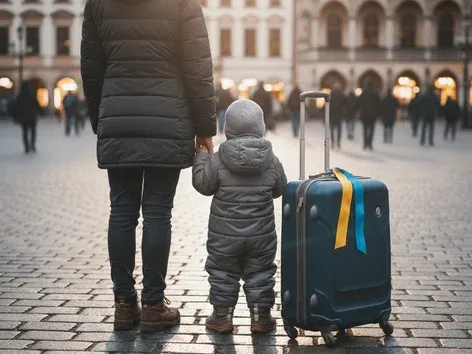
In 2026, temporary protection for Ukrainians in Europe remains available, but conditions vary significantly from country to country. To avoid mistakes with documents and not lose your right to support, it is important to understand in advance what requirements apply in your chosen country. Find out more about which EU countries provide temporary protection to Ukrainians in 2026, what conditions of stay apply, and what documents are required for legal residence

In 2026, Ukrainians can still receive temporary protection in many European countries, but the rules of stay, access to housing, social benefits, and integration requirements vary significantly. In some places, the status is automatically extended, while in others, approaches to financial support are changing or new legalization formats are replacing previous mechanisms.
In this article, we have compiled information about which countries will continue to provide temporary protection for refugees from Ukraine in 2026, what is important to know about the conditions and support, and what documents are usually required to apply for or extend status.
Need help with migration issues?
Get professional support from Visit Ukraine lawyers!

What does temporary protection mean in 2026 and why do the rules differ?
Temporary protection in European countries gives Ukrainians the right to live legally, work without special permits, use basic public services, and ensure their children have access to education. In most cases, it also opens the way to medical care and certain social programs, but their scope depends on the country.
At the same time, there is a noticeable general trend in 2026: states are increasingly linking the level of support to integration, employment, and actual residence. Therefore, even with the same “status” in different countries, the conditions can vary significantly — from the size of payments to the rules of residence in temporary accommodation centers.
What documents are Ukrainians most often required to provide to apply for or confirm their status?
In most countries, the basis is an identity document, most often a biometric foreign passport. If the status is being applied for children, a birth certificate is usually required. Proof of residence in the country (address, registration, sometimes certificates or documents from the place of residence) may also be requested.
Some countries require annual confirmation of status or formalities such as online registration and a personal visit to government agencies. Certain countries may have administrative fees and photo requirements for documents, and for some types of support, income verification or proof of actual residence.
Don't want to miss important updates and useful articles? Subscribe to our weekly newsletter!
Germany: support with a focus on employment and integration
In 2026, Ukrainians in Germany with temporary protection status will retain their right to state financial support. The approximate amounts of basic assistance depend on family composition and age: for one person — €563, for spouses/cohabitants — €506 per person, for adolescents aged 14–17 — €471, for children aged 6–13 — €390, and for children under 5 — €357. For newcomers who are not eligible for Bürgergeld, payments are lower and may be determined based on living conditions, and in some situations, income is checked.
Housing and “rules of conduct” in the support system are a separate issue. Employed persons can apply for a housing subsidy (Wohngeld) (the average benchmark is around €370 per month, but the amount depends on income and family composition and is granted for one year with reapplication). At the same time, employment requirements are being tightened: if you are unemployed without good reason, you risk losing your social benefits. There is also a focus on more active integration and a reduction in funding for integration programs: repeat free language courses are becoming unavailable, and the amount of support for vocational training is decreasing.
More useful information for Ukrainians in Germany:
– Which German states will accept Ukrainians in February 2026?
– Germany tightens rules on unemployment benefits: what will change from July 1, 2026?
– Citizen assistance under threat: Germany prepares tough reform of social benefits from 2026.
– The safest cities in Germany: where should Ukrainians stay?
– Germany tightens migration policy: what will change for Ukrainians?
Poland: PESEL UKR ends and transition to other grounds for legalization
In Poland, temporary protection for Ukrainians has been officially extended until March 4, 2026, but after that date, the PESEL UKR mechanism will cease to operate and will no longer grant the right to reside or work. Therefore, those who plan to stay are advised to switch to other grounds for legalization in advance, for example, through work, study, business, or family reunification (through the “residence card” format).
Separately, from 2026, a new format will appear — a three-year CUKR card for Ukrainians who have lived in Poland for a longer period with UKR status. Among the requirements announced are: an active PESEL UKR at the time of application, at least 365 days of continuous residence in this status, and a valid foreign passport. Social programs will remain in place but will become more stringent in terms of conditions: “800+” will remain in effect in 2026, but payments will be tied to the child's education in Poland (school/kindergarten/official home schooling), and there will be nuances for teenagers who continue their education after school.
Also mentioned are “Dobry Start” and “Aktywny Rodzic,” as well as tighter controls and the possibility of canceling payments in case of abuse.
From November 2025, free accommodation in temporary accommodation centers will only be available to vulnerable groups, while others will have to pay.
More useful information for Ukrainians in Poland:
– Ukrainians in Poland will need work permits from 2026: what will change and what to expect?
– 800+ assistance for Ukrainians in Poland: what conditions will change from February 1, 2026?
Czech Republic: extension until 2027, but confirmation is required every year
In the Czech Republic, temporary protection has been extended until March 4, 2027, but it is important to note that it must be confirmed annually. This requires mandatory online registration and a personal visit to the Ministry of the Interior. Tolerance visas issued due to the war are also automatically extended until March 31, 2027, but for actual confirmation, you need to obtain a new visa sticker in your document.
Social support in 2026 will continue in the form of humanitarian aid for basic expenses. It will be provided to those who are not provided with free housing, food, and hygiene products by the state. The amount depends on age and family composition and may decrease after the first few months. The guidelines for the first five months are as follows: 4,860 korunas for an adult, 3,490 korunas for a child, up to 5,235 korunas for a child with a disability, and up to 7,290 korunas for an adult with a disability. After 150 days, the amount may be reduced to the subsistence level (3,130 CZK) for those who are not working and do not belong to vulnerable categories. At the same time, access to the labor market remains open without a separate permit, and housing can be obtained through assistance centers or searched for independently (in particular, through popular Czech rental platforms).
More useful information for Ukrainians in the Czech Republic:
– The Czech Republic may reduce aid to refugees from Ukraine: what you need to know?
Spain: status retained until 2027, but financial assistance discontinued
Spain has extended temporary protection for Ukrainian citizens until 2027. For those who already have status, it will be maintained in 2026 without additional procedures or repeat applications. For those applying for status for the first time, a personal visit to the police or a refugee reception center is required.
The key documents include: a biometric passport, a child's birth certificate (if available), proof of address in Spain, a photo for documents, and a receipt for payment of the administrative fee (approximately €17 per person). After consideration, a TIE card is issued, which confirms the status and the right to work and access the healthcare system. At the same time, it is important to note that cash assistance payments to Ukrainians with temporary protection status in Spain have been suspended, and the issue of housing is often resolved through charitable organizations at the start and then through independent rental. Formally, it is possible to work, but in practice, there may be difficulties due to competition and language requirements, and vacancies are often offered in the service or seasonal sectors.
More useful information for Ukrainians in Spain:
– New Spanish immigration law from 2026: what will change for Ukrainians?
– Financial assistance for Ukrainians in Spain: conditions, amounts, and how to apply for payment
– Temporary protection in Spain for Ukrainians: how to apply and basic rules for refugees?
Italy: protection until March 2027 and payments for new arrivals
Italy has extended temporary protection for Ukrainian citizens until March 4, 2027. This status gives them the right to stay in the country, work officially, use public healthcare, count on social support, and enroll their children in educational institutions. The state can also place them in reception centers or assist in finding housing, and they retain the ability to move freely within EU countries and return to Ukraine.
In 2026, financial assistance in Italy is primarily targeted at new arrivals: €300 per month for each adult and an additional €150 for each minor child during the first three months of stay. After arrival, there are important organizational steps to take: within the first 48 hours, you must go to the police to declare your hospitality, then submit documents to the questura to apply for/renew your permesso di soggiorno, and apply to the ASL to obtain a temporary STP medical card, which gives you access to public health services.
More useful information for Ukrainians in Italy:
– Emigration to Italy: how can Ukrainians move there in 2026?
– Italy has extended temporary protection for Ukrainians until 2027.
Bulgaria: extension until 2027 and the importance of re-registering documents
Bulgaria has extended temporary protection for Ukrainian citizens until March 4, 2027, but in 2026 there is an important bureaucratic nuance: temporary protection registration cards issued earlier remained valid until April 30, 2025, and by that date it was necessary to re-register, otherwise the card would be canceled. After April 30, 2025, a new registration card can only be obtained from the territorial divisions of the relevant agency under the Bulgarian Ministry of Justice.
The status itself in 2026 guarantees legal residence until March 2027, the right to employment without additional permits, access to education for children, and the possibility of receiving social assistance and temporary housing. Medical care is described separately: emergency care is available to everyone, as well as various approaches to insurance/care depending on age and status. There is also a one-time social assistance payment of 375 leva per family (regardless of the number of members), for which a registration card, identity document, and address card are required; decisions are made within 27 days, and funds can be received by mail or to a Bulgarian bank account.
More useful information for Ukrainians in Bulgaria:
– Emigration to Bulgaria: how can Ukrainians move there?
Romania: a wide range of rights and benefits, but with regular confirmation of residence
In Romania, the temporary protection regime for Ukrainian citizens has been extended until March 2027. It is available to those who arrived after February 24, 2022, or were in the country at the time of the full-scale invasion, as well as to family members. Rights include residence, work or self-employment, social assistance if needed, free medical care in emergencies, and access to education for children on an equal basis with Romanian citizens.
Social support programs are described separately: a 2,000 lei voucher for mothers with newborns (provided they were born after April 12, 2024, and the application is submitted no later than three months after giving birth), child benefits with different rates depending on age/disability, and the possibility of unemployment benefits under certain conditions. At the same time, parents or legal representatives must confirm their actual residence at the declared address every three months by means of a declaration, otherwise payments will be suspended. There is also a one-time state benefit to cover living expenses for up to three months (if you have the status and an account in a Romanian bank) and a general rule: you can work on equal terms with citizens of the country.
More useful information for Ukrainians in Romania:
– Leaving Ukraine for Romania: crossing the border, customs control, legalizing your stay.
– Ukrainians in Romania: rules for entry and legal residence. What do you need to know?
– Ukrainians in Romania: what is CNP and why is it needed?
Ireland: status until 2027, but housing for newcomers is not free
Ireland is maintaining temporary protection for Ukrainian citizens until March 4, 2027.
You must apply immediately after entry; after approval by the Ministry of Justice, the applicant will receive confirmation — a so-called “yellow letter” certifying the granting of status. In 2026, this status guarantees the right to legally reside, work, and use public services.
However, the conditions have changed: from March 2025, new arrivals will no longer have access to free public housing, but social benefits will remain — €38.80 per week for adults and €29.80 for children. The complexity of the rental market due to housing shortages and high prices is also emphasized, and employment is formally open from day one: you can look for a job, in particular, through the Intreo service, which helps with employment and access to training programs.
More useful information for Ukrainians in Ireland:
– Temporary protection in Ireland: what decisions will Ukrainians have to make after 2026?
– Temporary protection in Ireland for Ukrainians: how to apply and the basic rules for refugees?
– When do Ukrainians need a visa to Ireland and how to get one?
Finland: unrestricted right to work and support through reception centers and municipalities
In Finland, temporary protection for Ukrainian citizens has been extended until March 4, 2027. It is available to Ukrainians who cannot return safely due to the war, as well as to family members if family ties were established in Ukraine before February 24, 2022 (e.g., marriage or birth of a child). Important note: the right to work and study is available immediately after registering an application for temporary protection with the police or border authority.
Social support here largely depends on where a person lives and whether they have their own funds. If income is insufficient, it is possible to receive “shelter” assistance to cover basic needs, and the amount depends on the financial situation and living conditions (center or private housing). After registering with the municipality, the person becomes the responsibility of local social security structures and can apply to Kela for child benefits, housing benefits, and basic social assistance. Regarding housing: either a place in a reception center (if necessary) or independent rental, but in the private option, the person covers the costs themselves, as rental support from reception centers is not provided.
More useful information for Ukrainians in Finland:
– When do Ukrainians need a visa to Finland and how to obtain it?
Norway: collective protection for one year and changes due to regional security assessments
Norway has a temporary collective protection program that is granted for a period of one year. You can apply at the border or through the police (for those who are already in the country). If you have friends or relatives, you can go to them immediately, but then you must contact the police or the National Arrival Center to complete the paperwork.
In 2026, it is critical to note that Norway is gradually changing its approach to providing protection depending on the security situation in Ukraine: in 2024–2025, the government recognized a number of regions as “safe for return,” and residents of some areas are no longer eligible for automatic temporary protection. However, these changes do not apply to those who applied before September 28, 2024, already have a residence permit, were evacuated under the Medevaku program, or are family members of a person with collective protection status. The financial support system has also been revised: state support is no longer provided to those living in private accommodation; payments for childless families have been reduced, and the rules in reception centers have become stricter (particularly with regard to pets). Accommodation for applicants is usually arranged through a system of reception centers and subsequent resettlement in communities, and it is possible to work after receiving protection.
More useful information for Ukrainians in Norway:
– Norway for Ukrainians: how to apply for protection, social support, and major changes for refugees.
Which countries have extended the protection program until March 2027 and what is important to know?
In addition to the countries where the details of the conditions are described above, the extension of the protection program until March 2027 has been confirmed for a wide range of countries. These include Belgium, Bulgaria, Cyprus, Denmark, Finland, France, Germany, Greece, Hungary, Ireland, Italy, Latvia, Lithuania, Luxembourg, Malta, the Netherlands, Portugal, Romania, Slovakia, Slovenia, Spain, Sweden, as well as Norway, Switzerland, Iceland, and Liechtenstein. In general terms, this means automatic extension of permits and continued access to education, healthcare, employment, and social protection.
At the same time, there is a nuance that is important to consider when planning a move. Poland, Austria, the Czech Republic, Croatia, and Estonia have been granted the right to no longer accept new refugees from Ukraine, but in practice, the rules may vary “by region” and do not always mean a complete cessation of acceptance. Therefore, even if a country formally has this right, the actual procedure may depend on current decisions and how the reception and registration are organized.
Need help with documents or choosing a country? Contact the immigration lawyers at Visit Ukraine!
When temporary protection rules change, the greatest risks arise in the details: what status to choose after the previous mechanism ends, how to confirm residence, what certificates are required for the family, whether you will lose your right to benefits or work due to a formality in the documents. This is especially true for those who plan to stay in the country longer and transition from temporary protection to other grounds for legalization.
Visit Ukraine's immigration lawyers will help you understand your situation, prepare a plan of action and documents for your chosen country and format of stay.
Book a consultation and go through the legalization process calmly, without unnecessary mistakes and wasted time!
Reminder! The State Border Service of Ukraine has published statistics on border crossings in 2025. How many Ukrainians did not return from abroad in 2025? We tell you here.
Photo: generated by Gemini
Want to know more? Read the latest news and useful materials about Ukraine and the world in the News section.
Our recommendation for a safe and comfortable trip:
Visit Ukraine Insurance - insurance for a safe stay abroad without unnecessary expenses;
Green Card - compulsory car insurance for traveling abroad;
Visit Ukraine Tickets - book tickets for buses, trains, and airplanes to/from Ukraine and between cities around the world;
Private Lawyer service - professional legal support on visa and migration issues;
Visit Ukraine Merch - buy patriotic clothing and accessories with worldwide delivery.
© 2018-2026, Visit Ukraine. Use, copying or reprinting of materials on this site is permitted only with a link (hyperlink for online publications) to Visit Ukraine.
All rights reserved.
Recommended articles
2 min
For refugees
800+ assistance for Ukrainians in Poland: what conditions will change from 1 February 2026?
From February 2026, Poland is revising its approach to social support for Ukrainian families with children. Receiving 800+ payments will depend on a number of new criteria, which are important to consider in advance so as not to lose your right to assistance. Learn more about the new conditions for receiving 800+ payments for Ukrainians in Poland
28 Jan. 2026
More details2 min
For refugees
Extension of temporary protection in Sweden in 2026: what do Ukrainians need to know?
It is important for Ukrainians in Sweden in 2026 to check the validity of their residence permits and the rules for extending them in advance. Timely submission of an application determines the possibility of continuing to legally reside in the country, work and receive support. Learn more about extending temporary protection in Sweden in 2026
29 Jan. 2026
More details3 min
For refugees
Temporary protection in Ireland: what decisions will Ukrainians have to make after 2026?
Temporary protection has allowed thousands of Ukrainians to live and work legally in Ireland, but this status has clear time limits. It is important to understand now what the consequences of its termination will be and what decisions will have to be made in order to remain in the country legally. Learn more about possible scenarios for Ukrainians in Ireland after 2026
07 Feb. 2026
More details2 min
For refugees
The Embassy of Ukraine will hold on-site consular receptions in Austrian cities in 2026
Ukrainians living in regions of Austria far from Vienna will be able to receive consular services without traveling to the capital. In 2026, on-site receptions are planned in six cities. Find out more about the updated schedule and the procedure for contacting consuls
05 Feb. 2026
More details